

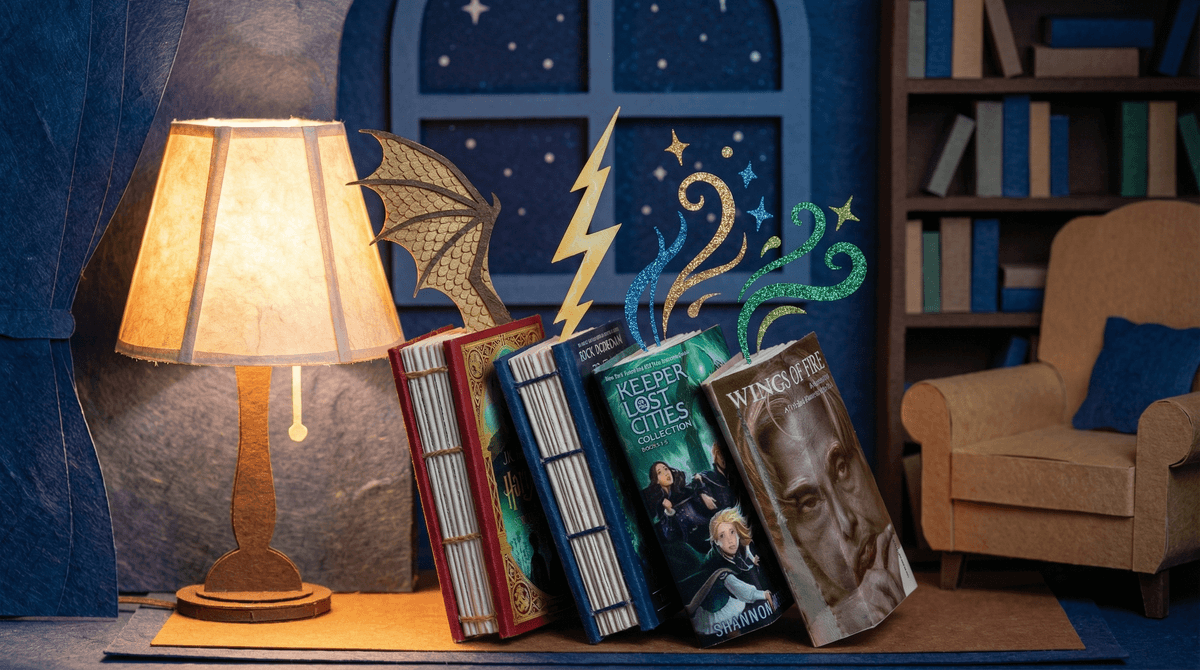
We're talking about those multi-book sagas that hook middle schoolers (roughly ages 9-14) and keep them coming back for more. Think Percy Jackson, The Hunger Games, Diary of a Wimpy Kid, Wings of Fire. These are the books that create actual readers—kids who will choose to read instead of scrolling TikTok or watching YouTube, at least sometimes.
The magic of a good series is that once a kid is invested in the characters and world, they're motivated to keep reading. No more begging them to finish their 20 minutes of reading time. They're sneaking the book under their covers with a flashlight like it's 1987.
Let's be real: getting tweens to read in 2026 is competing with Roblox, Discord, YouTube, and whatever new app launched this week. Their brains are getting trained on dopamine hits from notifications and infinite scroll. Books are the antidote to that fragmented attention.
Reading long-form fiction builds sustained attention, empathy, vocabulary, and critical thinking in ways that scrolling simply cannot. It's one of the few activities that actually strengthens their ability to focus for extended periods. Plus, when kids read for pleasure, they're not just becoming better readers—they're becoming better thinkers.
But here's the thing: you can't force it. Assigning them "quality literature" that bores them to tears will backfire spectacularly. The goal is to find books they actually want to read, even if those books aren't winning literary awards.
The best series for this age group have a few things in common:
Relatable protagonists around their age or slightly older. Tweens want to read about 12-16 year olds navigating challenges, not adults or little kids.
High stakes that matter to kids. Whether it's surviving the Hunger Games, saving the world from monsters, or just surviving middle school social dynamics—the stakes need to feel real and urgent.
Humor or emotional depth (or both). The best series make kids laugh out loud or feel deeply. Bonus points if they do both.
A world they want to return to. Whether it's Camp Half-Blood, Hogwarts, or just a really well-drawn middle school, the setting should feel like a place worth revisiting.
Forward momentum. Each book should end with enough resolution to be satisfying but enough mystery or cliffhanger to make them immediately grab the next one.
Not all series are created equal, and reading level doesn't always match emotional maturity. Here's a rough breakdown:
Ages 8-10 (Younger Tweens)
- Diary of a Wimpy Kid - Hilarious, low-stakes middle school humor
- Dog Man - Graphic novels that reluctant readers devour
- Wings of Fire - Dragons, prophecies, and surprising emotional depth
- Percy Jackson - Greek mythology meets ADHD representation
Ages 11-13 (Peak Tween)
- Harry Potter - Still the gold standard (yes, even with the JK Rowling controversy—read more about navigating that conversation
 )
) - The Hunger Games - Violence and themes get heavy, but most 12+ can handle it
- Keeper of the Lost Cities - Fantasy with mystery and found family themes
- Artemis Fowl - Criminal mastermind meets fairy world
Ages 13-14 (Older Tweens/Young Teens)
- Six of Crows - Heist fantasy with complex characters
- The Hate U Give - Contemporary realistic fiction tackling racism
- Throne of Glass - Assassins and romance (gets spicier in later books)
Graphic novels count. If your kid is devouring Amulet or Smile, that's reading. Don't let anyone tell you otherwise. Graphic novels build visual literacy and narrative comprehension.
Rereading is valuable. If your kid wants to read Percy Jackson for the fourth time, let them. Rereading comfort books is how many kids regulate their emotions and deepen their understanding.
Let them read "below their level." A kid reading level doesn't mean they should only read challenging books. Sometimes an advanced reader wants to breeze through something fun. That's fine! Reading should be pleasurable, not just educational.
Series can be social currency. Kids bond over shared books. When everyone at school is reading Wings of Fire, there's social value in being part of that conversation. Don't underestimate this.
Watch for content surprises. Some series start innocent and get darker (looking at you, Hunger Games). Read reviews or skim later books if you're concerned about violence, romance, or mature themes sneaking in.
Start with what they already love. If they're obsessed with Minecraft, try the Minecraft novels. If they love Avatar: The Last Airbender, grab the graphic novel series. Use their existing interests as a bridge.
Ask their friends (or their friends' parents). What's circulating in the fifth grade right now? What are the middle schoolers all talking about? Series reading is often social—kids want to read what their friends are reading.
Use audiobooks strategically. Some kids who resist physical reading will devour audiobooks on long car rides or before bed. It still counts! It's still building their narrative comprehension and vocabulary.
Visit the library or bookstore together. Let them browse. Let them judge books by their covers. Let them pick something that looks interesting to them, even if it's not what you would have chosen. Ownership of the choice matters.
Try the first book, then reassess. Most series hook you in book one or not at all. If they're not feeling it by the end of the first book, move on. There are too many good series out there to force it.
The best book series for your tween is the one they'll actually read. Not the one that wins awards, not the one their English teacher recommends, not the one you loved at their age. The one that makes them say "just one more chapter" at bedtime.
Your job isn't to curate their reading list like a literature professor. Your job is to keep books flowing, remove barriers (library cards, bookstore trips, audiobook subscriptions), and celebrate when they find something they love.
And when they're deep in a series, reading under the covers past bedtime, trying to find out what happens next? That's not a discipline problem. That's a win. Let them finish the chapter.
Make it easy to get the next book. Nothing kills reading momentum like finishing book three and having to wait two weeks for book four. Keep the next book ready, or make sure they know how to download it on their device immediately.
Create reading-friendly spaces. A cozy reading nook, a good book light, a comfortable spot that's screen-free—these matter more than you think.
Model reading yourself. Kids who see parents reading for pleasure are more likely to read for pleasure. Put your phone down and pick up a book sometimes. They're watching.
Want to explore specific series recommendations based on your kid's interests? Find the perfect book series for your reader.