

Finding Books Your Kids Will Actually Read (And What to Watch Out For)
Look, we all want our kids to love reading. But somewhere between "Goodnight Moon" and middle school, a lot of kids decide books are boring and TikTok is not. And honestly? I get it. There's a lot of competition for their attention.
But here's the thing: finding the right book can absolutely change a kid's relationship with reading. The trick is matching them with something they'll actually want to pick up—and knowing what you're getting into content-wise before they're three chapters deep into something that's going to prompt some conversations you weren't quite ready for.
Reading isn't just about literacy scores (though yes, that too). Kids who read regularly:
- Build longer attention spans in a world designed to fragment them
- Develop empathy by living in other people's heads
- Learn to sit with complex emotions and ideas
- Get a break from the dopamine slot machine of social media
Plus, books are one of the few places where kids can explore big ideas—identity, mortality, injustice, love—at their own pace, without an algorithm deciding what comes next.
The number one reason kids say they don't like reading? They haven't found their books yet.
Here's what actually works:
Start With What They Already Love
- Obsessed with Minecraft? Try the "Diary of an 8-Bit Warrior" series or "The Elementia Chronicles"
- Can't stop watching Avatar: The Last Airbender? Hand them the Kyoshi novels or the Percy Jackson series
- Into true crime YouTube? "A Good Girl's Guide to Murder" or "One of Us Is Lying"
The bridge from screen to page is shorter when the themes overlap.
Don't Get Hung Up on "Reading Level"
Yes, reading level matters for school. But for pleasure reading? Let them read what they want.
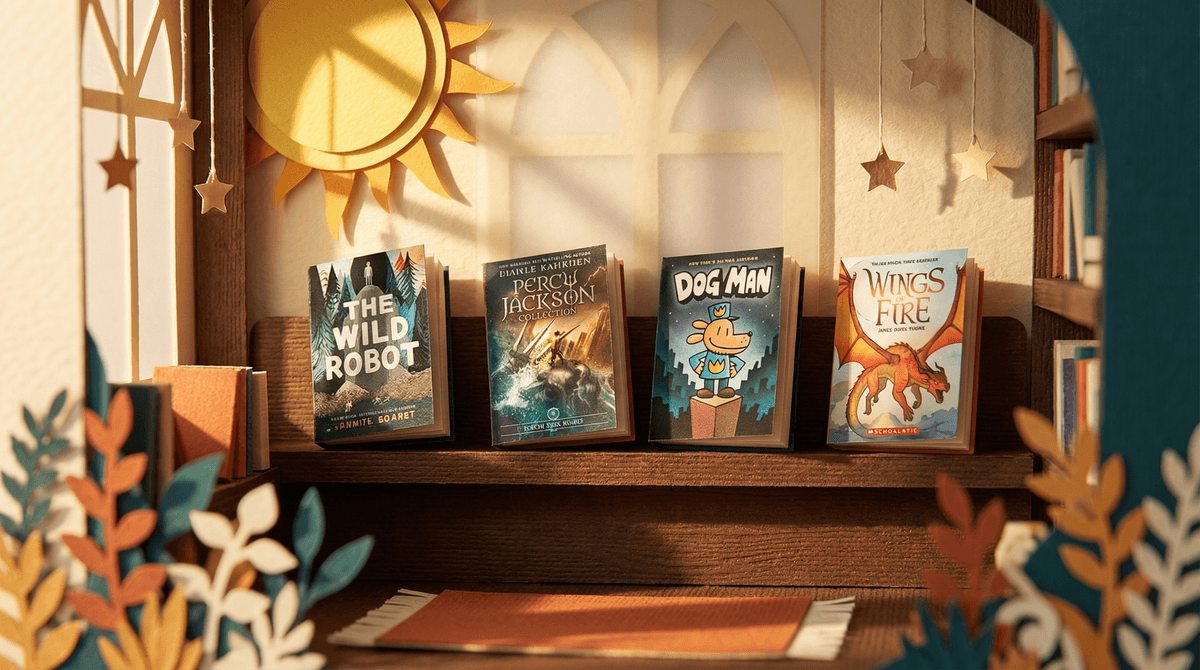
A reluctant reader devouring "Dog Man" graphic novels is building a reading habit. A strong reader re-reading "Harry Potter" for the fifth time is doing something important for their emotional development. A middle schooler reading YA romance is exploring identity in a safe way.
The goal is to make reading feel like a choice, not a chore.
Graphic Novels Are Real Books
I'm just going to say it: graphic novels are legitimate literature. "Smile" by Raina Telgemeier, "New Kid" by Jerry Craft, "Amulet" by Kazu Kibuishi—these books have launched thousands of reading habits.
If your kid only wants to read graphic novels, that's totally fine. They're reading complex narratives, following character development, and building visual literacy. Win-win-win.
Okay, real talk: kids' books today cover topics that would have gotten a book banned from my childhood library. Mental health, sexuality, racism, violence, abuse—it's all there, often in middle-grade fiction.
This isn't necessarily bad! But you should know what you're handing them.
The "Surprise Sex Scene" Problem
YA (Young Adult) books are written for ages 12-18, which is a HUGE range. A book marketed to 14-year-olds might have content that's not right for your 12-year-old—or might be exactly what your mature 12-year-old needs.
Before handing over a book:
- Check Common Sense Media for content warnings
- Read the first few chapters yourself if you're unsure
- Search "[book title] parent review" to see what others flagged
- Ask your librarian—they know which books have surprised parents
The "Dark Content" Question
A lot of popular middle-grade and YA books deal with heavy stuff: suicide, school shootings, eating disorders, abuse. Books like "Speak," "Thirteen Reasons Why," "The Hate U Give"—these are powerful, important books. They're also intense.
Consider:
- Is your kid reading this because they're curious about the topic, or because they're experiencing something similar?
- Are you available to talk about what comes up?
- Does your kid tend to internalize dark content or process it well?
There's no universal right answer. Some kids need to see their pain reflected in a story. Some kids aren't ready.
The Representation Conversation
Modern kids' books include LGBTQ+ characters, diverse family structures, and discussions of race and identity in ways that weren't common 20 years ago.
If your family values include exposure to diverse perspectives, this is great. If you want to preview how topics are handled, See specific content details for any book about any book.
Ages 6-8: Building the Habit
- "Dog Man" series (graphic novels, silly humor)
- "Ivy + Bean" (friendship, short chapters)
- Magic Tree House (adventure, educational)
- "The Bad Guys" (reluctant readers love these)
Ages 8-11: Finding Their Genre
- Percy Jackson series (mythology, humor, ADHD rep)
- "Wings of Fire" (dragons, complex plots)
- Wonder by R.J. Palacio (empathy, differences)
- "The Wild Robot" (sci-fi, nature, beautiful)
Ages 11-14: The Tricky Years
- "Refugee" by Alan Gratz (historical, multiple timelines)
- "The Hate U Give" (racism, police violence—heavy but important)
- "A Good Girl's Guide to Murder" (mystery, smart female lead)
- "Keeper of the Lost Cities" (fantasy, friendship)
Ages 14+: They're Ready for Real YA
- "The Hunger Games" (dystopia, violence, political themes)
- "Six of Crows" (heist, morally gray characters)
- "They Both Die at the End" (death, LGBTQ+ leads, beautiful)
- "Scythe" (philosophy, death, ethics)
The best book for your kid is the one they'll actually read.
Don't stress about reading level, genre, or whether graphic novels "count." Stress about whether they're building a relationship with stories—because that's what will serve them when the world gets louder and more distracting.
And yeah, preview content if you want to. There's no shame in reading the book first or checking reviews. You're not censoring; you're parenting intentionally.
- Ask your kid what they're interested in right now—not what they think they should read, but what actually sounds cool
- Hit up your local library—librarians are absolute wizards at matching kids to books
- Try the "five-page rule"—if they're not into it after five pages, they can quit. No guilt.
- Read what they're reading (at least sometimes)—it gives you something to talk about that isn't school or chores
And if you want specific recommendations based on your kid's interests or concerns about a specific book, Get book recommendations for your kid—we've got you.