

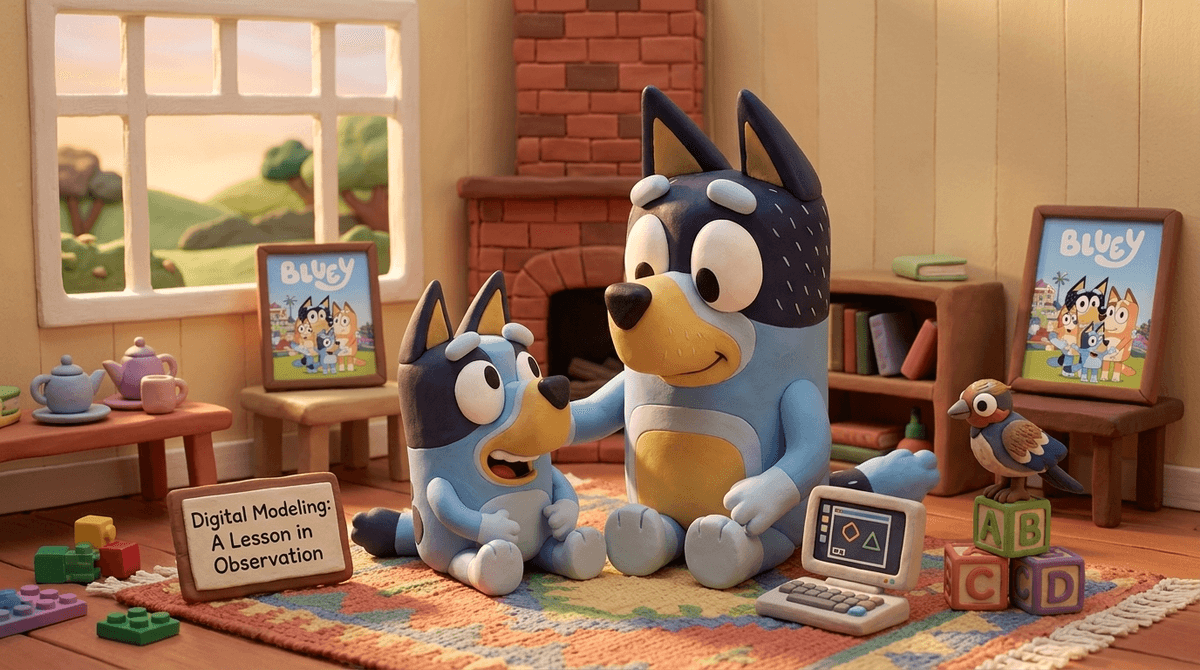
TL;DR: In the Bluey episode "Copycat," Bluey deals with the death of a bird by mimicking her dad's every move. It’s a masterclass in how kids use play to process trauma and—more importantly for us—a blunt reminder that our kids are constantly "copycatting" our digital habits.
Quick Links for Emotional Intelligence & Modeling:
- Bluey (Disney+) - The gold standard for parent-child dynamics.
- Daniel Tiger's Neighborhood - Great for specific "strategy songs" regarding big feelings.
- The Wild Robot by Peter Brown - A beautiful look at nature, life, and death.
- Spiritfarer - A "cozy" game about saying goodbye (Ages 10+).
If you’ve managed to avoid the emotional gut-punch that is Season 1, Episode 38 of Bluey, here’s the breakdown: Bluey is playing a game where she mimics everything her dad, Bandit, does. It’s cute and funny until they find a hurt budgie (a small bird) on their walk. They rush it to the vet, but the bird doesn't make it.
The rest of the episode isn't about the bird; it's about Bluey processing the reality of death by re-enacting the entire sequence. She plays "vet," she plays "the bird dying," and she watches how Bandit handles the sadness.
It’s one of those episodes that reminds you why Bluey isn't just "another kids' show" or some Skibidi Toilet level of brain rot. It’s actual art that tackles the heavy stuff without being condescending.
While the episode is ostensibly about a dead bird, the core mechanic is mimicry.
We often talk about "screen time" as a set of rules we impose on our kids, but we forget that we are the primary models for what a "digital life" looks like. If Bluey is copying Bandit’s posture, his words, and his reaction to bad news, your kids are doing the same with your phone.
When you're "just checking one email" at the dinner table, or doom-scrolling "Ohio" memes on TikTok while they’re trying to tell you about their Minecraft build, they are recording that behavior. They are learning that the glowing rectangle is the most important thing in the room.
Learn more about digital modeling and parental screen habits
If your kid is asking questions about loss, or if you want to use the "Copycat" episode as a bridge to better conversations, here are some high-quality resources that aren't just filler content.
Ages 2-5 Daniel Tiger is the spiritual successor to Mr. Rogers. It’s incredibly intentional. When Daniel’s fish dies, the show handles it with a level of directness that is rare in media for toddlers. It provides actual language ("Ask questions... that's okay") that kids can use.
Ages 7-12 This book (and the subsequent movie) is phenomenal. It deals with a robot named Roz who has to learn to survive in the wilderness. It doesn't shy away from the harshness of nature—animals eat other animals, and death is part of the cycle. It’s a great "step up" from Bluey for kids who are starting to outgrow the "Heeler" phase but still need help processing the world.
Ages 10+ If you want to move away from the "bank account draining" mechanics of Roblox and into something meaningful, Spiritfarer is a "cozy management game" about dying. You play as a ferrymaster to the deceased. You build a boat, care for your spirits, and eventually lead them to the "Everdoor." It’s profound, beautiful, and a great way to show that games can be more than just dopamine hits.
Preschoolers (Ages 2-5)
At this age, mimicry is their primary job. If they see you on Instagram, they will want to be on a screen.
- The Move: Narrate your phone use. "I'm checking the weather so we know if we need jackets," or "I'm sending a picture of your drawing to Grandma." This turns the "black hole" of the screen into a functional tool in their eyes.
Elementary (Ages 6-10)
This is the Roblox and YouTube era. They are copycatting more than just your habits; they’re copycatting the creators they watch.
- The Move: Watch "Copycat" together. Ask them, "Why do you think Bluey wanted to play the vet game even though it was sad?" It helps them realize that play is a tool for understanding the world.
Middle School (Ages 11-14)
They’ll tell you Bluey is for babies, but they’re still watching. At this age, the "copycat" behavior moves to social credit. They say things are "mid" or "basic" because that’s the digital language of their community.
- The Move: Be honest about your own digital struggles. "I realized I’ve been scrolling too much lately and it’s making me feel tired. I’m going to put my phone in the kitchen for an hour." Modeling the correction is just as important as modeling the behavior.
Check out our guide on how to talk to kids about death and grief
In the episode, Bluey is upset when the bird dies because "she wanted it to get better." Bandit’s response is perfect: "Sometimes, it doesn't."
As parents, we have a reflex to protect our kids from "bad" content. We want to filter out the sadness, the scary news, and the "weird" parts of the internet. But "Copycat" shows us that kids need to encounter these things in a safe environment (like a 7-minute cartoon or a family game night) so they can practice their reactions.
If we sanitize everything, they won't have the "emotional muscles" to handle the real world—or the real internet—when they eventually encounter it.
How to Talk About It
- Don't rush the "fix." When Bluey is reenacting the bird's death, Bandit doesn't stop her or try to make her play something "happier." He lets her play it out. If your kid is obsessed with a "weird" game or a "dark" story, ask questions before you shut it down.
- Acknowledge the mimicry. If you catch your kid saying something they heard on a YouTube short that feels off, use the "Copycat" logic. "I noticed you're using that word a lot—do you know what it means, or are you just copycatting that video?"
- Check your own "Copycat" mirror. Are you modeling the digital boundaries you want them to have?
Get tips on how to set digital boundaries as a parent
The "Copycat" episode of Bluey is a gift to parents. It’s a reminder that play is serious work and that our children are the world’s most observant little spies.
Whether it's dealing with the death of a pet or navigating the complexities of their first Discord server, they are looking at us to see how it’s done. We don't have to be perfect—Bandit certainly isn't—but we do have to be intentional.
Next Steps:
- Watch "Copycat" (Season 1, Ep 38) with your kids this weekend.
- Pick one "digital habit" you want to change and narrate it out loud to your kids.
- Check out our guide on the best shows for emotional intelligence for more recommendations.