

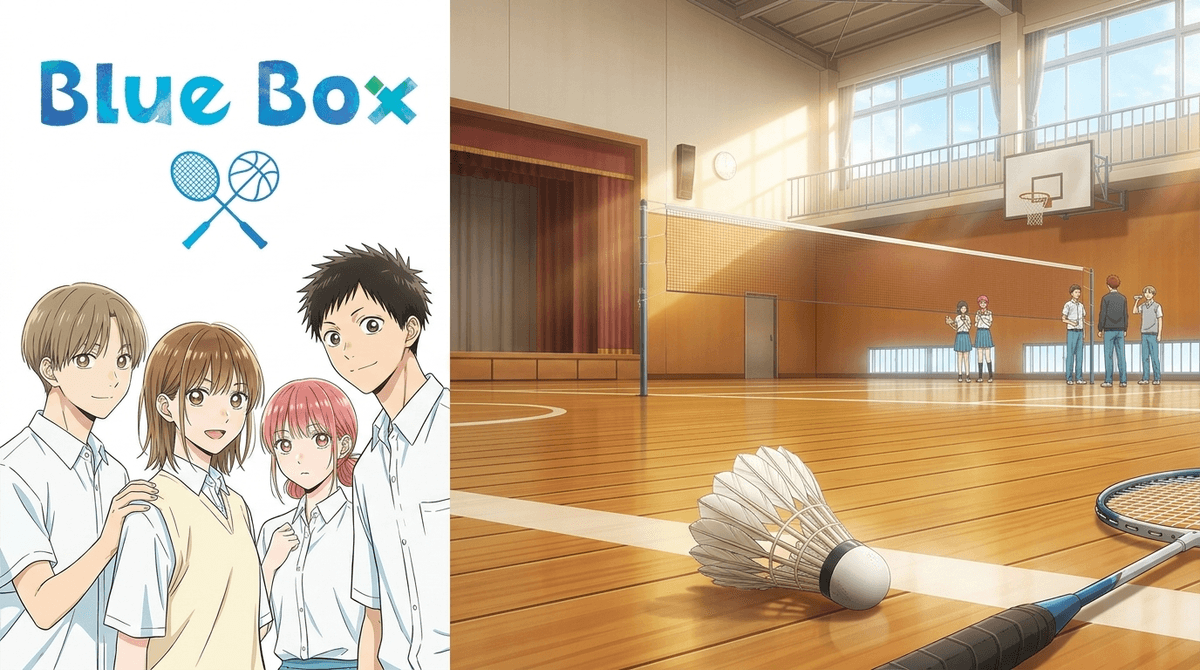
Blue Box: Why Your Teen is Hooked on This Wholesome Sports Manga
TL;DR: Blue Box (Ao no Hako) is a sports manga turned Netflix anime that follows high school badminton player Taiki as he navigates competitive athletics and a genuine crush on basketball star Chinatsu. It's refreshingly wholesome, features realistic teen emotions without melodrama, and balances athletic ambition with healthy relationship development. Best for ages 13+, especially teens who love sports anime like Haikyuu!! but want something with more romance woven in.
If your teen suddenly cares deeply about badminton training regimens and keeps muttering about "moving boxes," they've probably discovered Blue Box. This manga series by Kōji Miura has been quietly building a devoted following since 2021, and Netflix's 2024 anime adaptation has turned it into a full-blown phenomenon among middle and high schoolers.
Blue Box follows Taiki Inomata, a dedicated high school badminton player who arrives at school early every morning to practice. He's harboring a massive crush on Chinatsu Kano, a talented basketball player who also trains before classes. The series kicks off when Chinatsu's family situation changes and she ends up moving in with Taiki's family, setting up a "living under the same roof" dynamic that could easily veer into cringe territory but somehow... doesn't.
The manga is serialized in Weekly Shōnen Jump (the same magazine that gave us Naruto, One Piece, and My Hero Academia), and the anime adaptation premiered on Netflix in October 2024. As of February 2026, we're deep into Season 1 with more episodes still rolling out.
It's sports anime that actually respects the sport. Unlike series that use athletics as mere backdrop for drama, Blue Box digs into the genuine grind of competitive badminton and basketball. Taiki isn't magically gifted—he's working his ass off to improve, dealing with plateaus, analyzing his weaknesses, and learning from better players. For teens involved in any competitive activity (sports, music, esports, debate), this resonates hard.
The romance feels real. Taiki doesn't have some tragic backstory explaining his feelings. He just... likes Chinatsu. She's cool, driven, and kind. The series captures those excruciating early-crush moments—the overthinking, the accidental hand touches that feel like major events, the terror of seeming too interested or not interested enough. It's awkward without being embarrassing to watch.
The characters act like actual teenagers. Nobody's having philosophical monologues about the nature of love. They're nervous, sometimes oblivious, occasionally brave, and mostly just trying not to mess things up. The friend groups feel authentic, with the supportive-but-teasing dynamic that real teen friendships have.
It's wholesome without being boring. There's genuine tension and stakes (both athletic and romantic), but it's not manufactured through misunderstandings, love triangles, or manufactured drama. The conflicts come from real places: balancing personal goals with relationships, dealing with self-doubt, navigating changing dynamics when feelings get involved.
Content-wise, this is remarkably clean. There's no fanservice, no inappropriate content, minimal language beyond occasional mild expressions. The most "mature" content is teens experiencing genuine romantic feelings and occasionally blushing intensely. About 40% of families in our community regularly use Netflix for their kids' content, and Blue Box sits comfortably in the safer end of that spectrum for teens.
The themes are actually pretty valuable. The series explores:
- Setting and pursuing long-term goals
- Dealing with failure and plateaus in skill development
- Healthy communication in relationships (eventually—there's realistic fumbling first)
- Balancing multiple priorities (sports, academics, social life)
- Supporting others' ambitions even when they conflict with your own
It's a significant time investment. Each anime episode runs about 24 minutes, and the manga has 20+ volumes and counting. If your teen gets hooked, they're in for the long haul. Given that the average teen in our community logs about 4.2 hours of screen time daily, a 24-minute episode isn't unreasonable—but binge-watching entire arcs can eat up weekend afternoons fast.
The "living together" setup might raise eyebrows. Taiki and Chinatsu end up as housemates due to legitimate family circumstances, but the premise could feel uncomfortably convenient. The series handles it respectfully—there's appropriate boundaries, parental supervision, and the focus stays on their individual growth rather than manufactured proximity drama. Still, some families might find the setup questionable regardless of execution.
Reading vs. watching considerations: The manga is available through Viz Media and Shonen Jump app subscriptions. About 22% of teens in our community have smartphones, and many use them for manga apps. The anime is exclusively on Netflix. If you're trying to manage screen time, manga might actually be the better option—it's still visual media, but the reading component makes it slightly more active than passive viewing.
Ages 13-15: Perfect sweet spot. The characters are high schoolers, the romance is age-appropriate, and the themes around working toward goals and managing feelings are directly relevant. Teens in this range are likely experiencing similar emotions (even if not the exact living situation), making it relatable without being too mature.
Ages 16-18: Still enjoyable but might feel slightly young. Older teens often appreciate the realistic portrayal of early relationships and the sports dedication, but some find the pacing slow compared to more intense anime. That said, plenty of high schoolers love it as comfort viewing—something genuinely sweet in a media landscape that often equates "mature" with cynical.
Ages 11-12: Probably fine content-wise, but the emotional nuance might not land yet. Younger viewers often find the internal monologues and subtle relationship dynamics less engaging than action-heavy shows. Not harmful, just potentially boring.
Haikyuu!! - The gold standard for sports anime, following a high school volleyball team. More focused on team dynamics than romance, but shares Blue Box's respect for athletic dedication and realistic character growth.
Kimi ni Todoke - If they're more interested in the romance side, this series about a shy girl navigating high school relationships has similar wholesome energy with even more focus on emotional development.
Run With the Wind - College students training for a prestigious relay race. More mature than Blue Box but maintains the same authentic approach to sports and personal growth.
Teasing Master Takagi-san - Middle schoolers with a playful dynamic. Lighter and more episodic than Blue Box, but captures similar awkward-sweet early romance vibes.
For manga readers specifically, check out our guide to wholesome romance manga for more series in this vein.
Blue Box succeeds because it takes teen experiences seriously without sensationalizing them. Your kid isn't watching something that glamorizes toxic relationships or treats sports as just a backdrop for drama. They're watching characters work genuinely hard at things they care about while navigating the terrifying vulnerability of liking someone.
Is it going to teach them badminton strategy they can actually use? Probably not. But it might validate their experience of caring deeply about improvement in their own activities, or help them feel less alone in the specific torture of having a crush while trying to maintain normal human functionality.
The series respects both its athletic and romantic elements, never sacrificing one for cheap drama in the other. In a media landscape where teen content often swings between sanitized-to-the-point-of-unrealistic or unnecessarily edgy, Blue Box finds a genuine middle ground.
Next steps: Watch an episode or two with them. You'll quickly get a sense of whether the vibe works for your family. If your teen is already deep into the series, See what makes a good anime protagonist or which sport they'd rather train in. It's a low-stakes entry point for conversations about their interests, goals, and maybe even their own social dynamics—without the eye-rolling that comes from directly asking "so how are things with your friends?"