

Look, we all know the struggle: getting kids to put down the screen and pick up a book. But here's a secret weapon many parents overlook—sports books. These aren't just stories about kids throwing balls around. The best sports books tap into something kids already care about (competition, teamwork, winning, losing) and use those hooks to explore bigger themes like perseverance, identity, dealing with failure, and finding your people.
Sports books range from picture books about trying your first sport to middle grade novels that tackle serious issues through the lens of athletics. They work for kids who live and breathe sports AND for kids who've never touched a ball—because ultimately, these stories are about being human, facing challenges, and figuring out who you are.
Sports books hit different because they're about doing something, not just thinking about it. There's action, there's stakes, there's a scoreboard (literal or metaphorical). Kids respond to:
- Clear goals: Win the game, make the team, nail the routine
- Relatable struggles: Not being the best, dealing with a tough coach, navigating team drama
- Physical achievement: There's something satisfying about reading about bodies doing hard things
- Team dynamics: Friend drama, rivalries, finding your role in a group
Plus, for reluctant readers, sports books often have shorter chapters, faster pacing, and built-in tension that keeps pages turning.
Picture Books (Ages 4-8)
The Boy Who Loved Math by Deborah Heiligman isn't technically a sports book, but hear me out—it's about Paul Erdős and his obsessive dedication to numbers, which mirrors the single-minded focus of young athletes. For actual sports content, try Salt in His Shoes by Deloris Jordan (yes, Michael's mom), which tells the story of young Michael Jordan dealing with being shorter than other kids. It's a beautiful lesson about patience and growth that doesn't feel preachy.
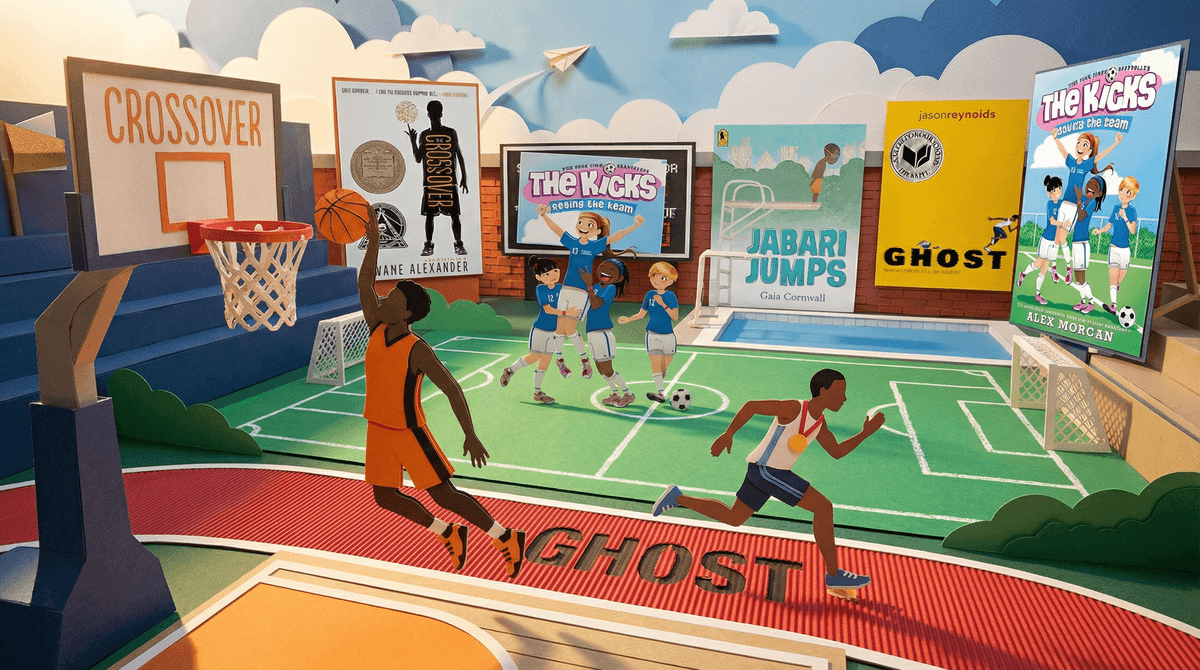
Jabari Jumps by Gaia Cornwall is perfect for kids facing any kind of physical challenge or fear. It's about a kid at the pool working up courage to jump off the diving board—simple, relatable, and the illustrations are gorgeous.
Early Readers (Ages 6-9)
The Kicks series by Alex Morgan (the soccer star) is solid for kids just getting into chapter books. Yes, it's written by a celebrity athlete, but it's actually good—deals with moving to a new school, being the new kid on a struggling team, and finding your confidence.
The Crossover by Kwame Alexander is written in verse, which makes it accessible for kids who find dense text intimidating. It's about twin brothers, basketball, family, and growing apart. Fair warning: it gets emotional. Kids love it, but have tissues ready.
Middle Grade (Ages 8-12)
Ghost by Jason Reynolds is the first in the Track series and it's phenomenal. Castle Cranshaw (Ghost) has a traumatic past and a talent for running—away from his problems and toward something better. Reynolds doesn't sugarcoat poverty, trauma, or the messiness of growing up, but the story is ultimately hopeful and funny.
Curveball: The Year I Lost My Grip by Jordan Sonnenblick deals with a baseball player whose pitching arm gives out. It's really about identity—who are you when the thing you're good at disappears? Great for kids (especially boys) who struggle to articulate feelings.
For girls who feel invisible in sports spaces, Throw Like a Girl by Sarah Henning is about a softball player who goes undercover as a boy to play baseball. It's fun, it's about challenging gender norms in sports, and it doesn't make a huge deal about it—just treats it as an obstacle to overcome.
Young Adult Adjacent (Ages 11+)
The Running Dream by Wendelin Van Draanen is about a runner who loses her leg in an accident. It's about grief, adaptation, and finding a new normal. Not going to lie, it's intense, but it's also incredibly inspiring without being inspiration porn.
Educated by Tara Westover isn't a sports book, but if your kid loved the grit and determination in sports memoirs, this memoir about escaping an abusive household through education hits similar notes of perseverance.
These books can open hard conversations. Many sports books deal with:
- Economic inequality (kids who can't afford equipment or travel teams)
- Racism and discrimination in sports
- Gender barriers
- Body image and physical differences
- Pressure from parents and coaches
- Injury and loss of identity
This is a feature, not a bug. Sports provide a framework for discussing these issues in a way that feels less abstract than a "let's talk about racism" sit-down.
Watch for the intensity level. Some sports books (especially in the middle grade and up category) deal with serious trauma, abuse, or loss. Check Common Sense Media reviews if you want specifics before handing a book to a sensitive kid.
They're great for reluctant readers. The action, shorter chapters, and clear stakes make sports books gateway drugs to reading. Once kids realize books can be as engaging as Fortnite, you're in business.
Sports books aren't just for jocks. They're for any kid learning to navigate failure, find their people, or figure out who they are when things don't go as planned. The best ones use sports as a vehicle to explore universal themes—and they do it without being preachy or boring.
Start with one book that matches your kid's reading level and interests. If they're into basketball, try The Crossover. If they're more into underdogs and humor, Ghost is your move. And if they claim they hate reading? Hand them Curveball and see what happens.
Not sure where to start? Get sports book recommendations for your kid based on your kid's age, interests, and reading level. And if you want to explore more ways to balance screen time with other activities, check out our guide to building screen-free habits.