

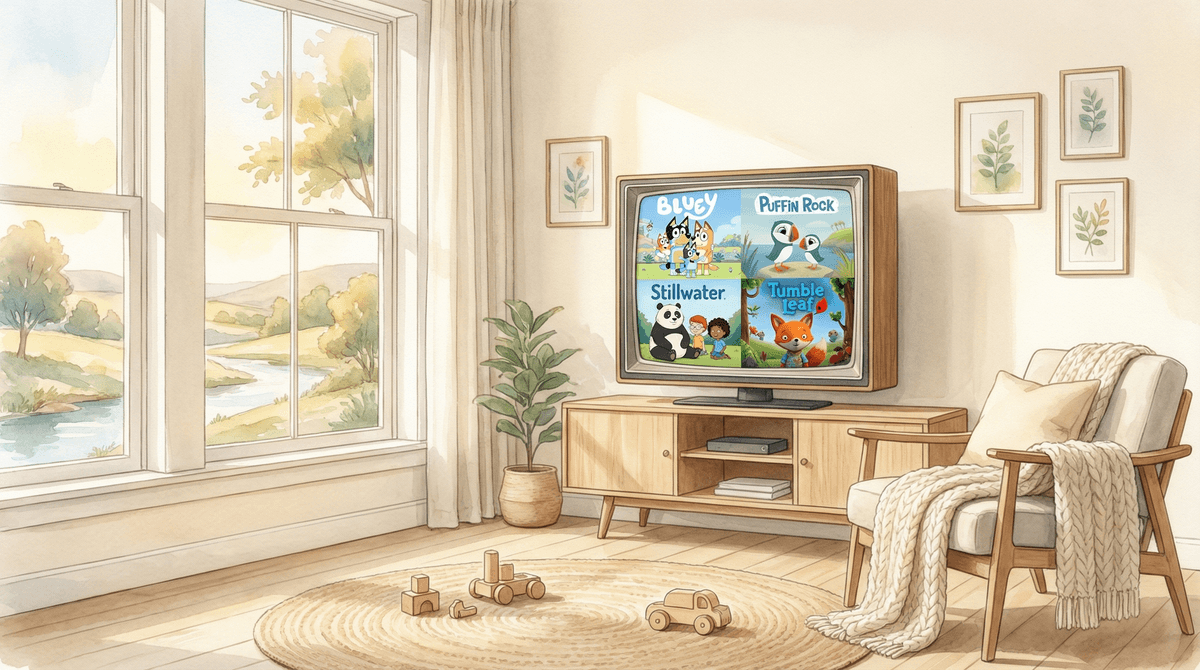
Calm, Gentle TV: The Best Slow-Paced Shows for Sensory-Sensitive Kids
If your kid gets overwhelmed by the frenetic energy of most children's programming, you're not alone. These shows offer gentler pacing, softer visuals, and calmer energy—without being boring:
- Bluey (Ages 2-8) - The gold standard for thoughtful, calm storytelling
- Daniel Tiger's Neighborhood (Ages 2-5) - Predictable structure, gentle lessons
- Tumble Leaf (Ages 3-6) - Gorgeous stop-motion with a meditative quality
- Elinor Wonders Why (Ages 3-6) - Science exploration at a thoughtful pace
- Hilda (Ages 6-10) - Cozy adventure without the chaos
- Puffin Rock (Ages 2-5) - Nature documentary vibes for little ones
Not every kid needs screen time that feels like a sugar rush. Some kids—whether they're autistic, have ADHD, are highly sensitive, or just prefer a calmer vibe—do better with shows that don't assault their nervous systems.
The problem? Most kids' programming is designed to grab and hold attention through rapid cuts, loud music, bright colors, and constant stimulation. It works, but it can be exhausting for sensory-sensitive kids (and honestly, for a lot of neurotypical kids too).
The good news is there's a growing collection of genuinely excellent shows that take a different approach. They're slow-paced without being boring, engaging without being overwhelming, and actually enjoyable for adults to watch alongside their kids.
Before we dive into recommendations, here's what to look for:
Slower pacing - Longer scenes, fewer cuts, time to process what's happening. Shows that let moments breathe instead of racing to the next joke or action sequence.
Softer visuals - Muted color palettes, natural lighting, less visual clutter. Think watercolor illustrations rather than neon explosions.
Gentle audio - Quieter music, less sudden sound effects, characters who speak in normal indoor voices instead of shouting everything.
Predictable structure - Consistent episode formats, clear beginnings and endings, routines that help kids know what to expect.
Emotional regulation - Characters who model calm problem-solving rather than big dramatic reactions to everything.
Not every sensory-sensitive kid needs all of these elements, but these are the common threads in shows that tend to work well.
Bluey (Ages 2-8)
I'm putting this first because it's the rare show that manages to be calming without being boring. The pacing is thoughtful—scenes actually last long enough for you to settle into them. The color palette is soft and naturalistic. The music is beautiful but never overwhelming.
What makes Bluey special for sensory-sensitive kids is that even when the characters are playing exciting games, the show itself maintains a grounded, calm energy. There's no laugh track, no sudden loud noises, no rapid-fire editing. Just really good storytelling about everyday family life.
The 7-minute episode length is also perfect—long enough to feel substantial but short enough that kids aren't committing to a big chunk of time if they're not feeling it.
Daniel Tiger's Neighborhood (Ages 2-5)
This Mr. Rogers successor is practically designed for predictability and calm. Every episode follows the same structure, uses the same musical cues, and moves at a gentle pace. The animation is simple and uncluttered. Characters speak softly and model emotional regulation.
Some parents find it almost too slow, but that's exactly what makes it work for sensory-sensitive kids. There are no surprises, no sudden loud moments, no overstimulation. It's like the weighted blanket of children's television.
The social-emotional lessons are also genuinely useful, especially for kids who need extra support understanding feelings and navigating social situations.
Tumble Leaf (Ages 3-6)
This Amazon original is criminally underrated. The stop-motion animation is gorgeous—soft textures, natural materials, beautiful lighting. The main character, Fig the fox, explores science concepts through gentle experimentation and problem-solving.
What's remarkable is how quiet this show is. There's minimal dialogue, lots of ambient nature sounds, and a dreamy, meditative quality. It's like watching a nature documentary designed for preschoolers. Episodes move slowly enough that kids can really observe and think about what's happening.
If your kid loves sensory play and exploring how things work, this is the show.
Puffin Rock (Ages 2-5)
Narrated by Chris O'Dowd in the most soothing Irish accent you've ever heard, this show follows a young puffin and her baby brother exploring their island home. The animation is soft and painterly, the music is gentle, and the whole vibe is just... cozy.
It's essentially a nature show for very young kids, with simple storylines about baby animals, weather, and the changing seasons. Nothing scary ever happens. Nobody yells. It's just genuinely peaceful television.
Elinor Wonders Why (Ages 3-6)
This PBS show teaches science through observation and inquiry, and it does it at a pace that actually allows kids to think. Elinor the bunny and her friends notice things, ask questions, and figure stuff out methodically.
The animation style is soft and watercolor-like, and the show builds in actual pauses for kids to think about questions before revealing answers. It's the opposite of the rapid-fire "edutainment" approach—this show trusts kids to be curious and patient.
Sarah & Duck (Ages 2-6)
This British show is delightfully weird in the gentlest possible way. A seven-year-old girl and her best friend (who is a duck) have quiet adventures that often involve things like visiting the moon, helping an umbrella find its purpose, or befriending a grumpy rainbow.
The pacing is deliberately slow, the humor is subtle and surreal, and the whole aesthetic is soft and quirky. The narrator has a wonderfully calm voice, and nothing remotely stressful ever happens. It's like the TV equivalent of a cup of chamomile tea.
Hilda (Ages 6-10)
Once kids age out of preschool shows, options get trickier—most shows for older kids ramp up the action and intensity. Hilda is a beautiful exception.
This Netflix series follows a blue-haired girl who moves from the wilderness to the city and has adventures with magical creatures. The animation is gorgeous—inspired by Scandinavian folklore with a muted, cozy color palette. The pacing is thoughtful, with time for quiet moments and reflection.
Yes, there are some mildly scary creatures and occasional tension, but it's handled in a way that feels more like cozy fantasy than intense action. The overall vibe is contemplative and gentle, even during exciting moments.
The Octonauts (Ages 3-6)
While this show has more action than others on this list, it maintains a structured, predictable format that works well for many sensory-sensitive kids. Each episode follows the same pattern: creature in trouble, research what's needed, execute rescue mission, learn facts about the animal.
The underwater setting naturally creates a calmer visual pace, and the characters are consistently kind and collaborative. The music is present but not overwhelming, and there's a reassuring predictability to how problems get solved.
Stillwater (Ages 4-8)
Based on Jon J. Muth's books, this Apple TV+ show features a giant panda who shares Zen wisdom with neighborhood kids. The animation is beautiful and painterly, the pacing is deliberately slow, and the whole show is designed to be calming.
Each episode centers on a problem one of the kids is facing, and Stillwater tells a story (often with gorgeous animated sequences) that helps them think about it differently. It's essentially mindfulness training disguised as a kids' show.
Trash Truck (Ages 3-6)
This Netflix show about a boy and his best friend (who is a trash truck) has a lovely, gentle energy. The animation is simple and clean, the stories are about everyday kid experiences, and there's a sweet, unhurried quality to everything.
The voice acting is naturalistic—kids actually sound like kids, not like adults doing kid voices. And the show embraces quiet moments, whether the characters are watching clouds or just hanging out together.
YouTube can be a minefield for sensory-sensitive kids—the algorithm tends to push high-energy, overstimulating content because that's what drives engagement.
If your kid watches YouTube, consider these calmer channels:
- Hey Bear Sensory - Specifically designed for sensory needs
- Sesame Street - Classic segments at a reasonable pace
- Nature documentaries - Search for age-appropriate nature content
Better yet, download episodes of the shows above so you're not at the mercy of autoplay suggesting increasingly chaotic content.
Ages 2-4: Start with Daniel Tiger, Puffin Rock, or Tumble Leaf. These shows are specifically designed for the youngest viewers with short attention spans and big sensory needs.
Ages 4-6: Bluey, Elinor Wonders Why, and Sarah & Duck offer more narrative complexity while maintaining gentle pacing.
Ages 6-10: Hilda and Stillwater provide age-appropriate content without the intensity of most shows aimed at this age group.
For all ages: Bluey genuinely works across a wide age range and is watchable for adults, making it ideal for families with multiple kids.
Slow doesn't mean babyish. Some of these shows (especially Bluey and Hilda) have sophisticated storytelling that engages older kids and adults. Don't assume your 8-year-old will find Bluey too young—many kids that age love it precisely because it's not trying to be cool or edgy.
Your kid might need a transition period. If your child is used to high-stimulation shows, slower-paced content might initially seem boring. Give it a few episodes. Many parents report that once kids adjust, they actually prefer the calmer vibe and get more engaged with the stories.
These shows are better for you too. Parents of sensory-sensitive kids are often managing their own sensory overload. Having shows you can actually tolerate in the background (or even enjoy watching) makes a real difference in your own stress levels.
Consider the time of day. Even if your kid can handle faster-paced shows sometimes, saving these gentler options for morning wake-up time, before bed, or when they're already dysregulated can be strategic.
It's okay to be selective about streaming services. If you're choosing which streaming services to pay for, knowing that Apple TV+ has Stillwater and Helpsters, or that Amazon has Tumble Leaf, might actually factor into your decision. Most of these shows are also available through your library's streaming services if you want to preview before subscribing.
Some popular "calm" recommendations don't actually work well for sensory-sensitive kids:
Cocomelon - Despite the nursery rhyme content, the animation is actually quite overstimulating with constant movement, bright colors, and rapid cuts. Many occupational therapists specifically recommend against it for sensory-sensitive kids.
Most Disney Junior shows - While not as intense as Nickelodeon or Cartoon Network content, shows like Mickey Mouse Clubhouse still have a lot of visual and auditory stimulation with the constant songs, sound effects, and direct-to-camera interactions.
Educational YouTube channels - Even well-intentioned content can have overstimulating editing, loud music, and too much happening on screen. If you're using YouTube for learning content, watch it with your kid first.
Screen time for sensory-sensitive kids doesn't have to be a source of stress or overstimulation. These shows prove that content can be engaging, educational, and entertaining while still being gentle on nervous systems.
The key is being intentional about what you're putting on—and recognizing that what works for other kids in your child's grade might not work for yours, and that's completely fine. Your family's screen choices don't need to match community norms if those norms don't serve your kid's needs.
Start with one or two shows from this list and see what resonates. Pay attention to how your child feels during and after watching—that's your best guide for what's working.
Try a few episodes of Bluey - It's the most universally loved show on this list and available on Disney+. Even if your kid is older than the target age, give it a shot.
Make a list of what's available on your current streaming services - No need to subscribe to everything. See which of these shows you already have access to and start there.
Create a "calm shows" profile or playlist - Most streaming services let you create separate profiles or lists. Having a designated space for these gentler shows makes it easier to default to them, especially when your kid is already overwhelmed and can't make decisions.
Talk to your kid about what helps them feel calm - Older kids especially can start to recognize which shows make them feel good versus which ones leave them feeling jangled. Building that self-awareness is valuable.
And remember: finding the right screen content for a sensory-sensitive kid is just one piece of the puzzle. If you're looking for more strategies around managing screen time with neurodivergent kids or alternatives to screens for sensory regulation, Screenwise has guides for that too.