

Look, we've all been there. Your kid is obsessed with animals, you're trying to find something educational that won't make you want to throw the remote out the window, and you're drowning in a sea of options that range from "actually incredible" to "why does this cartoon dog have a British accent and existential dread?"
Animal-focused shows can be genuinely amazing for kids. They teach empathy, introduce scientific concepts, spark curiosity about the natural world, and—when done well—create those rare moments where you actually don't mind sitting down to watch with them. But the quality spectrum is wild (pun intended). Some shows are basically nature documentary gold, while others are just... talking animals selling you plastic toys.
So let's break down the actual good stuff, organized by what your kid might be into and what you're hoping they'll get out of it.
Ages 6+
If your kid is ready for real animals doing real things, these are your go-tos:
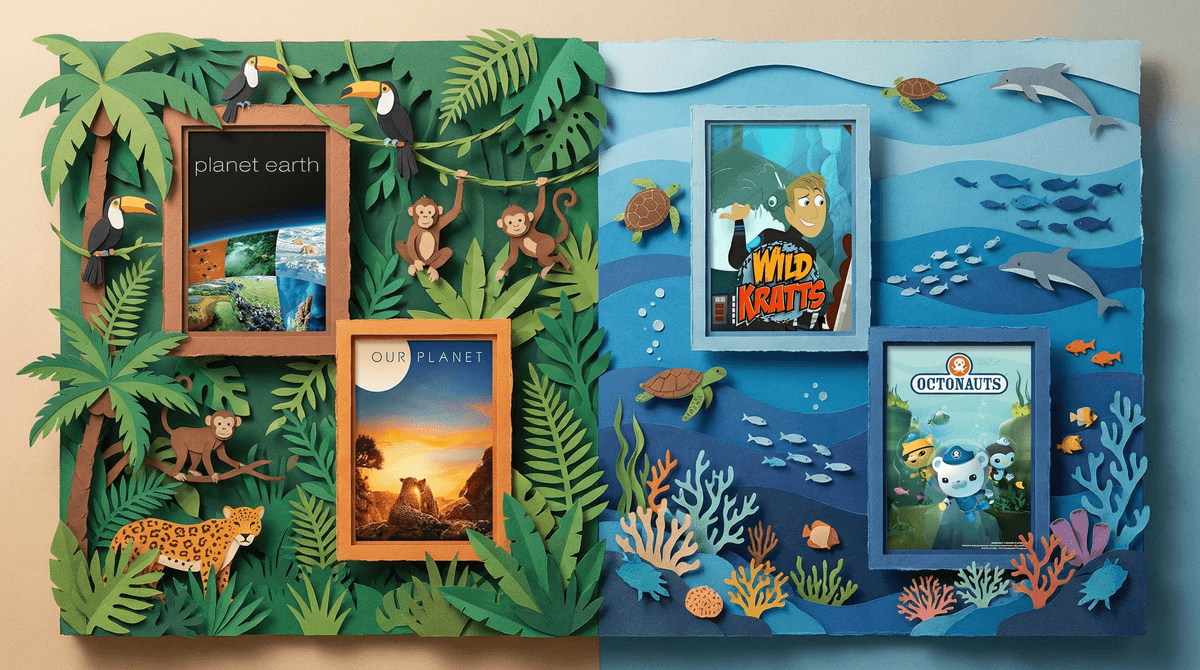
Our Planet and Planet Earth (both on Netflix) are absolutely stunning. David Attenborough's voice, incredible cinematography, and actual educational content about ecosystems, climate, and animal behavior. Fair warning: there are predator-prey moments that might be intense for sensitive kids, but they're not gratuitous. These shows treat nature with respect, not Disney-fied sentiment.
Life in Color with David Attenborough is slightly more accessible for younger viewers—it focuses on how animals see and use color, which is fascinating and less "circle of life" intense.
Ages 4-8
Octonauts is the sweet spot for this age range. It's animated, so no real animals getting eaten, but it's shockingly educational about marine biology. Each episode features a real sea creature, teaches actual facts, and the characters model problem-solving and teamwork. It's also genuinely entertaining—the theme song will live in your head rent-free, but in a good way.
Wild Kratts is another winner. The Kratt brothers (yes, the same ones from the '90s) teach kids about animal abilities and adaptations. It's got that PBS earnestness, but it works. Kids learn about real science, and the "creature power suits" concept makes it engaging without being purely commercial.
Ages 3-6
Bluey technically features animals (dogs), but it's really about family dynamics, imaginative play, and emotional intelligence. It's the rare show where parents are actually competent and present. You will cry during some episodes. This is normal.
Elinor Wonders Why is PBS gold for the younger set. It's about a bunny who asks questions about nature and science, and the show actually walks through scientific observation and inquiry. It's gentle, sweet, and legitimately educational without being preachy.
Ages 5-9
Hilda (Netflix) features a girl and her deer-fox companion navigating a world of magical creatures. It's beautifully animated, has genuine emotional depth, and while the animals aren't realistic, the show teaches curiosity, bravery, and respect for nature. Slightly more intense than preschool fare, but in a good way.
Puffin Rock is a hidden gem for younger kids—it's about puffin siblings exploring their island home. Chris O'Dowd narrates, it's set in Ireland, and it's just... lovely. Calm, educational, and won't make you want to fake a work emergency.
Animal shows done right can be genuinely transformative. They build empathy—kids who learn about animals and their habitats tend to develop stronger emotional intelligence and environmental awareness. They introduce scientific thinking—observation, cause and effect, adaptation. And they can spark lifelong interests in biology, conservation, and the natural world.
The key is finding shows that respect both the animals and your kid's intelligence. The best ones don't anthropomorphize to the point of absurdity (looking at you, shows where animals wear clothes and have smartphones). They either commit to realistic animal behavior or use animal characters to explore genuine themes.
Oversimplification: Some shows present nature as all cute and cuddly, which... it's not. Look for shows that acknowledge complexity without being traumatizing.
Commercial tie-ins: If every character is also a toy for sale, that's a red flag. Screenwise can help you evaluate whether a show is primarily content or primarily marketing .
.
Scary content: Nature documentaries can include predation, death, and climate change impacts. Preview episodes if your kid is sensitive, or watch together so you can provide context.
Outdated science: Some older shows have information that's been updated. Not a dealbreaker, but worth being aware of.
Ages 3-5: Stick with animated shows or very gentle nature content. Octonauts, Elinor Wonders Why, and Puffin Rock are perfect.
Ages 6-8: You can start introducing real nature documentaries, but maybe preview first. Wild Kratts bridges the gap nicely between animated and realistic.
Ages 9+: Most nature documentaries are fair game, though you might want to watch climate-focused content together to provide context and avoid eco-anxiety spirals.
The best animal shows combine entertainment with genuine education, respect both animals and viewers, and create opportunities for curiosity and conversation. Whether your kid is into marine biology, wants to understand why their dog does weird things, or is just obsessed with penguins, there's quality content out there.
Start with one show that matches your kid's age and interests, watch a few episodes together, and see what questions come up. The real magic happens when the show sparks conversations that go beyond the screen—when your kid starts noticing birds in your backyard or asking questions about how animals adapt to their environments.
And if you end up with the Octonauts theme song stuck in your head for three weeks straight? Welcome to the club. At least they're learning about cephalopods.
Not sure where to start? Check out our guide to age-appropriate nature content or explore alternatives if your kid has outgrown their current favorites. And if you're trying to balance screen time with actual outdoor exploration, we've got thoughts on that too.