

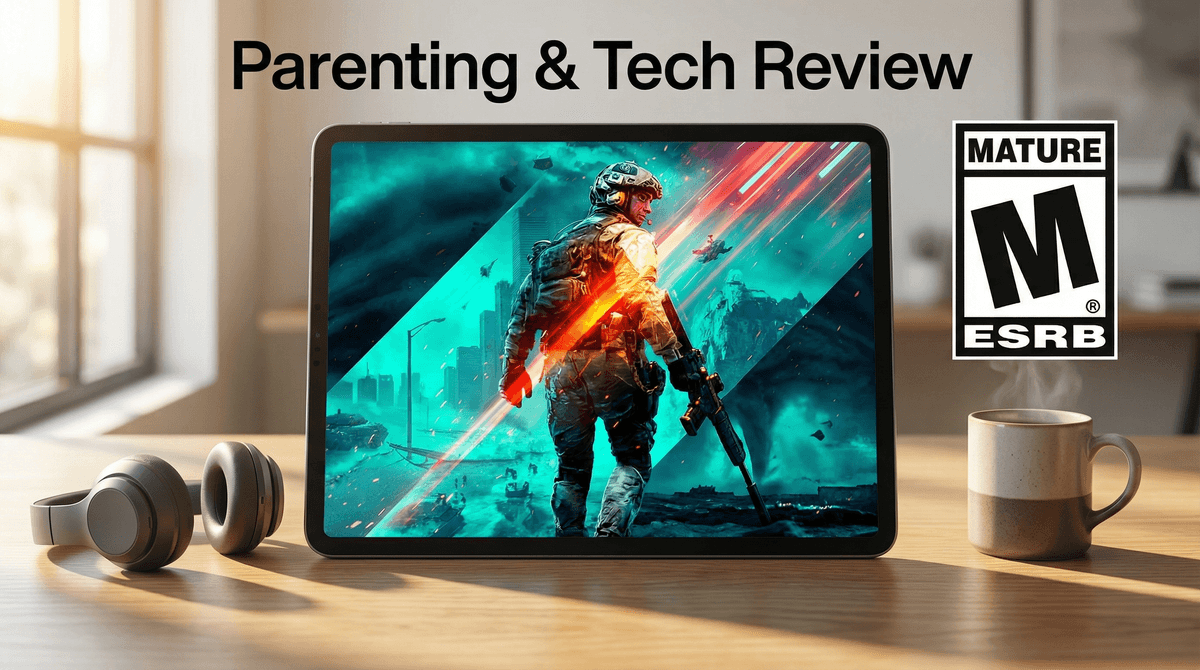
Battlefield 6 ESRB Rating: What the M for Mature Really Means for Your Teen
Battlefield 6 carries an M for Mature rating (17+) from the ESRB, primarily for intense violence, blood and gore, and strong language. The rating is accurate—this is a realistic modern warfare shooter where players shoot, stab, and blow up other soldiers in graphic detail. If your 13-15 year old is asking to play, you need to know exactly what that M rating means beyond just the number on the box.
Quick facts:
- Blood splatters, dismemberment, and realistic injury effects
- Frequent strong language (f-bombs in campaign and multiplayer voice chat)
- Realistic military violence with modern weapons
- Online multiplayer means exposure to unmoderated voice chat
- No sexual content or drug use
Battlefield 6 (officially titled Battlefield 2042 at launch, though the community often calls the franchise entries by number) is the latest installment in EA's long-running military shooter franchise. Unlike Call of Duty, which focuses on tight, fast-paced combat, Battlefield is known for massive 128-player battles with vehicles, destructible environments, and squad-based teamwork.
Your teen wants to play it because their friends are playing it, because the massive scale feels epic, and because frankly, it's one of the most technically impressive shooters out there. The tornado that rips across the map? The skyscraper that collapses in real-time? It's genuinely cool.
The ESRB slaps an M rating on games that are "generally suitable for ages 17 and up" and may contain "intense violence, blood and gore, sexual content, and/or strong language." For Battlefield 6, here's what that actually means:
Violence: Realistic and Intense
This isn't Fortnite where players disappear in a puff of light. Battlefield 6 depicts modern military combat with realistic weapons, blood effects, and injury animations. When you shoot someone, there's blood spatter. Explosions dismember bodies. Headshots produce visible gore. The game aims for authenticity in how modern warfare looks and feels.
The violence is constant—it's a multiplayer shooter where the entire point is eliminating enemy players. In a typical 30-minute match, your teen will kill dozens of enemy soldiers and likely die a dozen times themselves. The campaign mode (if they play it) includes scripted moments of close-quarters combat, interrogations, and battlefield executions.
Parent perspective: This is several steps beyond the cartoon violence of Splatoon or even Apex Legends. The realistic presentation matters. If you're uncomfortable with your teen watching R-rated war movies, you should be equally uncomfortable with this.
Language: Soldiers Swear
The campaign features military characters who speak like actual soldiers, which means frequent use of f-bombs, sh*t, and other strong language. It's not gratuitous—it's contextual to military settings—but it's consistent.
More importantly, online multiplayer voice chat is completely unmoderated. Your teen will hear everything from creative tactical callouts to racist slurs, depending on who's in their squad. EA provides tools to mute players and disable voice chat entirely, but the default experience includes whatever comes out of other players' mouths.
What's NOT in the Rating
Battlefield 6 contains no sexual content, no nudity, no drug use. It's purely focused on military combat. This isn't Grand Theft Auto where there are strip clubs and drug deals. The mature rating is entirely about violence and language.
Here's the reality: somewhere between 40-60% of 13-15 year olds are playing M-rated shooters, depending on your community. The ESRB rating is a guideline, not a law (except in terms of retail sales). Many parents treat M-rated games on a case-by-case basis rather than as a hard age cutoff.
That said, the rating exists for a reason. Research on violent video games and aggression is nuanced—there's no evidence that games cause violence , but there is evidence that exposure to realistic violence can desensitize kids to real-world violence and reduce empathy, particularly in younger teens who are still developing emotional regulation.
The question isn't "is this game evil?" The question is: Is your specific teen ready for realistic depictions of modern warfare?
Consider:
- Emotional maturity: Can they distinguish between game violence and real-world consequences? Do they understand that war is not actually fun?
- Sensitivity: Are they prone to nightmares or anxiety from intense media?
- Context: Are they learning about military history, geopolitics, and the human cost of war elsewhere in their life, or is this their only exposure to combat?
Ages 10-12: Hard no. The realistic violence and gore are simply too intense for this age group. If they want tactical shooters, Splatoon 3 offers similar team-based gameplay without any blood. Valorant is also a better middle-ground option—still a shooter, but with stylized, less realistic violence.
Ages 13-15: This is the gray zone where most parents are making case-by-case decisions. Some 13-year-olds are mature enough to handle this content; others aren't. If you're considering it:
- Watch gameplay together first (YouTube has plenty of walkthroughs)
- Discuss the difference between games and real military conflict
- Set boundaries around voice chat (mute by default is smart)
- Check in regularly about what they're experiencing
Ages 16+: Most teens this age can handle the content maturity-wise, but you still need to monitor time spent and online interactions. The bigger issue at this age isn't the violence—it's whether Battlefield is consuming 30 hours a week that could go toward homework, sleep, or real-world social connection.
It's Not Just About the Rating
The M rating tells you about content, but it doesn't tell you about:
- Addictive design: Battlefield uses progression systems, battle passes, and daily challenges to keep players engaged. It's designed to be habit-forming.
- Social pressure: If your teen's entire friend group plays, being the only one who can't creates real social friction.
- Microtransactions: The game includes cosmetic purchases that can add up quickly. Learn about how in-game purchases work.
Alternatives to Consider
If you're not comfortable with Battlefield but want to say yes to something:
- Fortnite: Still a shooter, but with cartoon violence and no blood (rated T for Teen)
- Rocket League: Competitive team-based gameplay without any violence
- Minecraft: Creative and survival modes that scratch the "building and strategy" itch
- Among Us: Social deduction with teamwork elements
Check out our guide to alternatives to violent shooters for more options.
The Voice Chat Problem
This deserves its own callout: online multiplayer voice chat is where the worst of gaming culture lives. Your teen will encounter:
- Toxic trash talk and personal insults
- Racist, sexist, and homophobic slurs
- Adults who shouldn't be talking to kids
EA provides reporting tools, but enforcement is inconsistent. Your best bet is requiring your teen to either play with voice chat muted or only in private parties with friends they know IRL. This isn't helicopter parenting—it's acknowledging that anonymous online spaces are often hostile, especially to younger players.
The M rating on Battlefield 6 is accurate and appropriate. This is a realistic military shooter with intense violence, blood, gore, and strong language. It's not appropriate for kids under 13, and even for 13-15 year olds, it requires careful consideration of your individual teen's maturity and your family's values around media violence.
If you decide to say yes:
- Play together first so you know exactly what they're experiencing
- Disable or heavily restrict voice chat
- Set clear time limits (Battlefield matches are long—30-45 minutes—so "one more game" is a big ask)
- Keep the conversation going about the difference between game violence and real-world consequences
If you decide to say no:
- Be prepared to offer alternatives that still let them connect with friends
- Explain your reasoning clearly—teens respect thoughtful boundaries more than arbitrary ones
- Revisit the conversation in 6-12 months as they mature
Want to dig deeper? Check out:
Still have questions? Get answers about specific concerns or browse our complete guide to teen gaming.
The decision is yours to make based on your teen, your values, and your comfort level. Just make sure it's an informed decision, not one driven by "but everyone else is playing it."