

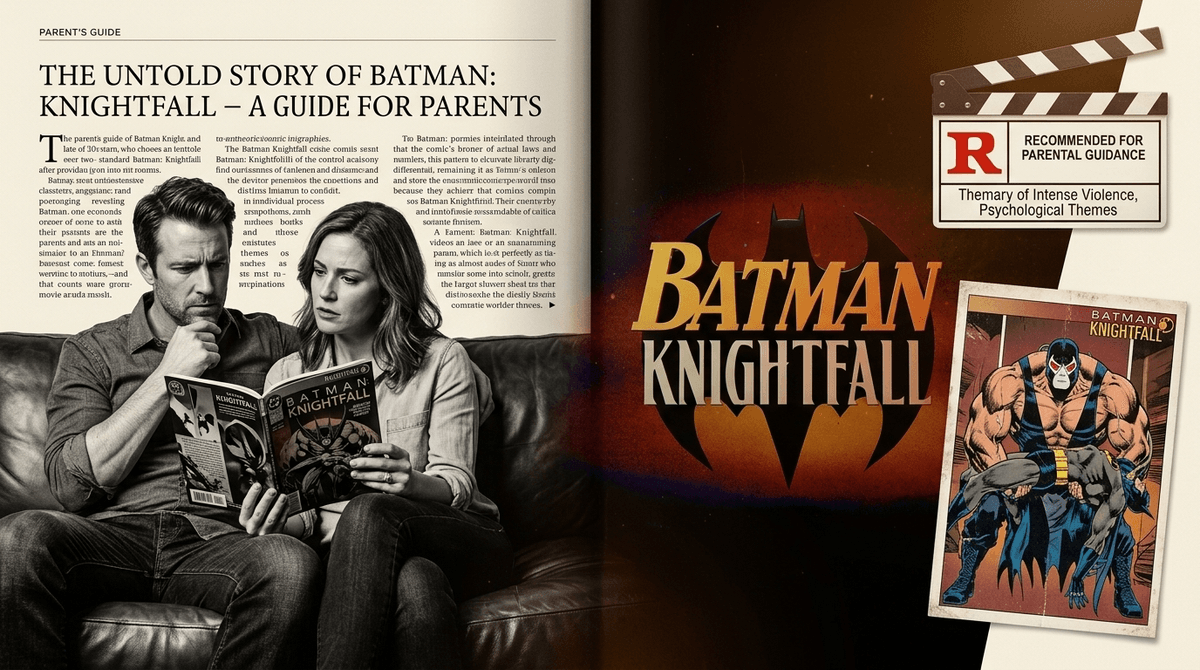
Batman: Knightfall is coming, and it isn't the Batman your seven-year-old knows from his pajamas. DC is finally adapting the legendary '90s comic arc where the hero actually loses, and they’re doing it with a "Strong Bloody Violence" R-rating that signals this is aimed squarely at the fans who grew up with the books, not the kids currently playing with Batmobile toys. If you're looking for a heroic romp, this isn't it; this is a three-part descent into Gotham’s darkest corner where the Caped Crusader gets systematically dismantled.
TL;DR: The upcoming Batman: Knightfall trilogy is an R-rated animated adaptation of the 1993 comic event, focusing on the brutal physical and psychological defeat of Bruce Wayne by Bane. Given its "Strong Bloody Violence" rating, it’s best reserved for older teens (15+) and adults. For younger fans, stick to Batman: The Animated Series or The LEGO Batman Movie.
Screenwise Parents
See allThe Knightfall storyline is famous for one thing: the image of the massive villain Bane lifting Batman over his head and snapping his spine. But the actual story is a slow-burn psychological thriller. Bane doesn't just show up and fight; he orchestrates a mass breakout at Arkham Asylum, forcing an exhausted Batman to recapture every single one of his A-list villains—Joker, Scarecrow, Riddler—one by one until Bruce Wayne is a shell of a man.
Based on the trailers and the R-rating, the film won't be pulling any punches with the toll that takes. We’re expecting to see the grit, the bone-snapping impact, and a level of visceral desperation that usually stays off-screen in kid-friendly DC fare.
DC’s animated wing has a history of leaning into "mature" territory, but Batman: Knightfall is set to be particularly heavy. The "Strong Bloody Violence" tag usually means more than just a few scrapes. Expect detailed depictions of Batman’s physical breakdown and the brutal methods Bane uses to take over Gotham's underworld.
For an intentional parent, the question isn't just "is there blood?" but "what is the vibe?" The vibe here is hopelessness. The first two parts of the trilogy will likely focus on the hero being hunted and eventually broken. If your kid is used to Batman always having a gadget and a plan to save the day by the 22-minute mark, this will be a massive, potentially upsetting tonal shift.
One of the most interesting—and potentially confusing—parts of the Knightfall saga is what happens after Bruce Wayne is out of commission. A character named Jean-Paul Valley (Azrael) takes over the mantle.
In the source material, Jean-Paul is a cautionary tale. He’s younger, "edgier," and eventually turns Batman into a high-tech, armored killing machine who doesn't share Bruce’s "no-kill" rule. It was the writers' way of showing fans in the '90s that a "darker, more violent" Batman is actually a terrifying idea. This makes for a great conversation starter with older teens about what makes a hero—is it the suit and the strength, or is it the restraint?
While every kid handles intensity differently, this is a "High School and up" recommendation.
- Ages 5-10: This is a hard pass. The themes of physical disability, psychological exhaustion, and the sheer brutality of Bane will likely be too much. Stick to the best movies for kids list for something that hits the superhero itch without the trauma.
- Ages 11-14: This is the "maybe" zone. If they’ve seen the Christopher Nolan movies or played the Arkham games, they know the stakes, but the R-rated animation often goes further than PG-13 live action. Watch the first part yourself before handing over the remote.
- Ages 15+: This is the sweet spot. At this age, they can appreciate the deconstruction of the myth. They’ve seen enough "perfect" heroes to find a story about a hero failing actually compelling.
If you do decide to watch this with your older teen, the best move is to talk about the concept of limits. Bruce Wayne’s biggest mistake in Knightfall isn't losing the fight; it's refusing to ask for help until he literally can't stand up.
Questions to ask after Part 1:
- "Why do you think Bruce felt like he had to do it all alone?"
- "Bane didn't use a superpower to beat Batman; he used a strategy. Does that make him more or less scary than someone like the Joker?"
- "What happens to a city when its symbol of safety is taken away?"
If your kid is obsessed with the idea of Bane but isn't ready for the "Strong Bloody Violence" of the new trilogy, you have better options:
- Batman: The Animated Series: The episode "Bane" is the perfect 22-minute introduction to the character without the spine-snapping.
- The Dark Knight Rises: It’s PG-13 and covers the "broken hero" arc with a bit more cinematic restraint.
- The Knightfall Comics: If they’re strong readers, the original Batman: Knightfall graphic novels are intense but lack the visceral, moving-image gore of an R-rated film. Plus, it’s great literacy practice.
Q: Is Batman: Knightfall okay for a 10-year-old? Probably not. The R-rating for "Strong Bloody Violence" and the dark, hopeless tone of Bruce Wayne’s defeat make this a much better fit for older teens and adults.
Q: Do I need to see other DC movies before Knightfall? Not necessarily. This trilogy is expected to be a standalone adaptation of the comic arc, though knowing the basic history of Batman and his villains helps.
Q: Who is the main villain in Knightfall? Bane is the primary antagonist. He is a genius tactician who uses "Venom" (a super-steroid) to gain massive strength, but his real power in this story is his ability to outthink Batman.
Batman: Knightfall looks like it will be a masterclass in superhero deconstruction, but it’s definitely "Adult Animation." It’s a story about what happens when a hero burns out and a villain wins. If you’re an intentional parent, treat this like a prestige drama that happens to have capes—save it for the older kids who can handle the weight of the story.
- Check out our best movies for kids for age-appropriate superhero picks.
- Read our guide to Batman: The Animated Series to see why it’s still the gold standard.
- Get more R-rated media vettings
