

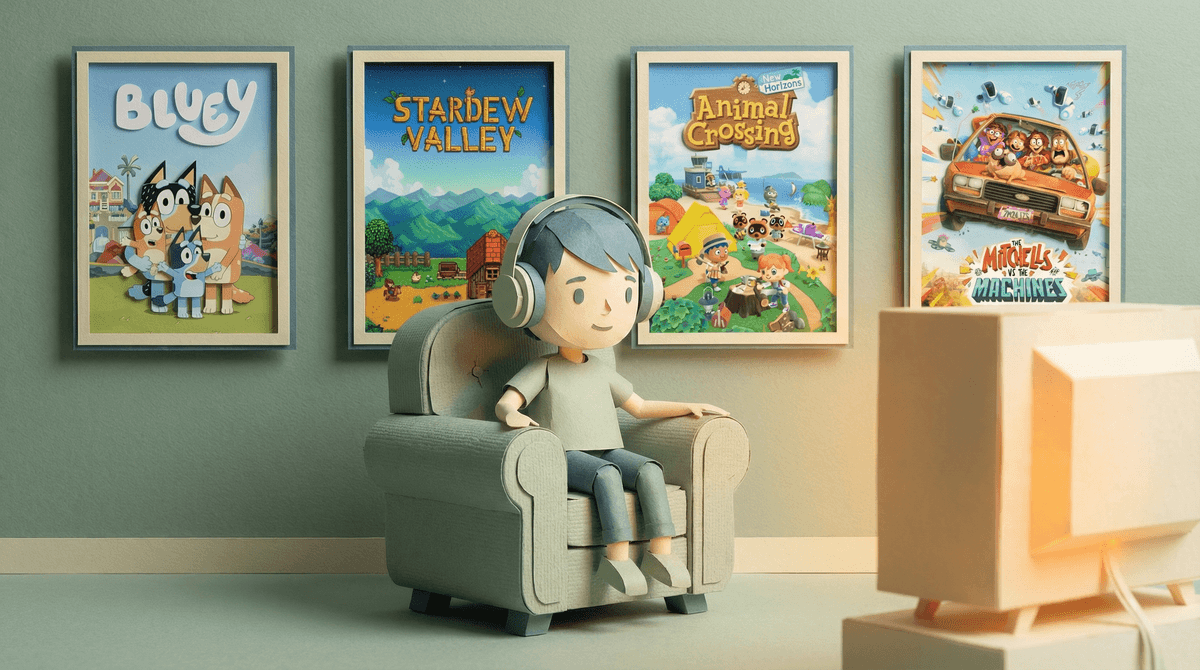
If you're parenting an autistic child, you already know that what seems like a totally normal viewing experience to neurotypical kids can be completely overwhelming—or even painful—for your child. We're talking about sensory sensitivities that can make certain sounds, visual effects, or even narrative structures genuinely distressing rather than just "a little annoying."
Media sensitivity isn't about being "too sensitive" or "picky." It's about how autistic brains process sensory input differently. That sudden loud noise in a kids' movie? For many autistic kids, it's not just startling—it can trigger genuine physical discomfort or anxiety that lingers long after the scene ends. The flickering lights in that action sequence? Could trigger sensory overload or even migraines. The unpredictable plot twist? Might cause real distress for a child who finds comfort in predictability.
The tricky part is that media sensitivity looks different for every autistic child. Some kids are fine with loud sounds but can't handle fast cuts. Others can watch chaotic action scenes all day but melt down if a character acts "out of character." There's no one-size-fits-all approach here.
Let's get specific about what might cause issues:
Auditory triggers:
- Sudden loud noises (jump scares, explosions, screaming)
- High-pitched sounds (squeaky voices, alarms, certain musical instruments)
- Overlapping dialogue or too many sounds at once
- Specific frequencies that just hit wrong
Visual triggers:
- Flashing or strobing lights
- Rapid scene changes or quick cuts
- Chaotic visual composition (too much happening on screen)
- Certain color palettes or contrast levels
- Close-ups of faces showing intense emotions
Narrative triggers:
- Unpredictability or plot twists
- Characters in distress or danger
- Social conflict or misunderstandings
- "Cringe" humor based on embarrassment
- Ambiguous endings or unresolved storylines
Emotional content:
- Secondhand embarrassment scenes
- Characters being treated unfairly
- Intense emotional expressions
- Situations that feel "wrong" or unjust
Here's the thing: modern kids' content is intense. Animation studios have gotten really good at creating stimulating content that grabs attention, but that often means more visual complexity, louder sound design, and faster pacing than ever before. What passed as a "kids' show" in 2005 is wildly different from what's on streaming platforms now.
Plus, the shift to streaming means less natural breaks. Remember commercial breaks? They were actually helpful processing time. Now kids can—and do—binge content for hours without natural stopping points, which compounds sensory overload.
And let's be honest: a lot of popular kids' content right now is genuinely overstimulating even for neurotypical kids. Cocomelon has been criticized for its hyperstimulating editing. YouTube content often features rapid cuts, loud reactions, and constant sensory input designed to hold attention at all costs.
Ages 2-5: At this age, you have the most control, which is good because sensory sensitivities are often most intense in early childhood. Look for:
- Slow-paced shows with predictable structures (Bluey is genuinely excellent here—calm, predictable, emotionally intelligent)
- Clear audio without sudden loud sounds
- Simple visual compositions
- Gentle narratives without scary moments
Skip: Most YouTube kids' content (it's designed for maximum stimulation), shows with laugh tracks (overwhelming audio), anything with jump scares even if they're "mild."
Ages 6-9: Your child might start requesting what their peers watch, which gets complicated. Some strategies:
- Preview everything first (yes, really—at least watch key scenes)
- Use closed captions to help with audio processing and give you a heads-up on loud scenes
- Start with lower-stakes episodes (many series have "calm" episodes vs. high-action ones)
- Consider watching together so you can fast-forward through triggering moments
Shows like Avatar: The Last Airbender have intense moments but also predictable structure and clear emotional arcs. Minecraft can be great because your child controls the pace and sensory input.
Ages 10-13: Peer pressure intensifies here. Your kid might want to watch what everyone's talking about even if it's genuinely uncomfortable for them. This is where you need to have real conversations about self-advocacy:
- Help them identify their specific triggers
- Teach them it's okay to look away or cover ears during certain scenes
- Discuss the difference between "this is uncomfortable but I can handle it" and "this is genuinely distressing"
- Learn about accommodations that can help

Ages 14+: Teens often develop more tolerance for sensory input, but not always. Some autistic teens still need significant accommodations. The goal here is helping them understand their own needs and advocate for themselves. They might want to watch Stranger Things because everyone at school is talking about it, but they need strategies for managing the horror elements.
Before watching:
- Read detailed parent reviews (Common Sense Media is good for this)
- Check "Does the dog die?" website for specific trigger warnings
- Watch the first episode yourself
- Discuss what to expect: "This show has some loud battle scenes, so we can turn down the volume during those parts"
During watching:
- Keep subtitles on (helps with audio processing and predictability)
- Remote in hand, ready to pause or skip
- Watch together when possible, especially new content
- Create a "stop signal" your child can use without explanation
- Consider lowering brightness or using blue light filters
After watching:
- Process what happened, especially confusing social situations
- Discuss what worked and what didn't
- Update your mental notes about triggers
Technical accommodations:
- Most streaming platforms let you adjust audio settings—use it
- Reduce brightness on screens
- Use headphones with volume limiters
- Consider watching on a smaller screen (less overwhelming than a big TV)
Games add another layer because they're interactive. Some considerations:
Helpful aspects:
- Player controls the pace
- Can often adjust audio/visual settings extensively
- Predictable game mechanics can be soothing
- Many games have "creative" or "peaceful" modes
Potential issues:
- Sudden game events (enemy attacks, jump scares)
- Competitive pressure in multiplayer games
- Voice chat (overwhelming and unpredictable)
- Flashing effects during gameplay
Stardew Valley, Animal Crossing, and creative mode in Minecraft are often great choices—player-paced, low-stress, predictable. Meanwhile, Fortnite with its sudden combat and social pressure might be overwhelming.
Here's what nobody talks about enough: media is social currency for kids. Your autistic child might desperately want to watch something that's genuinely uncomfortable for them because everyone at school is talking about it.
This is hard. You're balancing sensory needs with social connection. Some approaches:
- Help them find "entry points" to conversations without full viewing (watching recap videos, reading episode summaries)
- Look for fandoms around more sensory-friendly content
- Validate that it's genuinely unfair they can't easily access what peers are watching
- Help them find their people—often other neurodivergent kids with similar interests
Sometimes the answer is: "We'll watch this together, and you can step out during the parts that are too much, and I'll fill you in." Sometimes it's: "This one is genuinely not going to work for you, and that's okay, and here's how we can help you still be part of conversations about it."
A show can be fine content-wise for your child's age but completely inappropriate sensory-wise. A 10-year-old might be emotionally ready for The Mitchells vs. The Machines but not sensory-ready for its incredibly fast-paced, visually chaotic animation style.
Trust your knowledge of your child over age ratings. A "calm" show for 6-year-olds might actually be perfect for your 11-year-old who needs low sensory input.
Media sensitivity isn't pickiness—it's a real neurological difference that deserves accommodation. Yes, it makes media choices more complicated. Yes, it can feel isolating when your child can't watch what their peers watch. Yes, you'll spend time previewing content that other parents just throw on.
But here's what you're actually doing: teaching your child to understand their sensory needs, advocate for accommodations, and make choices that support their wellbeing rather than just going along with what everyone else is doing. These are life skills that matter way beyond screen time.
The goal isn't to find "perfect" content (it doesn't exist). The goal is to build a media diet that's mostly comfortable, occasionally challenging in manageable ways, and always respectful of your child's sensory reality.
This week:
- Have a conversation with your child about what bothers them most about shows/games (or observe if they're too young to articulate it)
- Test out one new accommodation (subtitles, lower volume, dimmer screen)
- Preview one show your child has been asking to watch
This month:
- Create a list of "safe" content you can rely on for calm days
- Experiment with one show that's slightly outside the comfort zone
- Explore sensory-friendly gaming options
Ongoing:
- Keep notes about what triggers you discover (you'll forget otherwise)
- Revisit content periodically—sensitivities can change
- Connect with other parents of autistic kids about their media finds
You're not being overprotective. You're being responsive to your child's actual needs. That's just good parenting.