

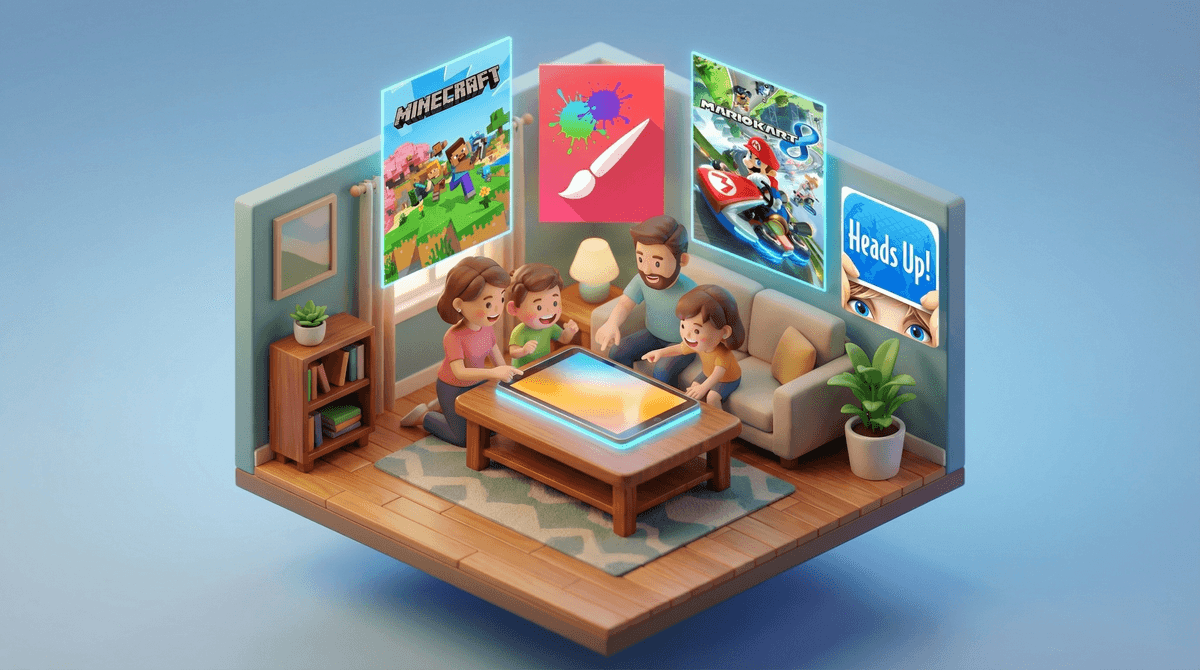
Look, we all know the irony. We're trying to reduce screen time, create more connection, get everyone off their devices... and here I am suggesting you download more apps. But hear me out.
Not all screen time is created equal. There's a massive difference between everyone scrolling their own feeds in separate rooms versus gathering around the kitchen table to collaborate on something together. The right apps can actually create shared experiences that spark conversation, laughter, and genuine connection—the kind where you're looking at each other, not just at screens.
These aren't apps that isolate. They're digital tools that bring people into the same space, working toward the same goal, or creating something together. Think of them less like "screen time" and more like "digital board games" or "collaborative art projects that happen to use technology."
The research is pretty clear: co-viewing and collaborative screen time has completely different effects on kids than solo consumption. When you're playing together, you're modeling problem-solving, teaching sportsmanship, negotiating rules, and having conversations that wouldn't happen otherwise.
Plus, let's be real—kids are going to use technology. If you can find ways to be part of their digital world rather than constantly policing it from the outside, you're building bridges. When you play Minecraft together, you're not just placing blocks—you're learning what your kid values, how they think creatively, and what makes them excited.
And honestly? Sometimes you just need 30 minutes where everyone's in a good mood and no one's fighting. These apps can be that.
Collaborative Gaming
Minecraft (Ages 7+)
The OG family bonding game. Creative mode is perfect for building together without combat stress. You can work on massive projects together—castles, cities, pixel art recreations of your house. The beauty is that everyone can contribute at their skill level. Your 7-year-old can gather materials while your 12-year-old architects the design.
Among Us (Ages 9+)
This is basically Mafia/Werewolf in space. You need at least 4-5 people, so it's perfect for families or when cousins visit. The discussions about who's the impostor are where the real bonding happens—lots of laughter, accusations, and "I can't believe you thought it was me!" moments. Fair warning: younger kids might struggle with the deception element.
Mario Kart Tour (Ages 6+)
Racing games are great equalizers. You can set up tournaments, cheer each other on, and the chaos of power-ups means anyone can win. The mobile version isn't as good as console Mario Kart, but it's accessible if you don't have a Switch.
Creative Collaboration
Procreate (Ages 8+)
If you have an iPad, this is hands-down the best digital art app. Take turns adding to a drawing, create a family comic strip together, or just doodle side by side. The time-lapse replay feature is magical—you can watch your creation come to life.
Toontastic (Ages 5-10)
Google's free app for creating animated stories. Kids design characters, record voices, and animate scenes. This is perfect for younger kids who want to make their own cartoons. Work together on the story, take on different character voices, and you've got a family production studio.
GarageBand (Ages 8+)
Make music together even if nobody plays an instrument. Layer loops, record silly songs, create theme music for your family. It's surprisingly intuitive and the results actually sound good.
Puzzle and Problem-Solving
The Room series (Ages 10+)
Gorgeous 3D puzzle games where you manipulate intricate boxes and mechanisms. These are perfect for huddling around one device together, pointing out details, and solving mysteries as a team. Not scary, just atmospheric and engaging.
Monument Valley and Monument Valley 2 (Ages 6+)
Stunning optical illusion puzzles. The second one is specifically about a mother and child's journey, which adds emotional weight. These are short enough to complete in one sitting and beautiful enough that everyone wants to watch.
Heads Up! (Ages 7+)
The Ellen DeGeneres guessing game. One person holds the phone to their forehead while others give clues. It's charades meets 20 questions. You'll need at least 3 people, but it's perfect for family game night and gets everyone laughing.
Shared Experiences
Pokémon GO (Ages 7+)
Gets everyone outside and walking together. Make it a weekend tradition to hunt for Pokémon at the park. The community days and events give you something to plan around together.
SkyView (Ages 5+)
Point your phone at the night sky and identify constellations and planets together. Take it camping or just into the backyard. It transforms stargazing from "look at the dots" to "oh wow, that's Saturn."
Geocaching (Ages 6+)
Real-world treasure hunting using GPS. There are probably dozens of hidden caches within a mile of your house. It turns a regular walk into an adventure.
Not every "multiplayer" app is actually good for families. Here's what doesn't work:
Battle royale games like Fortnite or PUBG can be fun, but the stress level and skill gaps often mean more frustration than bonding. If you have teens who are already into these, sure, but don't start here.
Social media apps aren't bonding tools. Scrolling TikTok "together" is still just parallel consumption. (Though making TikToks together can be fun—more on that in our guide to TikTok for families).
Most "educational" apps are designed for solo use. They're fine for learning, but they won't create connection. You want apps that require or reward collaboration.
The app is just the tool. Here's how to make it meaningful:
Set the stage. Put phones on Do Not Disturb. Make it clear this is family time, not "Dad's checking work email while we play."
Rotate who chooses. Let different family members pick the activity. Your 8-year-old might choose Toca Life World while your teen wants Among Us. Everyone gets a turn.
Talk about what you're doing. The magic isn't in the app—it's in the conversation. Ask questions, narrate your thinking, celebrate wins together.
Keep it time-boxed. 30-45 minutes is usually the sweet spot. Long enough to get into it, short enough that it doesn't take over the whole day.
Follow it with something else. Use the app as a starting point. Played Minecraft? Now build something with actual blocks. Used Procreate? Break out the real art supplies. The digital experience can spark offline creativity.
Screen time gets a bad rap, and a lot of that is deserved. But screens aren't inherently isolating—it's how we use them. A family playing Minecraft together, laughing at each other's creations, and problem-solving as a team? That's quality time. That's connection.
The goal isn't to replace board games or outdoor play or conversation. It's to add another tool to your family bonding toolkit—one that happens to meet kids where they already are, in the digital space they're comfortable with.
Just remember: the app is the excuse to be together. The bonding happens in between the taps and swipes, in the laughter and the teamwork and the shared "did you see that?!" moments.
Start small. Pick one app from this list and try it this weekend. See what resonates with your family.
Check out our guide to co-playing video games with your kids for more strategies on making gaming a family activity.
Need more ideas? Our alternatives to mindless scrolling guide has tons of options for replacing passive consumption with active engagement.
And if you're wondering whether a specific game or app is right for your family, See if an app is good for family bonding —we've probably got thoughts.