

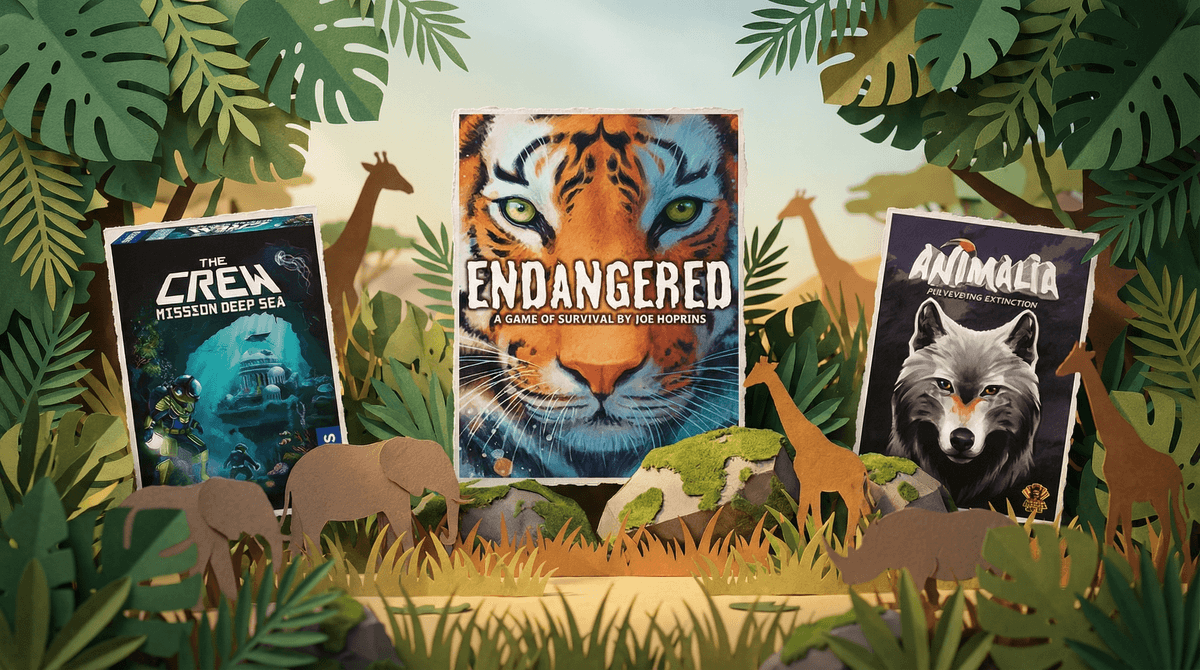
Animalia is a cooperative card game where players work together to save endangered animals from extinction. It's essentially a trick-taking game (think Hearts or Spades, but cooperative) where you're trying to complete conservation missions by playing cards strategically as a team.
The game comes from designer Eric Dubus and publisher Helvetiq, and it's been positioned as a family-friendly alternative to games like The Crew — another cooperative trick-taking game that's become popular in recent years.
Here's the basic setup: You've got a deck of animal cards with different values and colors (representing different species and habitats). Players need to work together to win specific tricks in a particular order to complete conservation objectives. The catch? Like most cooperative trick-taking games, you can't just openly discuss what cards you have. You need to communicate through the gameplay itself.
The conservation theme is appealing — it's nice when games teach something beyond "collect the most points." Kids get exposed to endangered species and the concept of habitat protection while playing. The artwork is solid, and the environmental message feels genuine rather than preachy.
Plus, it's genuinely cooperative. In a gaming landscape where competitive games can lead to tears at the dinner table (we've all been there), a game where everyone wins or loses together can be a relief. And at around $15-20, it's not a huge investment if it doesn't land with your family.
Here's where I need to be straight with you: Animalia is kind of a mixed bag.
According to reviews from the board game community, it's a light, accessible game that works fine for families — but it's not particularly exciting. One reviewer bluntly stated it's "not good, and more importantly, it's not particularly interesting in any of the ways that it fails." Ouch.
The core issue is that while it's trying to be an entry-level cooperative trick-taking game, it doesn't quite nail the sweet spot. It's simple enough for kids (which is good!), but the luck factor from card-drawing means that strategic decisions sometimes feel less meaningful. For adults who enjoy board games, it can feel a bit flat. For kids who are just learning trick-taking mechanics, it might work better — but they could also just learn with a regular deck of cards.
That said, some players appreciate it precisely because it's simple and quick. It's the kind of game you can pull out without a 20-minute rules explanation, and younger kids have a genuine shot at contributing meaningfully (unlike more complex cooperative games where adults often end up quarterbacking).
Ages 7-10: This is probably the sweet spot. Kids in this range are developing the strategic thinking needed for trick-taking games but aren't yet jaded enough to notice the game's limitations. The conservation theme resonates, and the cooperative element means they're not getting crushed by older siblings.
Ages 11+: Older kids and teens might find it too simple, especially if they're already into gaming. If your middle schooler plays Minecraft or more complex board games regularly, this probably won't hold their attention.
Family game night with mixed ages: This is where Animalia could actually shine. When you've got a 7-year-old and a 12-year-old, finding games that work for both is genuinely hard. The luck element that makes it less strategic also levels the playing field.
Game length: 15-20 minutes per round. This is perfect for attention spans and for fitting in multiple games or trying again if you lose.
Player count: 2-6 players. It works across that range, though like most cooperative games, it's probably best with 3-4.
Learning curve: Low. If you've ever played a trick-taking game, you'll get this immediately. If you haven't, it's actually a decent introduction to the genre.
Replayability: This is the weak point. Once you've played it a handful of times, you've kind of seen what it has to offer. There's not a ton of variety or progression.
The conservation angle: It's present but light. Don't expect your kids to become wildlife biologists from this game. It's more "awareness" than "education." The cards feature real endangered species, which is cool, but there's no deep dive into why they're endangered or what's being done about it.
If you like the idea of cooperative card games but want something with more depth, check out The Crew (mentioned earlier — it's the game Animalia is often compared to). It's more challenging but also more rewarding.
For younger kids who love animals, Endangered is a more involved cooperative game about conservation that actually teaches more about the topic.
If you just want a solid family card game that works across ages, Sushi Go or Exploding Kittens might be better bets.
Animalia isn't a bad game — it's just not a particularly memorable one. If you find it on sale, have kids in the 7-10 range, and want a quick cooperative game with an environmental theme, it's fine. It'll get played, kids will enjoy it, and it won't gather dust immediately.
But if you're trying to build a family game collection and want games that'll stay in rotation for years, this probably isn't a must-have. It's more of a "nice to have if you stumble across it" situation.
Best for: Families with younger elementary-age kids who are new to cooperative games and trick-taking mechanics.
Skip if: You've got older kids who are already into gaming, or if you're looking for something with real staying power in your game collection.
The conservation theme is lovely, and we need more games that make kids think about the planet. I just wish this one was a bit more fun while doing it.