

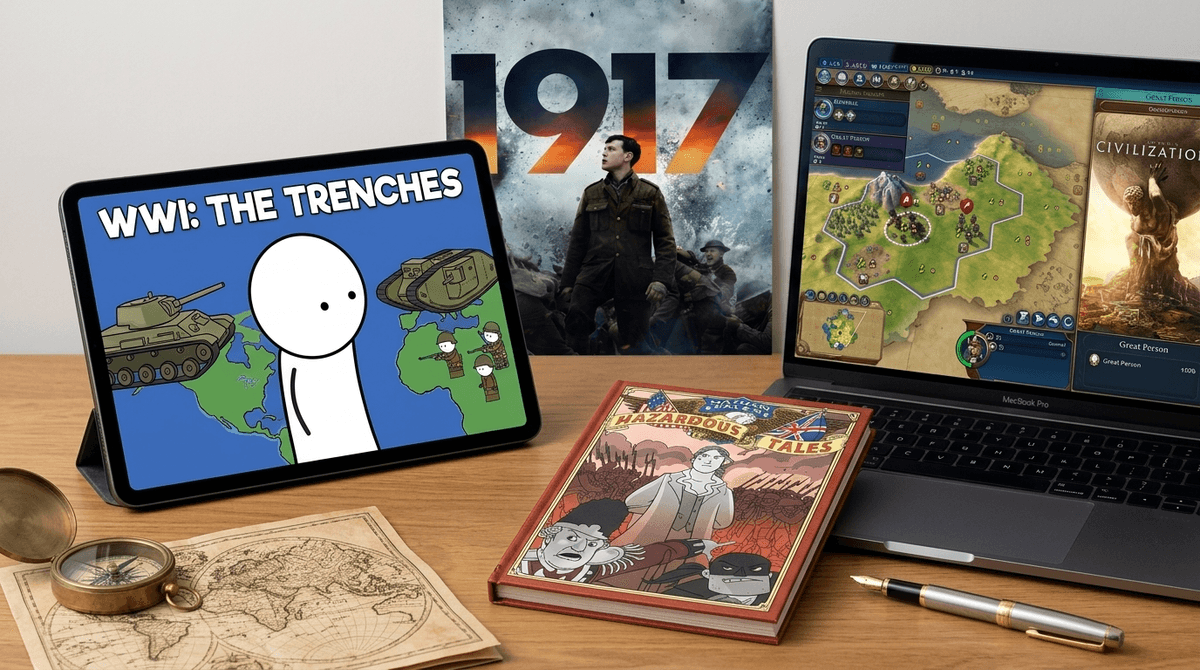
TL;DR: War and history don't have to be a choice between dry textbooks and the mindless carnage of a Call of Duty lobby. To bridge the gap, start with the "gateway drugs" of historical YouTube like OverSimplified, move into high-quality strategy games like Civilization VI, and use graphic novels like Nathan Hale's Hazardous Tales to provide the human context that shooters often ignore.
If you’ve spent any time on the internet lately, you know that "history" to a ten-year-old often looks like a deep-fried meme about the Roman Empire or a TikTok edit of a tank set to phonk music. We’re living in a weird era where kids might think "Ohio" is a synonym for a chaotic wasteland while simultaneously being able to name every variant of a German Panzer tank because of a YouTube rabbit hole.
As parents, we want our kids to understand the weight of history—the "why" behind the battles and the human cost of conflict—without just exposing them to "brain rot" content that treats war like a mindless aesthetic or a high-score leaderboard. The good news? There is a massive middle ground between "boring school project" and "toxic gaming lobby."
It's not just about the explosions. For many kids, history (and specifically war) offers a sense of high-stakes drama and "lore" that rivals any Marvel movie. They love the technical specs, the strategy, and the feeling of uncovering "hidden" stories that feel more real than what they’re getting in a classroom.
The challenge is that the algorithm doesn't care about historical accuracy or emotional maturity. It just wants engagement. That’s how a kid goes from watching a 5-minute video on the American Revolution to watching glorifications of extremist ideologies or getting sucked into the $70-a-pop skin-buying cycle of Call of Duty.

YouTube is where most kids encounter history today. It’s fast, it’s funny, and it fits their attention spans. But not all "history" channels are created equal.
Ages 10+ This is the gold standard. It’s funny, it uses stick-figure animations, and it explains complex geopolitical conflicts (like the Punic Wars or the French Revolution) in a way that actually sticks. Yes, there’s some "cartoon violence" and the occasional mild swear word, but it’s the best tool we have for making history feel relevant.
Ages 8+ If your kid is obsessed with the "tech" of war—the planes, the uniforms, the specific gadgets—this is a safer, more educational bet. It’s bite-sized and focuses on the facts without the edgy humor of some other channels.
Ages 13+ For the older kids who want to go deep. This channel covered WWI in "real-time" (100 years later) and is incredibly thorough. It moves away from the "cool" factor and leans into the grueling, tragic reality of the trenches.
Let’s be real about Call of Duty. It is not a history game. It is a fast-paced, dopamine-heavy arcade shooter with a military "skin." If your kid says they're "learning about WWII" by playing CoD, they’re lying to you (and probably themselves). It’s a social club with guns, and the chat lobbies are often toxic.
If you want them to actually engage with history through gaming, look here:
Ages 10+ The GOAT of historical gaming. It teaches geography, diplomacy, technological progression, and the "butterfly effect" of leadership decisions. It’s turn-based, so it encourages thinking rather than just twitch reflexes.
Ages 12+ This is a beautiful, puzzle-based game that focuses on the human stories of WWI. It’s emotional, educational, and honestly, it might make them cry. It’s the perfect antidote to the "war is just a game" mentality.
Ages 10+ This game features literal documentary-style footage between missions. It explains how trebuchets were built and why castles were designed the way they were. It’s basically a History Channel special you can play.
When the screen goes off, graphic novels are the best way to keep that interest alive. They provide the visual stimulation kids are used to from YouTube but require a deeper level of cognitive engagement.
Ages 8-12 If you buy one thing from this list, make it this series. It’s incredibly well-researched, funny, and doesn't shy away from the darker parts of history, but handles them with enough distance to be age-appropriate.
Ages 13+ The definitive graphic novel about the Holocaust. It’s heavy, it’s essential, and it’s a masterclass in using media to understand the unthinkable.
Elementary School (Ages 6-10)
At this age, focus on "The Explorers" and "The Inventors." Avoid realistic combat simulators. Stick to Who Was? (Show) on Netflix or the Who Was? book series. They get the "lore" of history without the trauma.
Middle School (Ages 11-13)
This is the peak "OverSimplified" age. They want to feel like they’re in on the joke. You can start introducing strategy games like Civilization VI. This is also the time to start talking about "media literacy"—why is this YouTube channel making light of a war? What’s the difference between a game and reality?
High School (Ages 14+)
They can handle the heavy hitters like Band of Brothers or 1917. At this stage, the goal is to move them from "consumption" to "critique." Encourage them to listen to podcasts like History Hit to see how historians actually argue about the past.
When kids get into "history" online, they can stumble into some dark corners. Here’s what to watch for:
- The "Wehraboo" pipeline: This is internet slang for kids who become weirdly obsessed with Nazi aesthetics, often under the guise of "just liking the tanks." If your kid’s search history is 100% German WWII tech, it’s time for a conversation about the ideology behind the machinery.
- Toxic Lobbies: Games like War Thunder or Call of Duty have unmoderated voice chats where historical "memes" can quickly turn into actual hate speech.
- Algorithmic Radicalization: If they watch one video on a historical battle, YouTube might start suggesting "Alpha Male" content or revisionist history. Keep an eye on the "Recommended" sidebar.
Don't be the parent who just says "War is bad, turn it off." That’s a conversation killer. Instead, try these:
- "That tank looks cool, but do you know what it was actually used for?"
- "Why do you think that game makes it look like one person can win a whole war by themselves?"
- "If you were the leader in Civilization, would you have made that same choice?"
History is the ultimate story, and it’s natural for kids to be drawn to the drama of war. Our job isn't to sanitize the past, but to make sure they aren't seeing it through a distorted lens. By steering them toward content that emphasizes strategy, empathy, and factual accuracy, we turn a "brain rot" obsession into a genuine intellectual curiosity.
If they’re going to spend hours learning about the past, let’s make sure they’re learning the parts that actually matter—not just how to get a 10-kill streak in a virtual wasteland.
- Check the Subscriptions: Take a 5-minute look at your kid's YouTube subscriptions. If you see OverSimplified, you’re doing okay. If it’s all "Phonk Tank Edits," it’s time to intervene.
- Swap the Shooter: If they’re begging for a war game, try suggesting Age of Empires IV or Valiant Hearts first.
- Library Run: Grab the first three volumes of Nathan Hale's Hazardous Tales. They are almost guaranteed to be a hit.