

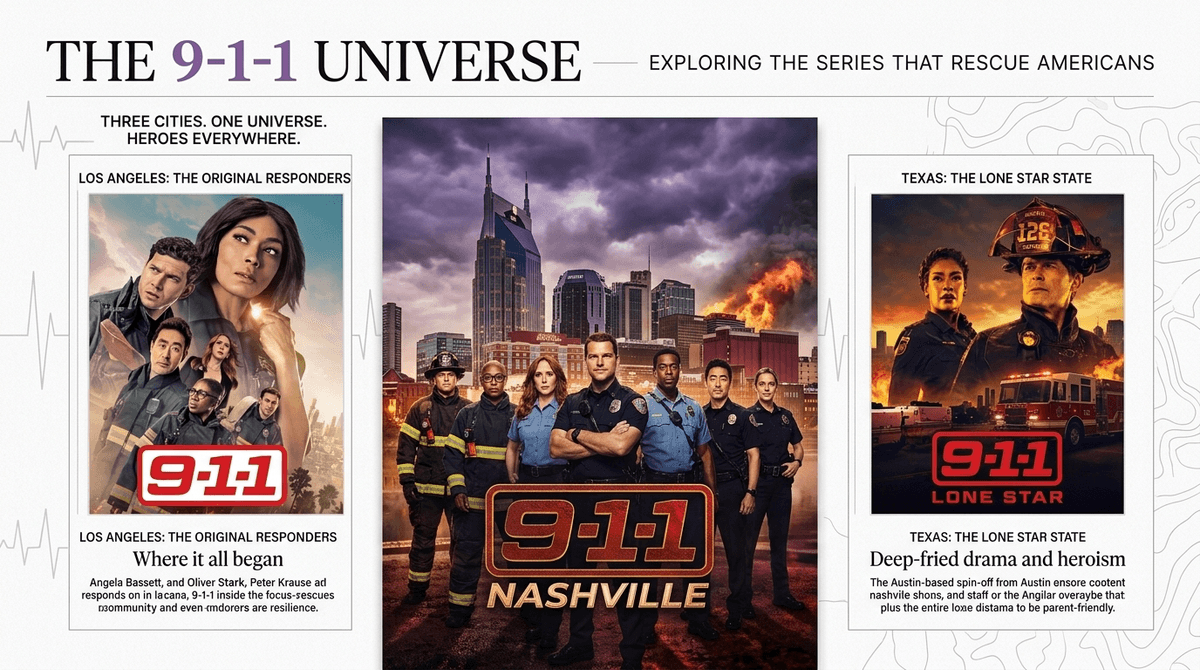
TL;DR: 9-1-1: Nashville is the newest high-octane spinoff in the Ryan Murphy procedural universe. Think 9-1-1 meets Yellowstone with a heavy dose of soap opera drama. Rated TV-14, it’s best for ages 14+ due to graphic rescue scenes, intense disasters (like a city-level tornado), and mature family plotlines involving secret children and complicated pasts.
Check out our full guide on TV-14 ratings and what they actually mean for your teen
Find out if this show is too intense for your 12-year-old
If you’ve spent any time watching 9-1-1 or its predecessor 9-1-1: Lone Star, you know the drill: absurdly specific emergencies, heroic first responders, and enough personal drama to fill a stadium.
9-1-1: Nashville moves the action to Music City, focusing on Station 113. The firehouse is led by Captain Don Hart (played by Chris O’Donnell), a "rugged rodeo rider" who runs the team alongside his son, Ryan. The show leans hard into its setting—expect country music cameos, horse racing subplots, and emergencies that involve things like people getting stuck on water slides or caught in massive Southern storms.
But the real hook this season? A massive paternity shocker. Don discovers he has a secret son, Blue Bennings, who happens to be a stripper-turned-firefighter (yes, you read that right). It’s messy, it’s campy, and it’s exactly what the franchise is known for.
Your teen probably isn't watching this for the nuance of fire safety. They’re watching for:
- The "Water Cooler" Moments: Every episode features at least one "how is that even possible?" rescue. It’s high-stakes and highly bingeable on Hulu.
- The Cast: With social media influencer Hunter McVey playing Blue Bennings, the show has a built-in Gen Z draw.
- The Drama: It’s basically a soap opera with sirens. The conflict between the "golden son" Ryan and the "secret son" Blue is pure teen-drama gold.
While the show is technically a procedural, it’s definitely not Paw Patrol. Here’s the breakdown:
Ages 14+ (The Sweet Spot)
Most 14-year-olds can handle the intensity. They understand that the "science" behind the rescues is often questionable and that the family drama is dialed up to eleven. This is a great age to start co-watching with teens because the show actually provides some decent jumping-off points for conversations about family secrets and high-pressure jobs.
Ages 12-13 (Proceed with Caution)
If your middle-schooler is sensitive to blood or "medical gore," you might want to pre-screen. The show doesn't shy away from showing the aftermath of accidents. One episode might feature a tornado leveling a building, while another shows a graphic injury from a rodeo accident. If they’ve seen Grey's Anatomy, they’ll likely be fine, but keep the remote close.
Under 12 (Not Recommended)
The combination of frightening disaster sequences and "adult" themes (like Blue’s previous career as a stripper and the infidelity-adjacent backstory of his birth) makes this a bit much for the younger set. Stick to something like The Mysterious Benedict Society for this age group.
Learn more about managing screen time for different age groups
There are three main "red flags" (or at least "yellow flags") you should be aware of:
1. The "Stripper" Element
Hunter McVey’s character, Blue, is introduced as a stripper who dresses like a firefighter for his "act" before actually joining the department. While the show stays within network TV limits, there are suggestive scenes, shirtless sequences, and a lot of talk about his former profession. It’s handled with a "wink and a nod" style, but it’s definitely mature.
2. Graphic Injuries
The franchise is famous for "the ick factor." Whether it's a freak accident at a concert or a massive highway pile-up, the show features prosthetic gore, blood, and intense medical procedures performed in the field. It’s more "shocking" than "scary," but it can be unsettling for some.
3. Family Betrayal
The central plot revolves around Captain Don Hart’s secret past. His wife, Blythe (Jessica Capshaw), and his son, Ryan, have to deal with the fallout of a secret child from a previous affair. If your family has dealt with similar dynamics, this might be a sensitive watch.
Check out our guide on how to talk to your kids about "soapy" TV drama
If your teen is hooked, use it as a chance to talk about:
- Reality vs. Fiction: First responders in real life have incredibly difficult jobs. Does the show make it look "too easy" or "too glamorous"?
- Family Dynamics: How do the characters handle the "secret brother" news? Is there a better way they could have communicated?
- The "Grit" Factor: Nashville is portrayed through a very specific, polished lens. How does this compare to real-world Nashville (or your own town)?
9-1-1: Nashville is "popcorn TV." It’s not trying to be deep art, and it’s certainly not trying to be a documentary. It’s a loud, flashy, and often ridiculous drama that is perfectly fine for most teenagers.
If your kid is looking for something similar but maybe a bit more "grounded" (relatively speaking), you might suggest The Rookie or even the original 9-1-1. But if they want the country music, the rodeo drama, and the secret-son-stripper-firefighter chaos? Nashville is the only place to get it.
- Check the Wise Score: Head over to the 9-1-1: Nashville media page to see how other parents in the Screenwise community are rating the "Gore" and "Mature Themes" levels.
- Set Boundaries: If you’re worried about the late-night binging, check out our guide to setting up app limits on Hulu.
- Chat with us: Not sure if your teen can handle the tornado episode? Get a content breakdown of the pilot.