

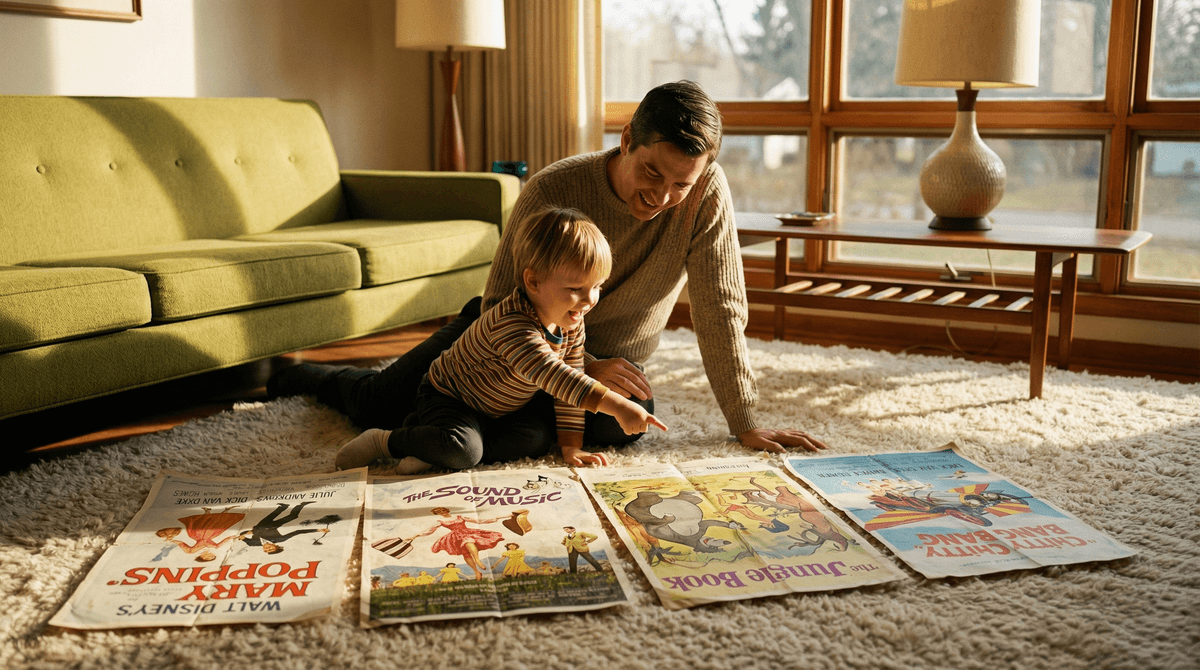
The 1960s gave us some of cinema's most iconic films—and surprisingly, many of them still work beautifully for kids today. We're talking about movies like Mary Poppins, The Sound of Music, and Chitty Chitty Bang Bang. These aren't just "old movies your parents loved"—they're genuinely entertaining stories with incredible music, practical effects that still hold up, and themes that resonate across generations.
Here's the thing: in an era where kids are used to the rapid-fire editing of YouTube and the instant gratification of TikTok, these slower-paced films can actually be a breath of fresh air. They teach patience, they reward attention, and honestly? The musical numbers are absolute bangers that kids will be singing for weeks.
The pacing is different, but not boring. Yes, these films take their time with scenes, but they're also filled with spectacle—elaborate dance numbers, stunning costumes, and practical effects that required real creativity. There's something mesmerizing about watching Julie Andrews actually climb those Austrian mountains or Dick Van Dyke dance with animated penguins.
The stories are genuinely good. The Jungle Book (1967) isn't just nostalgia—it's a legitimately funny, beautifully animated adventure. 101 Dalmatians (1961) has a villain so deliciously evil that kids still love to hate Cruella de Vil. These films work because they respect their audience, regardless of age.
They spark conversations. Many of these movies deal with themes that are still relevant: family dynamics, standing up to authority, finding where you belong, and yes—some outdated attitudes that create perfect teaching moments. More on that below.
Ages 4-7:
- Mary Poppins – Practically perfect in every way for this age group. The magic is whimsical, the songs are catchy, and the runtime (2h 19m) can be split over two viewings.
- The Jungle Book – Shorter runtime (78 minutes), fun animal characters, and "The Bare Necessities" is an instant favorite.
- Winnie the Pooh and the Honey Tree (1966) – Gentle, sweet, and perfect for the youngest viewers.
Ages 8-12:
- The Sound of Music – Yes, it's long (3 hours), but kids this age can handle it and often become obsessed. Fair warning: they will be singing "Do-Re-Mi" constantly.
- Swiss Family Robinson – Adventure, ingenuity, and a treehouse that will make every kid want to build their own.
- Chitty Chitty Bang Bang – A flying car, a child-catcher villain that's genuinely creepy, and Dick Van Dyke being delightfully eccentric.
Ages 10+:
- To Kill a Mockingbird – Heavy themes handled beautifully. Best watched with a parent who can discuss the racial injustice and moral courage at its center.
- The Great Escape – A thrilling WWII adventure that's surprisingly engaging for preteens interested in history.
The outdated stuff is real. Many '60s films contain gender roles, racial stereotypes, and cultural attitudes that haven't aged well. Mary Poppins has a problematic rooftop scene. The Jungle Book has some cringeworthy cultural stereotypes. If you're wondering how to approach these conversations , you're not alone—this is actually a great opportunity to build critical media literacy.
These are teaching moments, not reasons to avoid the films. Watching with your kids and pausing to say "this part doesn't show respect for other cultures" or "notice how the mom is only shown doing housework—that's not how all families work" turns passive viewing into active learning.
The length can be a feature, not a bug. In a world where kids are used to 7-second TikTok videos, sitting through a 2-3 hour film builds focus and patience. Consider making it an event: intermission with snacks, cozy blankets, phones away. It becomes a family ritual rather than just another screen.
The music is genuinely great. These soundtracks are iconic for a reason. Don't be surprised if your kids start requesting the Mary Poppins soundtrack on car rides or performing "I Wanna Be Like You" from The Jungle Book in the living room.
Classic 1960s movies offer something different from modern kids' content—they're slower, more theatrical, and often more thoughtful. They won't replace Bluey or The Wild Robot in your rotation, but they're worth introducing, especially for families looking to diversify their media diet beyond algorithm-driven recommendations.
The key is framing: these aren't homework assignments or "educational content." They're genuinely entertaining films that happen to be older. Watch them together, talk about what's changed and what hasn't, and don't stress if your kid isn't immediately hooked. Sometimes it takes a few tries, and that's okay.
Start with one film that matches your kid's current interests. Love animals? Try The Jungle Book. Into music? Mary Poppins or The Sound of Music. Adventure-seekers might love Swiss Family Robinson.
Make it special. Dim the lights, make popcorn, put phones in another room. Create the experience of actually watching a movie together rather than having it on in the background.
Talk about it afterward. What did they love? What felt weird or different? What would they change if they were making the movie today? These conversations build critical thinking skills that transfer to all media consumption—including that Roblox game they're obsessed with.
And if your kid absolutely hates it? That's data too. Not every classic will resonate, and that's perfectly fine. Want to explore more age-appropriate movie options? There's a whole world of cinema out there to discover together.