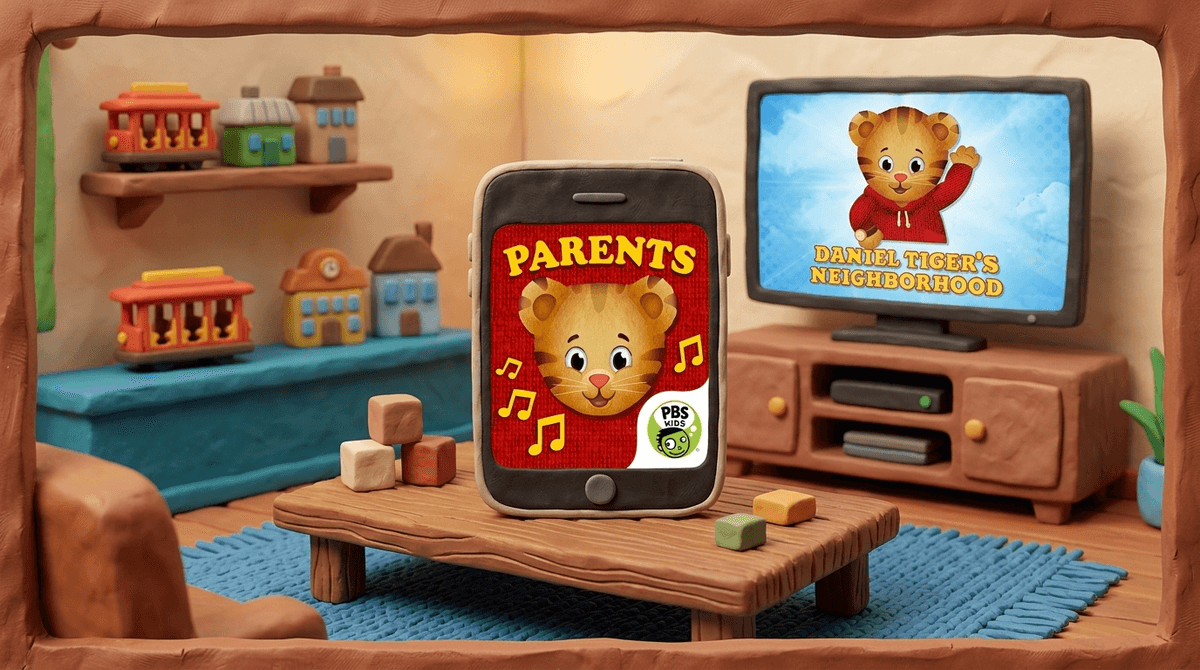


Daniel Tiger's Neighborhood is the direct heir to Mister Rogers' Neighborhood — same Pittsburgh production house, same moral universe, same fundamental belief that preschoolers are people with feelings worth taking seriously. The format is updated for modern attention spans: 28-minute episodes split into two 11-minute stories, each built around a single social-emotional skill. Sharing. Managing frustration. Trying something new. Going to the doctor. Saying goodbye. Every episode ends the same way it began — a strategy song, a problem, the strategy put to use, resolution.
That predictability is not a flaw. For a 3-year-old navigating a world that is almost entirely unpredictable, a show that does the same thing the same way every time is a gift. The rhythm is the point.
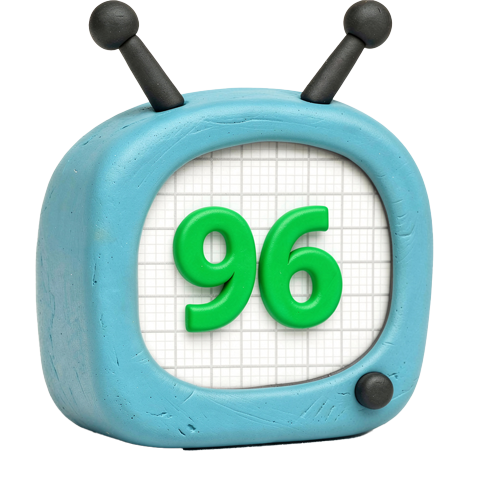
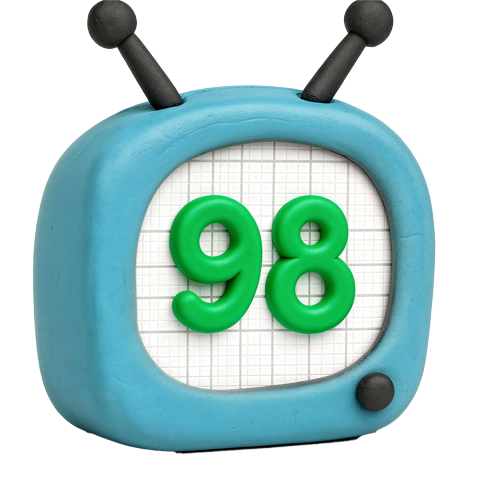
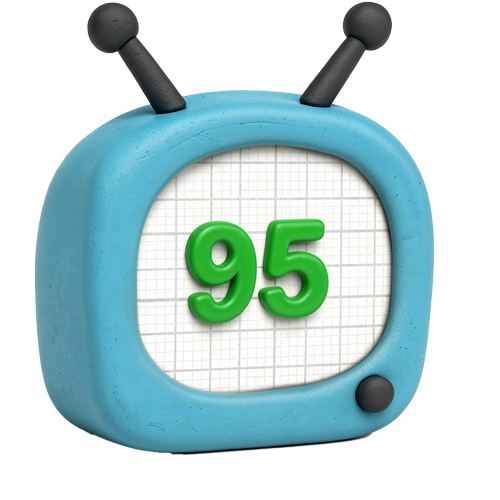
We score children's media on four dimensions — Wholesome, Imaginative, Safe, and Enriching — and Daniel Tiger hits 95, 68, 98, and 88. The Safe and Wholesome scores are near-perfect, and the Enriching score reflects something real: the strategy songs are evidence-based, borrowed from decades of social-emotional learning research. The Imaginative score is the honest one. This is not a show that sparks wide-open creative play. It sparks emotional vocabulary. Different muscle, still worth building.
For kids 2–6, what Daniel Tiger teaches is the stuff that's genuinely hard to teach directly: how to name what you're feeling, what to do when you're so mad you want to throw something, how to be okay when a plan changes. The jingles are delivery mechanisms for those tools — "When you feel so mad that you want to roar, take a deep breath and count to four" is catchy because it has to be, because the goal is for a child in the middle of a meltdown to remember it without prompting.
Here's the parent's reality: you will hate these songs, and then one afternoon your four-year-old will be on the verge of a spiral and will start quietly singing one under their breath, and you'll feel something shift. The show is slower than slow, Daniel's voice is an acquired taste, and the plots are thin by design. But it works in the way that actually matters — out in the real world, away from the TV. That's a high bar for any kids' show to clear.