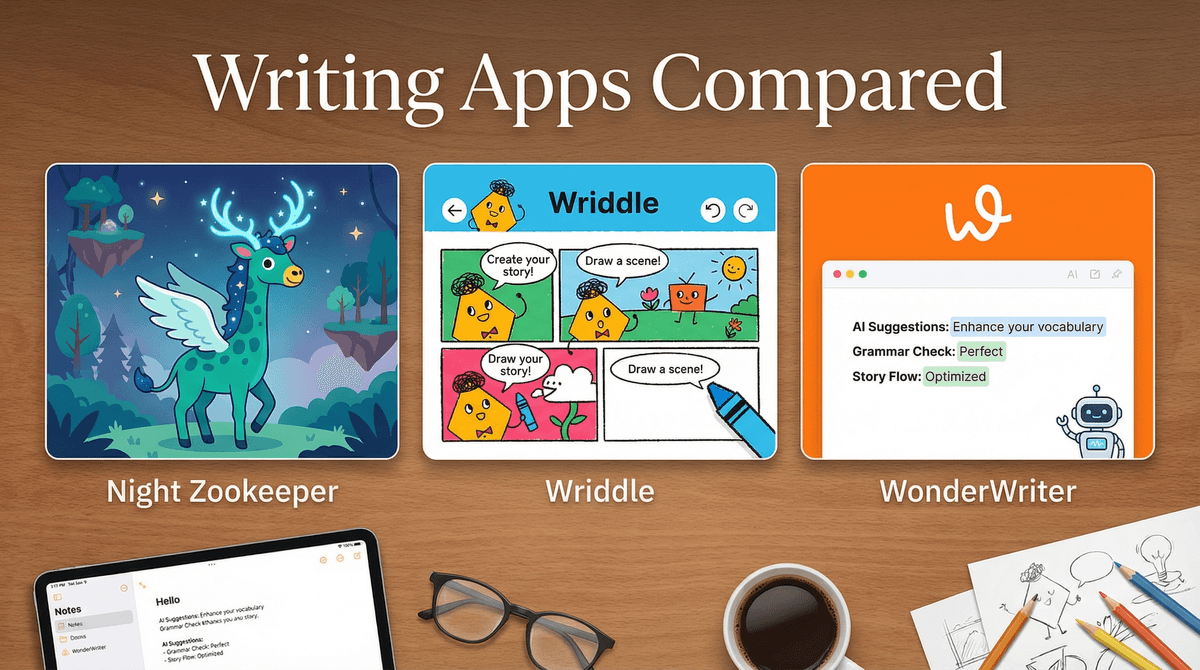
Most kids' apps are a sensory assault of confetti pops, streak counters, and high-pitched mascot voices. Wriddle is the exact opposite. It is essentially a digital version of the "story paper" kids use in kindergarten—the kind with the big empty box on top for a drawing and the wide ruled lines on the bottom for a single, shaky sentence.
Designer Melinda Kolk built this because she was tired of her kids' physical drawings ending up in the recycling bin. She realized that while a drawing is great, the voice of a five-year-old explaining that drawing is what parents actually want to bottle up and keep forever.
The power of the "Audio Portfolio"
The genius here isn't the drawing tool (which is basic) or the text input. It's the loop. A child writes "The cat is big," draws a chunky orange blob, and then hits record to say it out loud.
For a pre-reader, hearing their own voice played back while looking at their own words is a massive "aha!" moment for literacy. It connects the abstract concept of text to the physical act of speaking. Because the app saves these over time, it becomes a literal time capsule. You can scroll back six months and hear the shift from phonetic "invented" spelling and toddler pronunciations to actual syntax and clearer speech. It’s the kind of data a teacher or a sentimental parent can actually use.
Where the friction lives
Don't hand this to a four-year-old and walk away immediately. The interface is clean, but the transition between the three "modes"—writing, drawing, and recording—requires a bit of sequencing logic that younger kids might fumble at first.
You’ll likely spend the first three or four sessions acting as the "producer," helping them find the record button or reminding them to finish the sentence before they start coloring. Once they internalize the workflow, it becomes a solo activity, but that initial hand-holding is the price of admission for a tool that doesn't use manipulative "click here!" animations to guide the eye.
How it stacks up
If your kid is already obsessed with stickers and digital "rewards," Wriddle might feel a little dry at first. There are no gems to collect and no dragons to level up. It relies entirely on the child's internal desire to create something.
If you’re trying to decide between this and a more "heavy-duty" curriculum app, it helps to know what you're optimizing for. We break down the differences in our guide to Writing Apps That Actually Work: Night Zookeeper, WonderWriter & Wriddle Compared. While other apps focus on "gamified" quests, Wriddle is the one you pick if you want a quiet, 15-minute activity that results in a finished product you might actually want to email to a grandparent.
A note on the "Recycling Bin" problem
The app lets you print these creations, which includes a QR code. When you scan the code on the fridge, it plays the audio of your child reading the sentence. It’s a clever bridge between the digital and physical worlds that solves the "missing voice" problem Melinda Kolk identified. It turns a static piece of paper into a multi-modal memory, which is a high-bar achievement for an app that looks this simple on the surface.