Most educational apps are essentially digital worksheets with a thin layer of glitter and a high-pitched mascot. They operate on a "correct answer, get a sticker" loop that treats learning like a chore to be gamified. Tinybop’s Explorer’s Library takes the opposite approach. It treats the iPad like a microscope or a window. There are no levels to beat and no points to rack up. Instead, you get a series of incredibly polished, interactive models that reward curiosity with actual information.
The Magic School Bus effect
The Weather app is the standout example of how this works. Most weather apps for kids just show a sun or a cloud and call it a day. Here, you can literally jump inside a cloud to see the water molecules and ice crystals. You can drag heat and cold around the screen to see how they collide to create a thunderstorm.
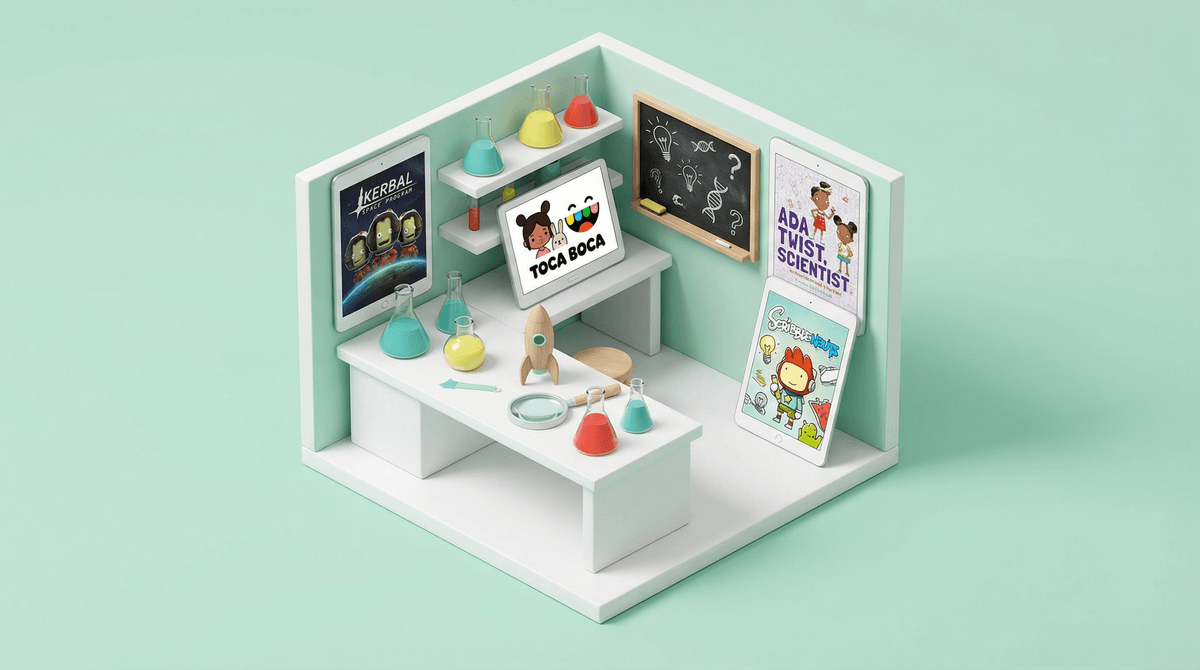
It’s the digital equivalent of those games that have the Ada Twist vibe, where the goal isn't to "win," but to ask "why?" and "how?" The app doesn't tell you how a hurricane forms; it gives you the ingredients—heat, air, water—and lets you tinker until the wind starts swirling. If your kid is the type who constantly asks why the sky is blue or how rain stays in the air, this is the most direct way to give them an answer they can actually see.
Art that doesn't talk down
A lot of the "educational" category looks like generic clip art. Tinybop commissioned original artwork by Jasu Hu for this series, and it shows. The aesthetic is sophisticated and tactile. When you change the temperature, you aren't just looking at a number; you’re watching the plants wilt or the pets react.
The sound design is equally intentional. It’s subtle and responsive, providing a "click" or a "whoosh" that makes the digital environment feel like a physical toy. This is why the 4+ age rating is so accurate. A preschooler can enjoy the cause-and-effect of making it snow, while an eight-year-old can use the interactive labels (available in 40+ languages) to learn the actual meteorology behind it.
The "Explorer’s Pass" math
You can buy these apps individually for $2.99, which is a steal for the quality. However, if you find your kid cycling through the Human Body, Space, and Simple Machines titles, the Explorer’s Pass subscription starts to make more sense.
One thing to keep in mind: these are "Digital Toys" in the truest sense. If your kid is used to the high-octane dopamine hits of Roblox or Mario Kart, they might find this quiet at first. It requires a different kind of engagement. It’s a slow-burn experience. To get the most out of it, download the free handbooks from the Tinybop site. They provide the "why" behind the "what," turning a 15-minute session of poking at clouds into a genuine science lesson. For parents who want screen time to feel like an expansion of the world rather than a distraction from it, this is the gold standard.