The "Rough Draft" of a Legend
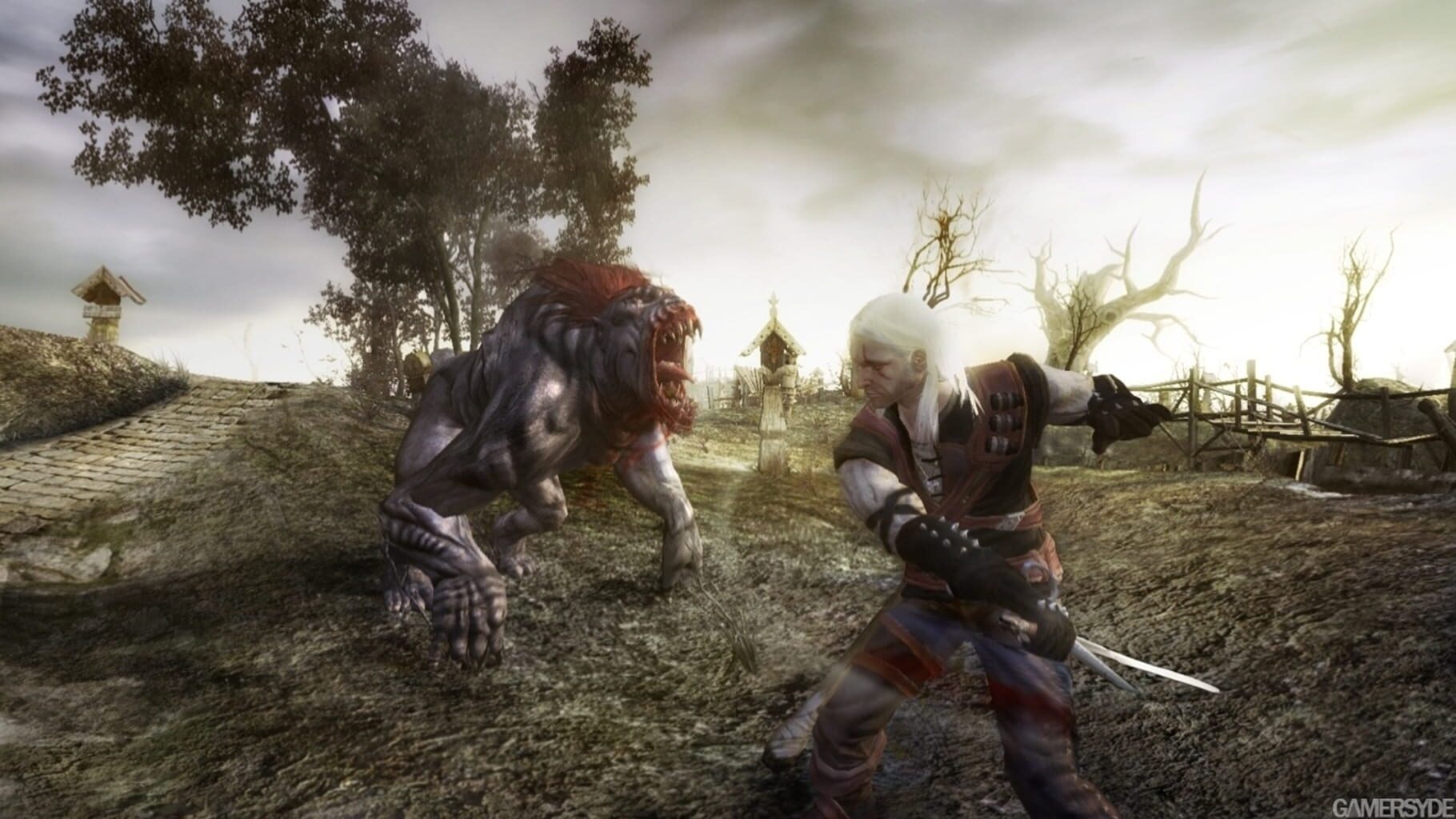
If you’ve heard of Geralt of Rivia, it’s probably because of the massive third game or the Netflix series. This 2007 original is a different beast entirely. It’s the scrappy, slightly awkward "indie" start to the franchise. While it laid the groundwork for everything fans love—the cynical humor, the monster-slaying, and the heavy political intrigue—it’s also a product of its time.
Playing this today feels like watching a director's first student film after they’ve already won an Oscar. The bones of a masterpiece are there, but the execution is messy. The combat system isn't the fluid swordplay you see in modern titles; it’s a weird, rhythm-based clicking exercise that can feel more like a chore than a fight. If you aren't a die-hard fan of the books or a completionist, the mechanical friction here might be a dealbreaker.
The Problem with the "Romance"
We need to talk about the "Sex Cards." In this first game, Geralt can have various encounters with women he meets, and the "reward" for these scenes is a collectible digital card featuring an illustration of the woman in a suggestive pose. It’s a mechanic that has aged poorly and feels significantly more objectifying than the more grounded, relationship-driven approach in later games.
This isn't just about "mature content"—it’s about a specific, dated brand of "gamer" culture from the mid-2000s that prioritized a juvenile male gaze. Even if you're okay with your older teen seeing nudity, this specific framing is worth noting because it’s a far cry from the nuanced storytelling the series eventually became known for. If you want to see how the series handles these themes with more maturity, our Witcher 3 Parents Guide explains how the sequels evolved.
Choosing Between Two Evils
The real reason to play The Witcher is the writing. Most RPGs give you a "Good" option and an "Evil" option. Geralt doesn't get that luxury. You’re often forced to choose between a group of violent rebels and a corrupt military force, and the game is famous for not telling you the consequences of your choice until hours later.
This delay is brilliant but brutal. It prevents "save scumming" (reloading a save to fix a mistake) because by the time you realize your choice led to a village being burned down, you've already played three more hours. It’s a fantastic way to engage with the idea of unintended consequences, but it makes for a very heavy, often depressing experience.
The "If Your Kid Liked X" Move
If your kid is asking for this because they liked the open-world freedom of Zelda: Tears of the Kingdom or the flashy combat of Elden Ring, they are going to be disappointed. This is a slow, narrative-heavy PC game that requires a lot of reading and patience.
- If they want the lore but can't handle the 2007 jank: Just have them play The Witcher 3. It’s better in every measurable way.
- If they want fantasy RPGs that are actually age-appropriate: Look at the Dragon Quest series or Kingdoms of Amalur.
- If they want "Dark Fantasy" without the explicit sex scenes: The Dark Souls series offers plenty of gloom and monster-slaying without the "adults-only" HBO vibes.
Bottom line: This is a historical curiosity for fans of the franchise. For everyone else, it’s a clunky relic that’s probably better left in 2007.