The "Fortnite to Famine" pipeline
If you’re looking at this 1,000-page brick because your kid recognized Rick Grimes from a Fortnite crossover, you need to pause. In the gaming world, these characters are skins—cool, rugged survivors doing dances. In Robert Kirkman’s original vision, they are participants in a meat-grinder. The jump from the sanitized, colorful world of Battle Royale to the stark, black-and-white misery of this compendium is massive.
This isn't just "zombie action." It is a relentless study of what happens when humans stop being polite and start being predators. While the TV series is famously brutal, the comic source material often goes further, lingering on the psychological erosion of its cast in ways a 42-minute episode can’t quite capture.
The Kirkman factor
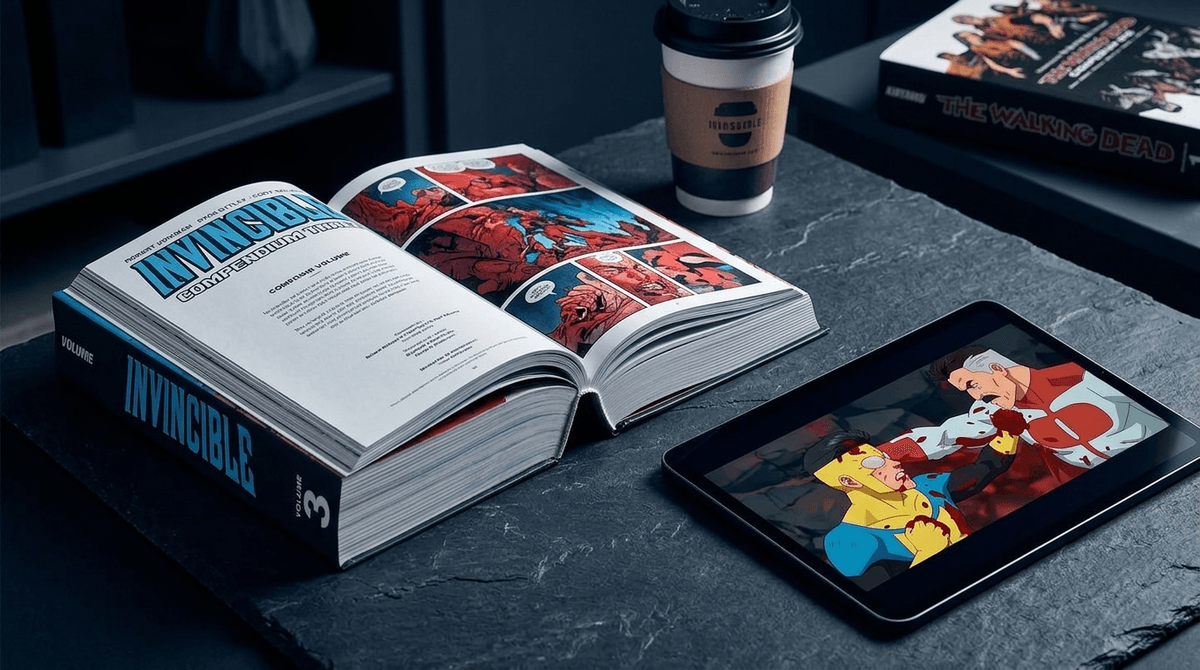
Robert Kirkman has a very specific brand: he takes a familiar genre trope and then applies a level of biological and psychological realism that borders on sadistic. We see this in his other major works, too. If you’ve already checked our guide to the Invincible Compendium, you know the drill. He loves to subvert the "hero" narrative by showing exactly what happens to a human jaw when it hits a brick wall, or what happens to a person’s soul after they’ve had to make an impossible choice.
In The Walking Dead, this manifests as a total lack of plot armor. Anyone can die, and usually, they die in a way that is unceremonious and ugly. For an adult reader, that unpredictability is what makes it a "page-turner" and earned it those Eisner Awards. For a younger reader, it’s just a trauma factory.
Why it's a "reluctant reader" trap
Parents often use graphic novels as a bridge for dealing with reluctant readers. It’s a smart move 90% of the time—the visual medium helps with comprehension and engagement. But this book is the exception to that rule.
Because it’s a comic, there’s a temptation to think it’s "lighter" than a prose novel. It’s actually the opposite. The art doesn't leave anything to the imagination. When the synopsis mentions the "controversial" introduction of The Governor, it’s underselling it. That arc involves levels of depravity—specifically sexual violence and torture—that are heavy even for seasoned horror fans.
The "Show vs. Book" calculus
If your teen has already seen the AMC show and thinks they’re ready for the "real" story, they might be surprised by how much darker the books get. The show had to answer to advertisers and network standards; the books only had to answer to Kirkman.
The comic moves faster and hits harder. Characters who survived for years on screen die in the first few chapters here. If you’re trying to decide if they can handle it, check our breakdown of the TV-MA rating for the show first. If they can’t handle the gore on screen, they definitely shouldn't be staring at it in high-contrast ink where they can dwell on every panel. This is a masterclass in survival horror, but it’s a lesson best saved for adulthood.