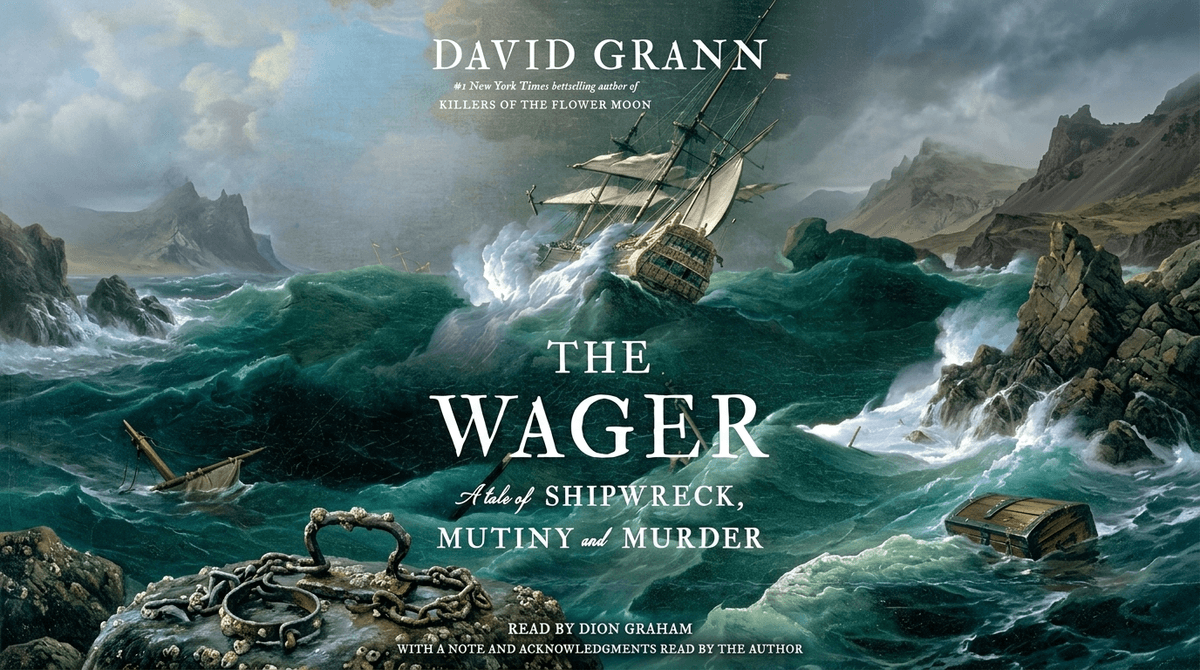
The David Grann effect
If you haven't read David Grann before, the best way to describe his work is "cinematic archaeology." He finds a forgotten, dusty corner of history and turns it into a high-stakes thriller without inventing a single line of dialogue. For a teenager who finds history textbooks suffocating, this is the antidote.
Grann doesn't just tell you what happened; he reconstructs the "wooden world" of an 18th-century warship so vividly you can almost smell the rot. It’s a great pick for kids who gravitate toward survival stories like The Endurance or the gritty maritime tension of Master and Commander, but who are ready for something with a much darker, more cynical edge. This isn't a story about "triumph of the human spirit." It’s a story about what happens when that spirit breaks.
The body horror of the 1700s
While the "mutiny and murder" in the title gets the headlines, the first half of the book is effectively a medical horror story. Grann’s description of scurvy is particularly visceral. He explains how the disease causes old wounds—even those from decades prior—to literally reopen as the body loses the ability to produce collagen.
It is a level of physical reality that most historical fiction glosses over. If you have a kid who is squeamish about biological decay or the "gross" side of history, be warned: Grann doesn't blink. But for the right reader, these details make the eventual breakdown of order on the island feel inevitable rather than just dramatic. You understand why these men turned on each other; they were physically and mentally dissolving long before they hit the rocks.
A masterclass in the "unreliable narrator"
The most sophisticated part of the book is the final act, which focuses on the court-martial back in England. This is where the story shifts from a survival epic to a psychological puzzle. You have two different groups of survivors telling two completely different versions of the same events to save their own necks.
This makes for a great "co-reading" experience if you want to tackle a book alongside your teen. The central question isn't just "who survived?" but "who is lying?" It’s a perfect entry point for discussing how history is written by the people who manage to tell the most persuasive story, not necessarily the most truthful one.
If they liked the movie, give them the book
If your teen watched the film adaptation of Grann’s previous book, Killers of the Flower Moon, they already know his vibe: meticulous research paired with an obsession with justice (and the lack thereof). The Wager is arguably even more paced, trading the sprawling plains of Oklahoma for the claustrophobic confines of a leaking ship and a desolate island.
"The Admiralty wanted a story that would preserve the image of the empire, not a story that revealed the ugly truth of what happened on the island."
For a deeper look at the historical context of the Royal Navy during this era, the National Maritime Museum has excellent digital archives that complement Grann's research. It's the kind of book that sends you down a Wikipedia rabbit hole at 2:00 AM, which is the highest praise you can give narrative non-fiction.