The "Post-Percy" pivot
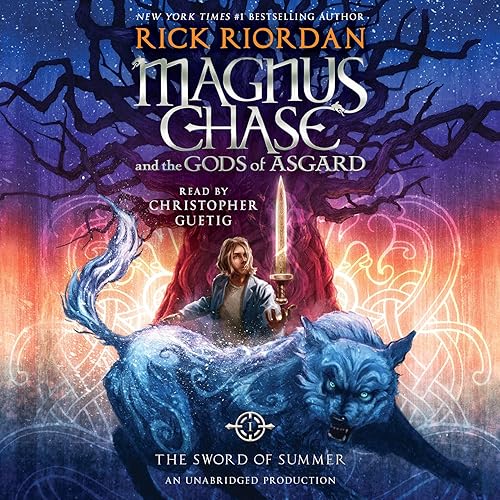
If your kid has already burned through the original Greek myths, they're likely looking for more of that same snarky, high-stakes energy. The Sword of Summer delivers that, but it’s not just a Norse reskin of what came before. While The Lightning Thief focused on a kid finding out he was a "chosen one" in a boarding school setting, Magnus starts his journey homeless on the streets of Boston. It’s a grittier starting point that immediately raises the stakes.
The genius of Rick Riordan is that he doesn't make Magnus a carbon copy of Percy. Magnus is a healer, not a natural brawler. He’s cynical, he’s spent years looking over his shoulder, and his "weapon" is a sentient sword that has more personality (and a better taste in music) than half the human cast. It’s a great pick for the kid who feels like they don't fit the traditional "hero" mold.
The Valhalla loophole
Parents usually see "Viking" and think of axes and gore. This book has plenty of the former but handles the latter with a clever mythological workaround. Because the setting is Valhalla—a Viking afterlife where warriors train for the end of the world—characters can be "killed" in practice matches every single day.
They get run through with spears or lose limbs, only to regenerate in time for dinner. It’s essentially "video game logic" applied to a novel. If your kid is sensitive to permanent character death, this setup actually makes the action feel safer than your average fantasy novel. However, if you’re looking for something with more grounded, "real-world" consequences and a classic knightly feel, you might want to compare this to the tone in The Hedge Knight, which keeps the swords but loses the magical safety net.
Why it still hits in 2026
It’s been over a decade since this book dropped, yet it stays at the top of the middle-grade charts for a reason. Riordan was ahead of the curve on representation without making it feel like a checklist.
- Samirah is a practicing Muslim and a Valkyrie, and the book actually explores how she balances those identities.
- Hearthstone uses sign language (Alf Sign Language), and the way the book describes the "visual" nature of his magic is genuinely cool.
These aren't just background details; they are central to how these characters solve problems. It’s the kind of world-building that makes the "real world" feel a lot bigger for a ten-year-old. If your reader is transitioning out of purely "fun" books and starting to look for stories with a bit more emotional weight—dealing with things like grief or family abandonment—this is the gold standard for doing it without being a total downer.