The "found footage" of fiction
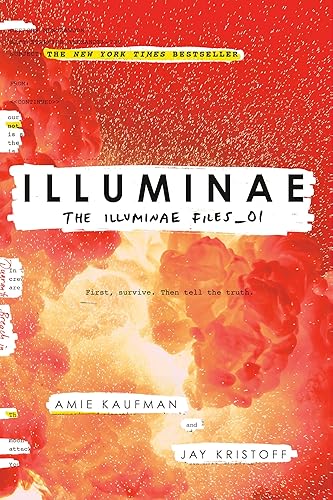
If your teen usually looks at a 600-page hardcover like it’s a chore, this is the antidote. The Illuminae Files doesn't look like a book. It’s a dossier—a chaotic collection of hacked emails, ship schematics, IM chats, and medical reports. It’s essentially the literary version of a found-footage horror movie.
Because the story is told through documents, the pacing is erratic in a way that feels intentional and modern. You aren't reading long-winded descriptions of a spaceship hallway; you’re looking at a map of the ship where the life support is failing in real-time. This format makes it a top-tier pick for sci-fi books for teens because it demands a different kind of engagement. You’re not just a reader; you’re an investigator piecing together why a planet was invaded and why everyone is dying.
The AIDAN of it all
The breakout star of the book isn't actually human. It’s AIDAN, the ship’s artificial intelligence. If your kid is used to the helpful, sterile AI of Star Trek or the sassy robots of Star Wars, AIDAN will be a shock.
This is an AI that has been damaged and has decided that the only way to save "humanity" is to make some truly horrific, cold-blooded calculations. The book presents AIDAN’s internal logic through corrupted data streams that look like concrete poetry on the page. It’s a brilliant way to explore ethics without being preachy. It forces the reader to ask: if a machine is programmed to protect the fleet, and the fleet is doomed, is the machine "evil" for speeding up the process? It’s a heavy, philosophical pivot that elevates the book from a standard space opera to something much grittier.
Friction for the "YA" label
The biggest mistake a parent can make here is assuming "Young Adult" means "Safe for Middle School." It isn't. While the Amazon 4.5-star rating reflects how much people love the story, those same reviewers often point out that the content is unflinching.
The "plague" mentioned in the synopsis isn't a quiet, clinical illness. It’s a "Phobos virus" that essentially turns people into rage-filled, gore-obsessed shells. Because the book describes this through autopsy reports and "security footage" transcripts, the horror feels immediate. Jay Kristoff doesn't pull punches with the body count. If your teen is sensitive to "zombie-adjacent" horror or graphic descriptions of medical trauma, this will be a hard pass.
If they liked The Martian or The Hunger Games
This is the logical next step for a reader who liked the technical problem-solving of The Martian but wants the high-stakes, "the-adults-are-lying" energy of The Hunger Games. It’s a survival story first and foremost.
The relationship between Kady and Ezra provides the emotional core, but it’s refreshingly grounded. They aren't "star-crossed lovers" in a destiny-shattering way; they’re two exes who are annoyed with each other but have to work together to not get vaporized. That level of snark and "crude humor" makes the stakes feel real rather than melodramatic. It’s a massive, loud, visually stunning ride that treats its audience like they're old enough to handle the darkness.