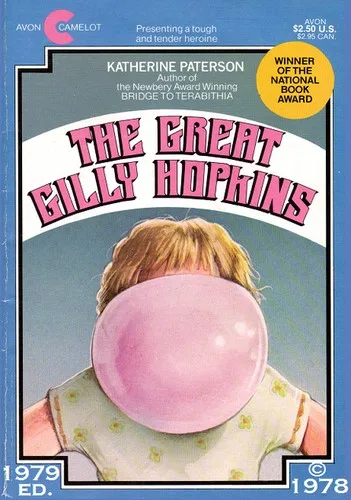
The Great Gilly Hopkins

The Great Gilly Hopkins

book

1979, Juvenile Fiction

WISE
85%

WISE Score

A masterclass in the 'difficult kid' trope that proves family isn't about blood, it's about who shows up for you.

Where to Read

Our reviews and ratings are 100% unbiased, but as an Amazon Associate, Screenwise earns an affiliate fee if you buy a book or game by clicking one of our links. We don't get any credit if you just Google it instead :)

Screenwise Verdict

The Great Gilly Hopkins is a rare bird: a 1970s classic that doesn't feel like it's covered in dust. Gilly is angry, manipulative, and brilliant—a combination that still resonates with kids who feel like the world is stacked against them. It’s a tough read in spots, particularly because Gilly uses prejudice as a weapon, but the payoff is a profound lesson in what family actually looks like.

If your kid is tired of 'perfect' protagonists and wants something with real emotional teeth, this is the one. It’s a great bridge into more mature YA literature because it treats the reader like someone who can handle a story where not every problem is solved with a hug.

Age Fit

Best for ages 10 to 14. Younger kids might find Gilly's initial cruelty upsetting, but middle schoolers will appreciate the psychological complexity and the 'no-BS' tone.

WISE Breakdown
Wholesome
82

It models a messy, authentic version of love and redemption. While Gilly starts out as a 'difficult' kid, the emotional core is about finding belonging in the most unexpected places.

Imaginative
65

This is grounded realistic fiction. The 'imagination' here is in Gilly's internal monologues and her elaborate schemes to escape, rather than world-building.

Safe
70

Safe from a 'no-sex-or-violence' standpoint, but contains a racial slur and heavy doses of prejudice from the protagonist early on. It's used to show her character's ignorance, not to endorse it, but it requires a heads-up.

Enriching
94

Few books build empathy for 'unlikeable' kids better than this. It tackles foster care, abandonment, and the realization that parents are flawed humans with incredible depth.

Parent Info
✓

Why It Might Be Great

  • Gilly Hopkins is a refreshingly honest protagonist who isn't trying to be liked, making her growth feel earned rather than forced.
  • Maime Trotter is one of the most iconic foster mothers in literature, modeling patience and unconditional love without being a saintly caricature.
  • It provides a realistic look at foster care and the psychological defense mechanisms kids build when they've been let down by adults.
  • Katherine Paterson's prose is sharp and unsentimental, avoiding the saccharine 'after-school special' vibes of lesser middle-grade fiction.
⚠

What to Watch For

  • Gilly uses a racial slur (the n-word) early in the book specifically to hurt and shock the adults around her. It's a character-defining moment of ugliness that sets up her later growth.
  • The ending isn't a perfect 'happily ever after.' It’s a bittersweet dose of reality that might frustrate kids used to neater resolutions.
  • There's some 1970s-era grit, including casual mentions of physical discipline and some dated social attitudes that Gilly eventually unlearns.

Conversation Starters

  • "Why do you think Gilly tries so hard to make people hate her?"
  • "Gilly has a very specific picture of her 'real' mother in her head. How does that compare to the reality of Courtney?"
  • "What makes Maime Trotter different from the other foster parents Gilly has had?"
  • "Do you think the ending was fair to Gilly, or did you want something else to happen?"

Ask Anything

Get a personalized guide on any topic