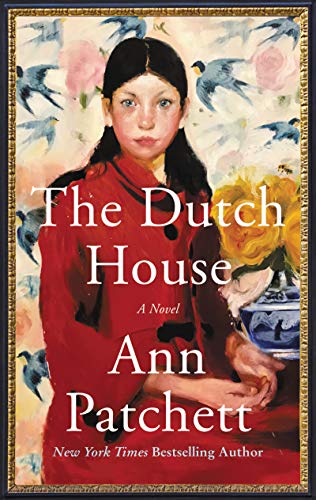
The Dutch House

The Dutch House

book

WISE
86%

WISE Score

Two siblings spend five decades obsessing over the opulent Philadelphia mansion they were exiled from after their mother vanished and stepmother took over.

Where to Read

Our reviews and ratings are 100% unbiased, but as an Amazon Associate, Screenwise earns an affiliate fee if you buy a book or game by clicking one of our links. We don't get any credit if you just Google it instead :)

Screenwise Verdict

Ann Patchett's The Dutch House is an exquisite family drama that reads like a modern fairy tale. It follows siblings Maeve and Danny Conroy across five decades as they repeatedly park down the street from their childhood home—an opulent, glass-wrapped Philadelphia estate—and ruminate on the stepmother who cast them out.

For teens who enjoy character-driven fiction, high school English reading, or thoughtful audiobooks, this is a gem. There are no sudden shocks or cheap thrills here, just a deeply felt exploration of how people romanticize their own misfortune and whether it's possible to forgive parents who let you down.

Age Fit

Best for mature middle-schoolers and high school teens (ages 14+). While there's minimal explicit content, the book's long-term focus on real estate, medical school finances, nostalgia, and adult compromise requires a patient, thoughtful reader.

WISE Breakdown
Wholesome
78

Explores painful family dynamics like parental abandonment and stepmother estrangement, but centers on an enduring, loyal sibling bond.

Imaginative
84

Subtly weaves fairy-tale motifs—the sprawling glass house, the evil stepmother, the exiled siblings—into a realistic 20th-century family saga.

Safe
88

Mild profanity, non-explicit references to adult relationships/infidelity, and brief off-screen physical conflict. No graphic violence or explicit content.

Enriching
90

Offers exceptional psychological depth regarding nostalgia, forgiveness, codependency, and how childhood memory shapes adult identity.

Parent Info
✓

Why It Might Be Great

  • Masterclass in sibling loyalty: Maeve and Danny Conroy's protective, fierce connection drives the book and feels fiercely authentic.
  • Modern fairy-tale framing: Subtly mirrors Hansel and Gretel or Cinderella without ever breaking its grounded, realistic setting.
  • Audiobook gold standard: Tom Hanks narrates the official audiobook, giving the story an extraordinary, warm warmth if your teen prefers listening.
  • Rich thematic substance: Opens up meaningful conversations about nostalgia, grudges, class, and what we owe our families.
⚠

What to Watch For

  • Pacing is reflective, not action-driven: Readers expecting plot twists or fast drama will find a quiet five-decade character study instead.
  • Heavy parental abandonment: The siblings' mother walks out early on, and their stepmother effectively kicks them out—emotional neglect is central.

Conversation Starters

  • "Do Maeve and Danny's memories of the Dutch House bring them together, or do those memories keep them trapped in the past?"
  • "How did you feel about their mother's reasons for leaving, and can a good intention excuse leaving your kids behind?"
  • "At what point does holding onto a shared family grievance stop being protective and start holding you back?"

Deep Dive

A Fairy Tale Wrapped in 20th-Century Realism

On its surface, The Dutch House is about property, real estate, and two siblings navigating life after their father dies and his chilly new wife takes over his estate. But Ann Patchett structures the whole novel like a dark fable. You have the grand house filled with delft mantels and marble floors, the absent mother, the wicked stepmother (Andrea), and two children who survive by relying entirely on each other.

What makes the novel work so well for high schoolers is that it doesn't treat trauma as a plot device—it treats memory as a habit. Maeve and Danny spend years sitting in a parked car across from their former home, smoking cigarettes and repeating the stories of their childhood. It raises a question every teenager eventually encounters: at what point do the stories we tell about our upbringing start defining us more than the actual events?

The Audiobook Factor

If your teen isn't prone to sitting down with 300 pages of reflective literary fiction, get the audiobook. Tom Hanks narrates Danny's perspective, and his performance brings an incredible warmth and wry self-awareness to the prose. It turns what could be a melancholy story into a rich, immersive listening experience for long commutes or solo walks.

It's a quiet book, but a durable one—the kind that lingers long after the final chapter because it treats its young protagonists' intelligence and endurance with real respect.

What Parents Ask

Ask Anything

Get a personalized guide on any topic