The Berenstain Bears' Trouble with Money

The Berenstain Bears' Trouble with Money

book

1983, Children's Books, Growing Up & Facts of Life

WISE
68%

WISE Score

4.7

Amazon

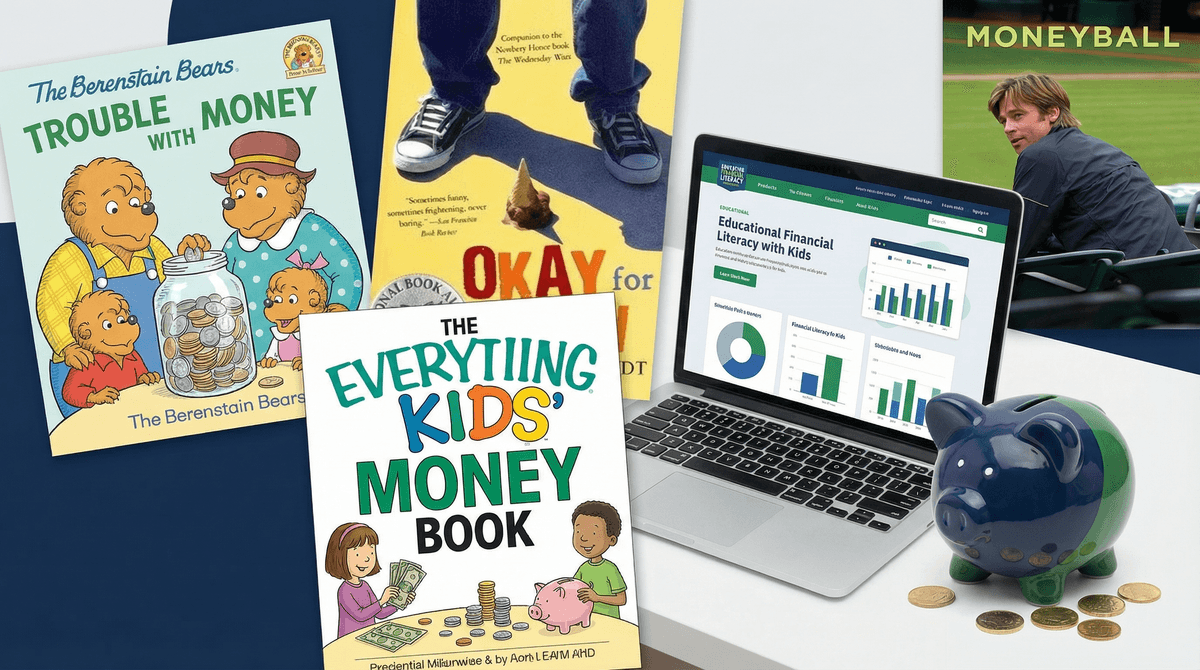
Brother and Sister Bear learn about allowances, saving, and spending—wholesome 1983 financial literacy that's more vegetables than dessert.

Amazon4.7
Common Sense Media

Where to Read

Our reviews and ratings are 100% unbiased, but as an Amazon Associate, Screenwise earns an affiliate fee if you buy a book or game by clicking one of our links. We don't get any credit if you just Google it instead :)

Screenwise Verdict

This is the Berenstain Bears doing what they do: teaching a lesson with maximum wholesomeness and minimum subtlety. The money concepts are genuinely useful for young kids—earning, saving, impulse control—but the 1983 execution feels like eating plain oatmeal. It's good for you, but nobody's asking for seconds.

If you're actively trying to introduce financial literacy to a 4-6 year old, this gets the job done safely and clearly. But if you're looking for a book your kid will beg to read again, look elsewhere. It's a teaching tool first, a story second.

The bigger question: is this the best way to teach money skills in 2025? Maybe just hand them a dollar at the store and let them figure out they can't buy everything they touch. Faster, and you don't have to read about Bear Country's economy.
Age Fit

Best for ages 3-7, when the concept of money is new and exciting. By 8 or 9, kids are ready for more nuanced financial stories (or just real-world practice). The Lexile level (AD740L) is higher than the content complexity, making it ideal for read-alouds to younger kids.

WISE Breakdown
Wholesome
82

Classic Berenstain Bears approach: warm family dynamics, gentle conflict resolution, and a lesson about money management delivered without heavy-handedness. Mama and Papa Bear guide the cubs through spending impulses and saving concepts with patience. The tone is consistently kind and age-appropriate for preschool through early elementary.

Imaginative
48

This is a straightforward financial literacy story with minimal creative spark. The Bears go shopping, want things, learn to budget—it's functional but formulaic. The 1983 illustrations are charming in a nostalgic way but don't invite much exploration or wonder. It teaches a concept rather than igniting curiosity or creative thinking.

Safe
98

Completely safe. No content concerns whatsoever—no violence, no scary moments, no inappropriate themes. It's a picture book about allowances and saving money. The only 'conflict' is whether to buy candy now or save for a toy later. Books don't get safer than this.

Enriching
71

Solid financial literacy foundation for young kids: introduces earning, saving, spending, and delayed gratification. These are genuinely useful concepts for 4-7 year olds. But the execution is didactic—the lesson is the point, not a natural outcome of an engaging story. It teaches, but doesn't particularly inspire or offer deep insight. Still, money management is a practical life skill worth learning early.

Parent Info

Why It Might Be Great

  • Introduces real money concepts (earning, saving, delayed gratification) in age-appropriate language for preschool through 2nd grade
  • Classic Berenstain Bears family warmth—no yelling, just patient teaching moments
  • Short 32-page format works well for bedtime or classroom read-alouds
  • Practical life skill that actually matters: understanding money before they're holding your credit card at Target

What to Watch For

  • Very didactic—the moral is served with a spoon, not woven into the story naturally
  • 1983 visuals and references (candy stores, piggy banks) feel dated; modern kids may not connect as easily
  • Low entertainment factor—this is broccoli disguised as a story, not a story that happens to teach something

Conversation Starters

  • "If you got five dollars right now, what would you want to buy? What if you saved it for a month—what could you get then?"
  • "Do you think it's harder to save money or spend it? Why?"
  • "Should kids get an allowance for chores, or should helping the family just be part of living together?"

Ask Anything

Get a personalized guide on any topic