

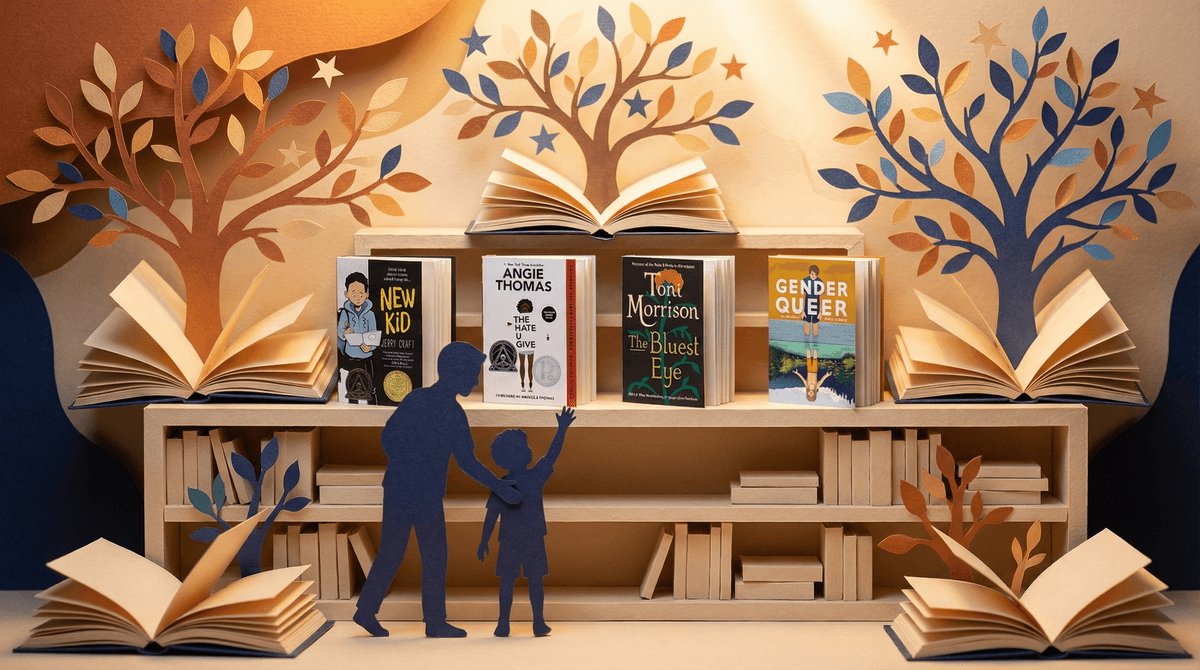
Freedom to Read Week happens every year in late September, but honestly? The conversation about book bans and challenged books is happening year-round now, and it's probably already touched your kid's school library.
Here's what's going on: Book challenges and bans have tripled in the past few years. We're talking about books being removed from school libraries and classrooms, often before kids or parents even know they're under review. Some of these are books you probably read as a kid. Some are newer titles dealing with racism, identity, or tough historical topics. And yeah, some contain content that might genuinely not be right for every age group—but that's different from banning them entirely.
The Freedom to Read movement is about protecting the right for families to make their own informed choices about what their kids read, rather than having those decisions made by a small group of vocal parents or administrators.
Look, I get it. You might be thinking "I have enough to worry about with TikTok and Roblox, now I need to care about books?" But here's the thing: this is actually connected to all those digital literacy conversations you're already having.
The same skills kids need to navigate the internet—critical thinking, media literacy, understanding different perspectives—are the exact skills they develop through reading challenging books.
When we remove books that make us uncomfortable, we're not protecting kids. We're just making sure they encounter those ideas somewhere else, probably on YouTube or Discord, without any context or guidance. At least with a book, you can read it together, talk about it, and help them process what they're learning.
Plus, let's be real: telling a teenager they can't read something is basically the best marketing campaign ever. The forbidden fruit effect is strong.
The most frequently challenged books right now include:
- The Hate U Give by Angie Thomas (about police violence and racism)
- Gender Queer by Maia Kobabe (a memoir about gender identity)
- All Boys Aren't Blue by George M. Johnson (memoir about being Black and queer)
- Classics like The Bluest Eye by Toni Morrison and even The Handmaid's Tale by Margaret Atwood
Most challenges cite sexual content, LGBTQ+ themes, or discussions of racism as reasons for removal. Some of these books absolutely contain mature content—but they're typically in high school libraries, not elementary schools, and they deal with real experiences that many teens are already navigating.
Elementary (K-5): Your kids probably aren't encountering banned books drama directly yet, but they're definitely hearing about it if it's happening at school. This is a good age to talk about how different families have different rules about what they read, watch, and play—just like some families allow Fortnite and others don't.
Middle School (6-8): Now it gets interesting. Middle schoolers are old enough to understand censorship as a concept, and many of the challenged books deal with topics they're already encountering online. This is the perfect age to start reading together and having real conversations about difficult topics. Books like Wonder by R.J. Palacio or New Kid by Jerry Craft are great entry points for talking about perspective and empathy.
High School (9-12): Your teen should absolutely be part of these conversations now. They're capable of reading and discussing complex, uncomfortable topics—and they need practice doing it with guidance before they're out in the world alone. If a book is being challenged at their school, consider reading it yourself and talking about why it might make people uncomfortable, whether those concerns are valid, and how we balance different viewpoints in a diverse community.
Don't avoid the uncomfortable stuff. If your kid asks why a book was banned, don't just say "some people didn't like it." Be specific: "Some parents felt it had too much sexual content for a school library" or "Some people disagreed with how it portrayed police officers." Then ask what they think about that reasoning.
Read the actual books. You can't have an informed opinion about whether The Absolutely True Diary of a Part-Time Indian is appropriate for your teen if you haven't read it. And honestly? A lot of these books are really good. They're being challenged precisely because they're powerful and make people think.
Differentiate between "not right for my kid" and "not right for anyone." Maybe you don't think your 13-year-old is ready for a particular book. That's fine! That's parenting. But that's different from saying no 13-year-old should have access to it.
Talk about who gets to decide. This is a great critical thinking exercise: Who should make decisions about what books are available? Parents? Teachers? Librarians? Kids themselves? What's the difference between age-appropriate curation and censorship?
Your school library probably has a challenge policy. Find out what it is. Most require formal written complaints and review by a committee that includes teachers, librarians, and parents. If books are being removed without this process, that's a red flag.
Librarians are your allies here. School librarians are trained professionals who think deeply about age-appropriateness and diverse representation. They're not trying to corrupt your kids—they're trying to make sure every kid can find books where they see themselves and learn about others.
You can request books be added, not just removed. If you feel the library is missing perspectives that matter to your family, suggest additions. Want more books about faith? Entrepreneurship? Different cultures? Ask for them.
Your kid can still access challenged books. Even if a book is removed from your school library, your kid can get it from the public library, buy it, or download it. Book bans don't actually prevent access—they just remove guidance and context .
.
Freedom to Read isn't about forcing controversial books on anyone. It's about trusting families to make their own informed decisions about what their kids read, and trusting kids to develop the critical thinking skills they need to engage with complex, sometimes uncomfortable ideas.
The same way you're (hopefully) not just giving your kid unrestricted internet access and walking away, you also don't need to just hand them any book and hope for the best. Read together. Talk about what you're reading. Help them process difficult content.
But removing books entirely? That just means kids will encounter those ideas somewhere else—probably on social media, without any of the nuance, literary merit, or guidance that comes from a well-written book.
Your actual next step: Check if your school library has had any recent book challenges. If you're curious about a specific challenged book, read it yourself—you might be surprised. And if your kid is old enough, ask them what they think about the whole thing. They probably have more thoughtful opinions than you'd expect.
Want to dig deeper into media literacy with your kids? Check out our guide on teaching critical thinking skills.