
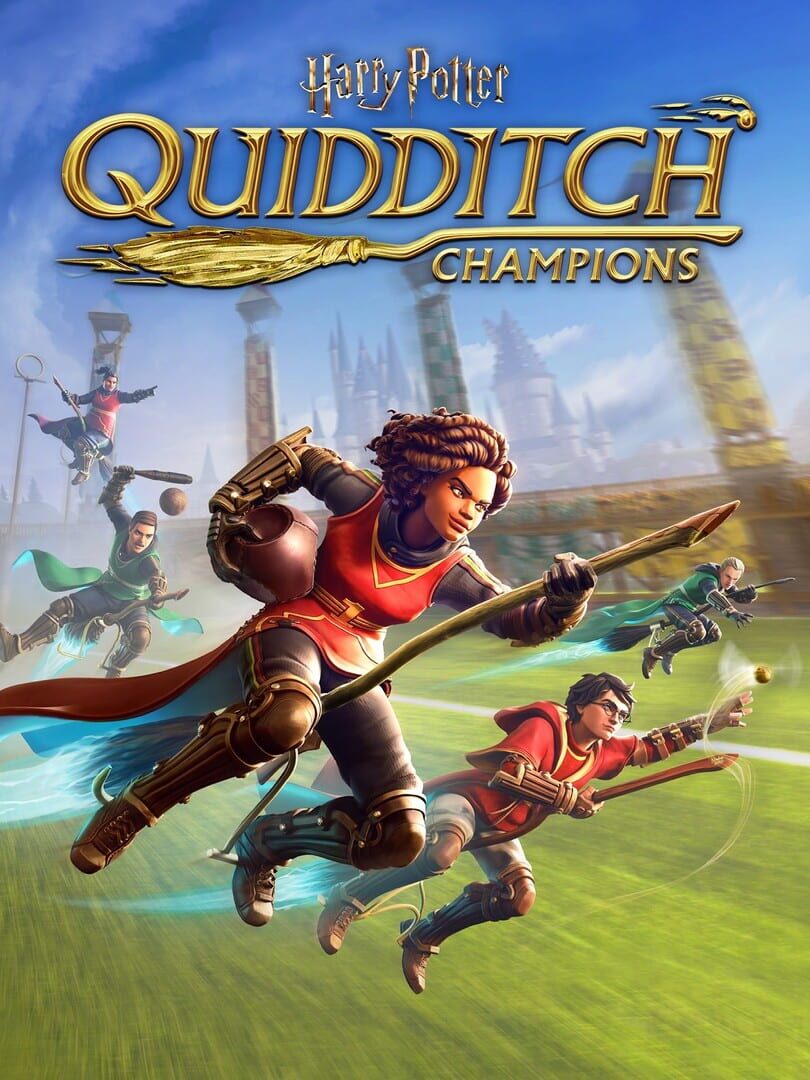
Quidditch Champions

Quidditch Champions

game

2024, Sport, Arcade

WISE
67%

WISE Score

70%

IGDB

Finally, a chance to play actual Quidditch—arcadey, magical, and moderately fun if you're into the wizarding world.

Screenwise Verdict

This is exactly what it says on the tin: a Quidditch game for people who've always wanted to play Quidditch. It's not revolutionary, and the 69 IGDB score tells you it's competent but not amazing.

For Potter-obsessed families, it's a solid way to engage with the wizarding world without doom-scrolling TikTok or getting sucked into predatory mobile games. The lack of chat is genuinely great—your kid can play online without you worrying about some 34-year-old in Ohio screaming slurs at them.

But let's be real: if your kid isn't already into Harry Potter, this won't convert them. It's an arcade sports game with broomsticks. Fun for a few hours, probably not something they'll still be playing six months from now. The Teen rating is appropriate and the content is mild enough that most 11-12 year olds could handle it if they're mature enough for the Potter universe generally.

Age Fit

The Teen rating (13+) is spot-on. Younger Potter fans around 10-11 could handle the content fine, but the gameplay complexity and online interactions make 12-13 the sweet spot. Teens and adults who love Harry Potter will enjoy it; everyone else will find it a decent but unremarkable sports arcade game.

WISE Breakdown
Wholesome
72

Fantasy sports game with competitive but not mean-spirited gameplay. Players tackle and stun opponents during matches, but it's within the context of a magical sport. Some crude humor and mild language ('s--t' appears) keeps it from being squeaky clean, but the tone is generally upbeat and team-focused. The T rating for mild blood and fantasy violence is appropriate—it's Quidditch, not a war zone.

Imaginative
68

Flying around on broomsticks in the Harry Potter universe has inherent magical appeal, and the game showcases never-before-seen areas of the wizarding world. Four distinct position types (Chaser, Seeker, Keeper, Beater) offer different play styles. However, it's ultimately a sports arcade game with set rules and arenas—you're not building or creating anything, just playing matches. The imagination is in the setting more than the gameplay mechanics.

Safe
78

Users interact online but there's no in-game chat, which eliminates the biggest toxicity vector. ESRB lists 'In-Game Purchases' but our data shows none, so there's some confusion there—assuming minimal monetization based on available info. Fantasy violence is mild and expected for a broomstick sport where you're hitting balls at people. One instance of 's--t' in dialogue won't traumatize anyone over 12. No loot boxes, no gacha, no predatory loops. Straightforward sports game structure.

Enriching
58

It's an arcade sports game—fun, but not particularly enriching. You'll develop hand-eye coordination and teamwork skills if playing with others, and understanding different position roles requires strategic thinking. But this isn't teaching you about history, empathy, or complex problem-solving. It's Quidditch. You fly around and throw balls. Entertainment value is solid for Potter fans, but cognitive growth is limited to basic sports game skills.

Parent Info

Why It Might Be Great

  • Potter fans get to live out the fantasy of playing Quidditch with four distinct positions that each feel different
  • No toxic chat features—you can play online with others without the usual cesspool of gamer toxicity
  • Explores new areas of the wizarding world beyond what's in the books and movies
  • Couch co-op and multiplayer options make it genuinely social and family-friendly for Potter households
  • Straightforward arcade sports mechanics mean it's easy to pick up and play

What to Watch For

  • Some mild language including 's--t' and crude humor—nothing shocking but worth knowing for younger teens
  • Fantasy violence involves tackling and stunning opponents mid-flight, though it's cartoonish and bloodless
  • If your kid isn't into Harry Potter, this will feel pretty meh—the magic is mostly in the IP
  • Online interactions without chat still means playing with strangers, so set expectations about sportsmanship

Conversation Starters

  • "Which Quidditch position would you actually want to play in real life, and why?"
  • "How does the game compare to how you imagined Quidditch when reading the books or watching the movies?"
  • "What makes a good team in this game—is it better to have one star player or balanced skills?"
  • "If Quidditch were a real sport at school, what rules would need to change to make it fair?"

Deep Dive

The Rocket League of the Wizarding World

If your kid spent forty hours in Hogwarts Legacy just wishing they could actually fly a broom in a competitive match, this is the specific itch-scratcher they’ve been waiting for. It’s important to set expectations: this isn't a sprawling RPG. It’s a sports sim. Think of it like Rocket League with capes and a much higher learning curve.

The game handles the "Snitch problem" by making the Seeker’s job a high-speed mini-game rather than an instant "I win" button that ends the match. It turns Quidditch into a legitimate sport rather than a broken plot device. For a certain type of competitive kid, that’s a massive upgrade. For others, the lack of a "win button" might feel less like the movies they love.

The "No Chat" Holy Grail

The most significant feature here isn't the broom physics—it’s the silence. Most competitive online games are a minefield of toxic voice chat and "get gud" messages. By stripping out the online chat, the developers created a space where your kid can engage in high-stakes multiplayer without you needing to monitor the headset every five minutes.

It’s rare to find a game that feels this modern and competitive without the usual social baggage. If you’re trying to decide where this fits in the broader landscape of Potter media, check out The Ultimate Guide to Harry Potter Games to see how it stacks up against the more story-heavy LEGO titles.

Mechanics and "The Grind"

Each position—Chaser, Beater, Keeper, and Seeker—feels like a different game entirely.

  • Chasers play a standard arcade sports game (think FIFA but vertical).
  • Beaters are essentially playing a combat game, aiming Bludgers to knock people out.
  • Keepers have a weird, rhythmic defensive vibe.
  • Seekers are in a pure racing mode.

The friction comes from the repetition. After about ten hours, the arenas start to look the same and the loop of "fly, pass, shoot" can get stale. It’s the kind of game a kid will obsess over for two weeks during summer break and then never touch again once they’ve unlocked their favorite broom skin. That’s not necessarily a bad thing—it’s just a "snack" game, not a "meal" game.

Who is this actually for?

If your kid is a casual fan who just likes the vibe of the movies, they might find the controls frustrating. Flying isn't exactly "pick up and play"; it requires some actual coordination to navigate the 3D space while tracking a ball.

However, if they’re the type of kid who memorizes stats and wants to master a specific skill, they’ll find a lot of depth in the different broom upgrades. It’s a solid "middle ground" game—more complex than the LEGO series but far less demanding than a hardcore flight simulator. It’s perfect for that 11-to-13 window where they want something that feels grown-up and competitive but isn't quite ready for the intensity (or the community) of Call of Duty.

Ask Anything

Get a personalized guide on any topic