Most kids go through a "space phase" where they can name every moon of Jupiter but forget to put their shoes on. If yours is in the thick of it, this is the heavy hitter you want on the shelf. While a lot of science books for kids feel like a collection of stock photos and "did you know?" boxes, this 2nd Edition actually feels like a narrative. It’s the difference between reading a dictionary and watching a high-budget documentary.
The Aguilar Factor
A big reason this works is David A. Aguilar. He isn't some ghostwriter churning out educational content; he’s a legitimate astronomer who spent years at the Harvard-Smithsonian Center for Astrophysics. You can feel that authority on the page. He doesn't just tell you that a black hole is a "big vacuum in space." He walks you through the actual mechanics of the first-ever black hole image, which was a massive cultural moment when this edition dropped.
If you’ve spent any time reading our parent's guide to the Nat Geo Kids Space Encyclopedia, you know we value accuracy over fluff. This book treats kids like they're capable of understanding complex ideas like exoplanets and the formation of the universe without watering them down until they're flavorless.
High-Def Reality
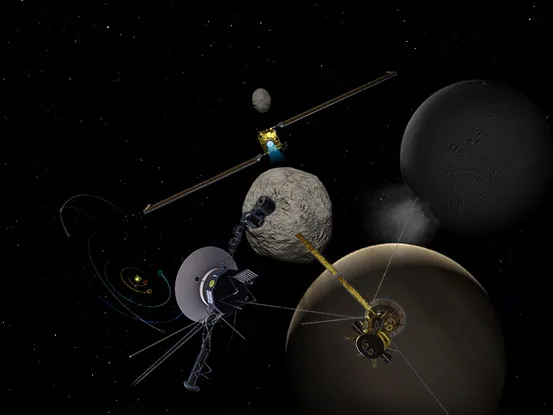
The visuals are what usually seal the deal. We’re past the era of grainy, purple-tinted photos of Saturn. This edition uses the best NASA imagery available, and the layout is intentionally chaotic in a way that works for a kid's brain. You can open it to any page and find something arresting.
It’s a great pivot for kids who are currently obsessed with Kurzgesagt videos or space-themed YouTube channels. It offers that same "wow" factor but in a tactile format that doesn't involve a screen. If your kid is the type to get lost in a Wikipedia rabbit hole, this is the analog version of that experience, but with better fact-checking and way better art.
The Coffee Table Test
This isn't a book that hides in a bedroom. It’s physically massive and heavy enough to serve as a doorstop. Because of that, it usually ends up on the coffee table. That’s actually the best way to use it. It’s a "flipper" book. You don’t read it from page 1 to 100. You leave it out, someone opens it to a random page about dwarf planets or the SpaceX era, and suddenly you’re having a twenty-minute conversation about whether we’ll actually colonize Mars.
The 4.9 rating on Amazon isn't a fluke. It’s rare for a reference book to hold a kid's attention for more than one school project, but the production value here makes it a staple. It survives the transition from "cool pictures" for a 7-year-old to "actual research" for a 12-year-old. Just be prepared for them to correct you on the definition of a supernova for the next six months.