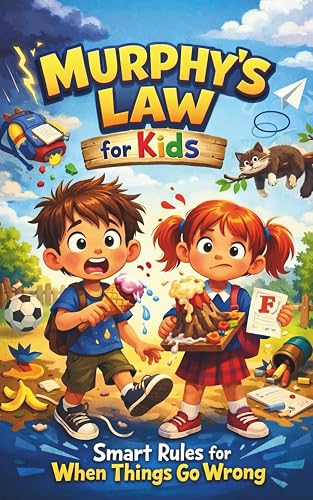
If your kid is currently in the "everything is a catastrophe" stage of development, this book is essentially a de-escalation manual. We’ve all seen the meltdown that happens when a Lego tower collapses or the Wi-Fi cuts out during a crucial moment. Heather Rushmore isn't trying to write the next great American novel here; she’s writing a tactical guide for kids who haven't yet learned that a bad minute doesn't have to equal a bad day.
The "Life Hack" approach to storytelling
The 10 stories in this collection are short, which is a mercy for parents dealing with short attention spans. They don't waste time on flowery descriptions or complex world-building. Instead, they get straight to the friction. A kid works hard on a project, something goes wrong at the last second, and the world feels like it’s ending.
The value isn't in the plot, which is honestly a bit predictable. The value is in the "pause" button the book hits right after the disaster happens. It walks the reader through the internal monologue of a kid moving from "I’m a failure" to "Okay, how do I fix this?" It’s a very specific kind of survival guide for life’s messy moments that focuses on the internal response rather than the external problem.
Didactic, but in a good way
Let’s be real: this book is educational. It’s not something a kid is going to choose over a graphic novel or a high-stakes fantasy series if they’re looking for thrills. If you hand this to a 10-year-old and tell them it’s a "fun story," they’ll probably see through it in three pages and call it boring.
However, as a shared reading experience, it works. It’s a conversation starter disguised as a book. The bonus chapter explaining Murphy’s Law is the strongest part of the package because it gives kids a vocabulary for the unfairness of life. When they realize that "things going wrong at the worst time" is a documented phenomenon and not a personal attack from the universe, their anxiety levels tend to drop.
How it stacks up
If you’ve already looked into handling the "everything is ruined" phase, you know there are a lot of these "resilience" books hitting the shelves lately. What makes this one stand out is that it doesn't try to be too funny or too cool. It’s straightforward. It’s for the parent who wants a clear, age-appropriate way to talk about emotional regulation without the fluff of a "feelings" book that’s too young for an 8-year-old.
It’s a solid 4.5-star experience if you use it as a tool. If you’re looking for a bedtime story that will transport your kid to a magical realm, keep looking. But if you want a kid who can handle a dropped ice cream cone without a 20-minute sob session, this is a smart addition to the shelf.