The Logic of a Seven-Year-Old
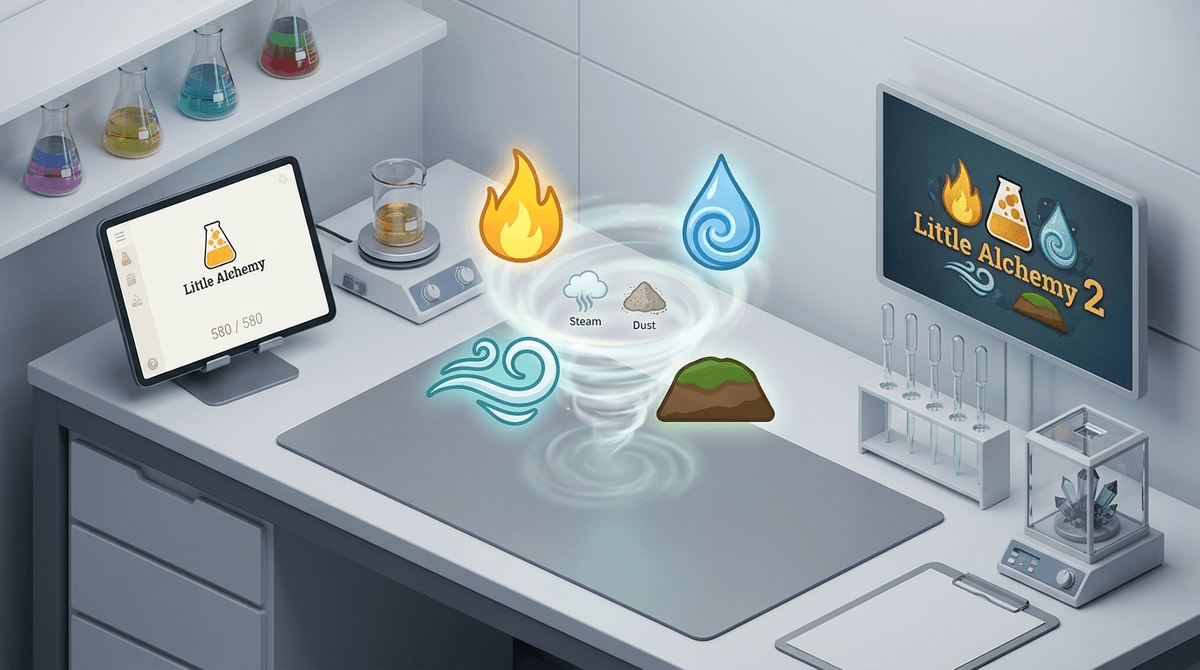
Don’t come into this expecting a chemistry lesson. While the game starts with the basics—water plus air equals mist—it quickly veers into the kind of surreal logic you’d find in a playground debate. It’s more of a word-association puzzle than a science simulator. To find the more "exciting items" mentioned in the official descriptions, you have to think laterally.
For example, you aren't just mixing molecules; you’re mixing concepts. Eventually, you’re trying to figure out what happens when you combine "Time" with "Lizard" or "Glass" with "Electricity." This is where the game shines. It rewards the "what if" brain. When a kid finally realizes that a "Bird" plus "Lake" makes a "Duck," that little spark of recognition is the whole point of the experience.
Managing the Visual Clutter
The biggest point of friction in Little Alchemy 2 isn't the difficulty of the puzzles. It’s the clutter. Critics and players on Common Sense Education have noted that many elements look similar. Once you’ve unlocked a hundred different items, your sidebar becomes a graveyard of tiny, colorful icons that all start to blend together.
If you see your kid getting frustrated, it’s usually not because they’re stuck on a recipe. It’s because they can't find the "Stone" icon in a sea of grey circles. The game includes an encyclopedia to help track discoveries, but the actual workspace can get messy fast. Teaching them how to use the "clean up" button early on is the best way to prevent a total meltdown when the screen gets too crowded.
Moving Beyond the Basics
This is a "finite" game. Unlike some modern sandbox titles that go on forever, you will eventually hit a wall where you’ve discovered everything. It’s a fantastic bridge game. It takes the "crafting" mechanic that kids love in Minecraft and strips away the monsters and the 3D navigation, leaving only the pure joy of discovery.
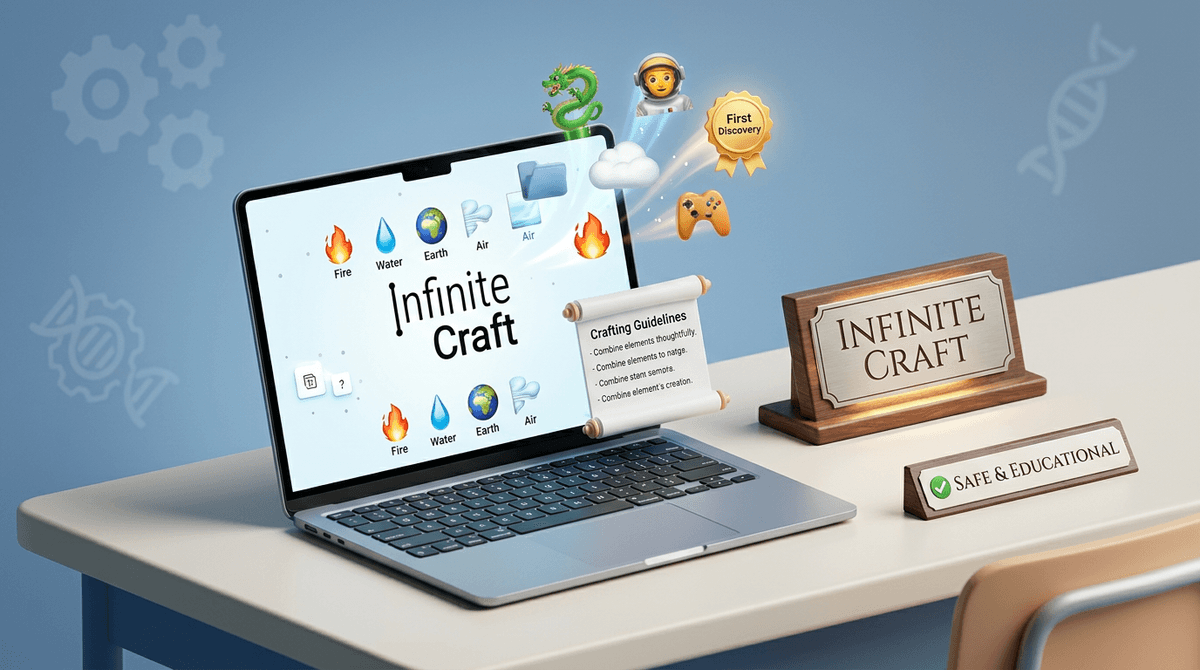
If your kid hits that wall and still wants more, you’re likely looking for the best games like Infinite Craft. While Little Alchemy 2 is hand-curated by developers to ensure every combination makes some kind of sense, newer alternatives use AI to let kids combine literally anything. Little Alchemy 2 is the safer, more intentional starting point. It’s the "curated museum" version of a crafting game, whereas the AI-driven alternatives are more like a chaotic junk drawer.
The "Waiting Room" Essential
Because it’s available on web browsers, iOS, and Android, this is the ultimate "we’re stuck in line" tool. It doesn't require a high-speed connection or a controller. It’s quiet. There are no loud explosions or frantic music loops that will annoy people sitting next to you. It’s one of the few games you can hand over in a doctor's office and feel confident that the kid is actually using their brain rather than just zoning out to bright lights and loud noises. It turns "boredom" into a series of small, logical wins.