Most modern "creation" games are actually just storefronts in disguise. When you boot up Roblox, you're immediately hit with a barrage of "Limited Edition" hats and flashy thumbnails designed to hijack a kid's dopamine loop. Kodu Game Lab is the opposite. It’s a quiet, dusty workshop in the back of a digital garage. It doesn't want your money, and it doesn't want your data. It just wants you to figure out how to make a robot pick up a virtual apple.
The logic of "When and Do"
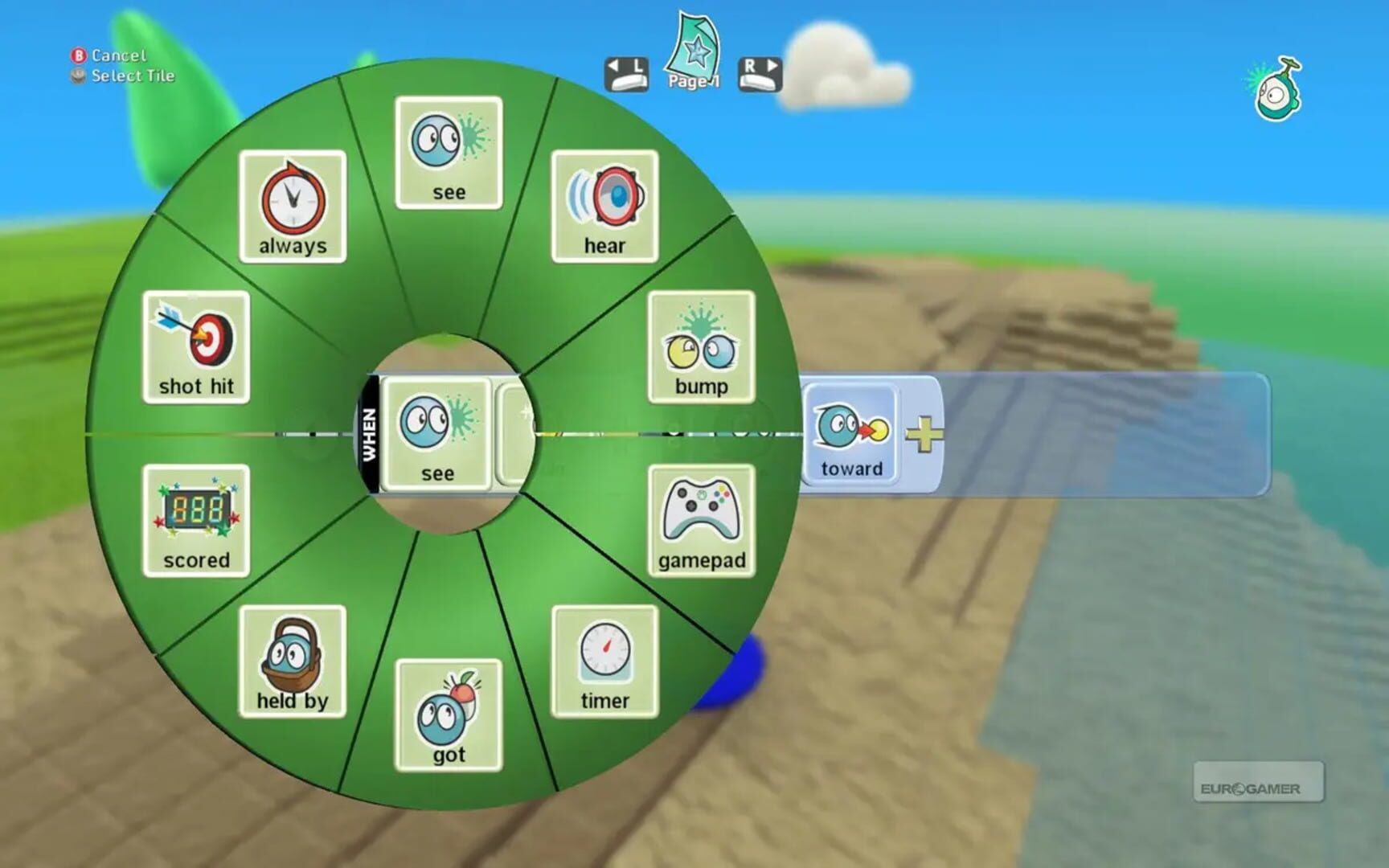
The genius of Kodu is the visual programming language. Instead of typing lines of syntax that break because you forgot a semicolon, your kid builds logic using tiles. It’s built entirely on a "When/Do" framework.
- When: See — Red — Apple
- Do: Move — Toward — Fast
This is the bedrock of computer science. It’s conditional logic stripped of the intimidating jargon. I’ve seen kids who struggle with math suddenly light up when they realize they can make a character jump only when it touches a specific color of terrain. It turns "coding" into a physical puzzle. Because the assets are limited to a specific set of characters like the Kodu (a little hovering bot) or the Cycle (a futuristic bike), kids spend less time worrying about how things look and more time figuring out how they behave.
The 2009 friction
You have to be prepared for the "retro" factor. Kodu was originally designed for the Xbox 360, and it shows. The menus are radial, designed for a joystick rather than a mouse. Navigating the interface on a PC can feel a bit like trying to paint a house through a letterbox. It isn’t intuitive for a generation raised on iPad swipes and sleek, minimalist apps.
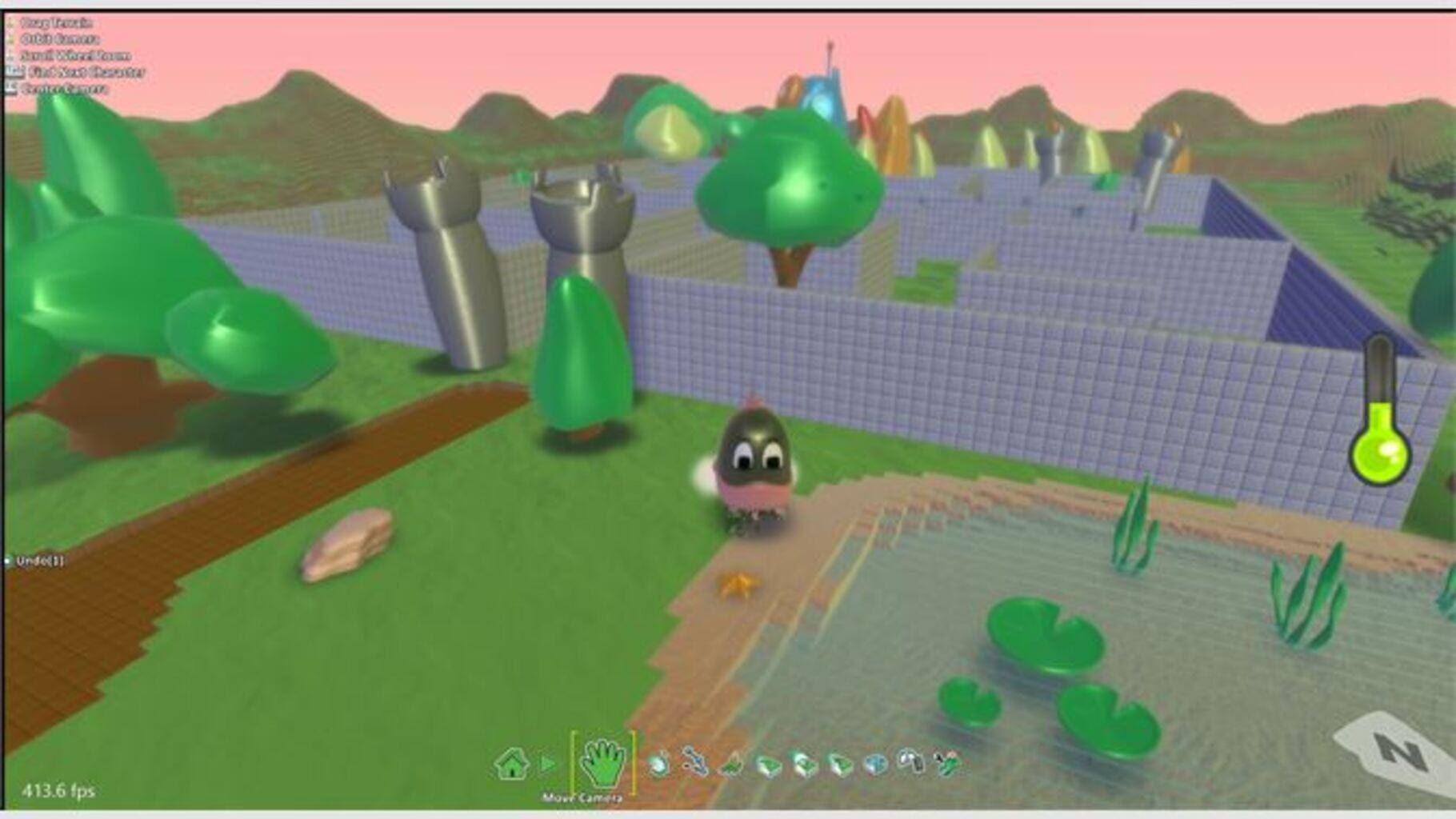
The graphics are also very much of their era. The terrain is blocky, the water effects are basic, and the character designs are "early 2000s tech-optimism." If your kid is used to the high-fidelity lighting of modern consoles, they might call this "trash" within five minutes. You’ll need to frame it as a tool, not a blockbuster game. It’s the digital equivalent of a sketchbook—it’s about the ideas, not the paper quality.
Where to go from here
Kodu is a "first step" platform. It’s where you go when a kid says they want to make games but gets overwhelmed by the blank cursor of a real IDE. It’s a safe, offline sandbox where they can fail without a global leaderboard watching.
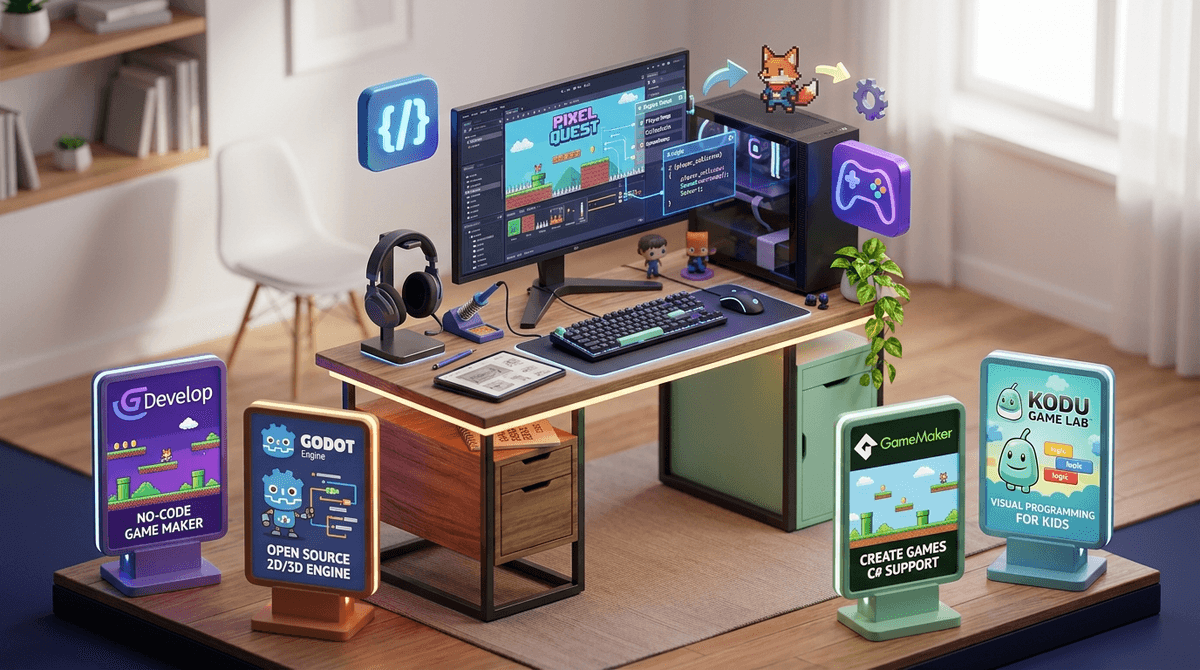
If they spend a weekend in Kodu and start complaining about the limitations—like not being able to import their own sounds or wanting more complex physics—that’s actually a win. It means they’ve outgrown the Duplo phase and are ready for something with more teeth. At that point, you should check out our guide on alternatives to Roblox Studio to see which professional-grade tools actually respect a kid's privacy and your wallet.
Kodu isn't a destination. It’s the training wheels. Once they realize they have the power to write the rules of a world, they won't want to go back to just playing someone else's.