Immune Attack

Immune Attack

app

4+, 2022, Games, Education

WISE
72%

WISE Score

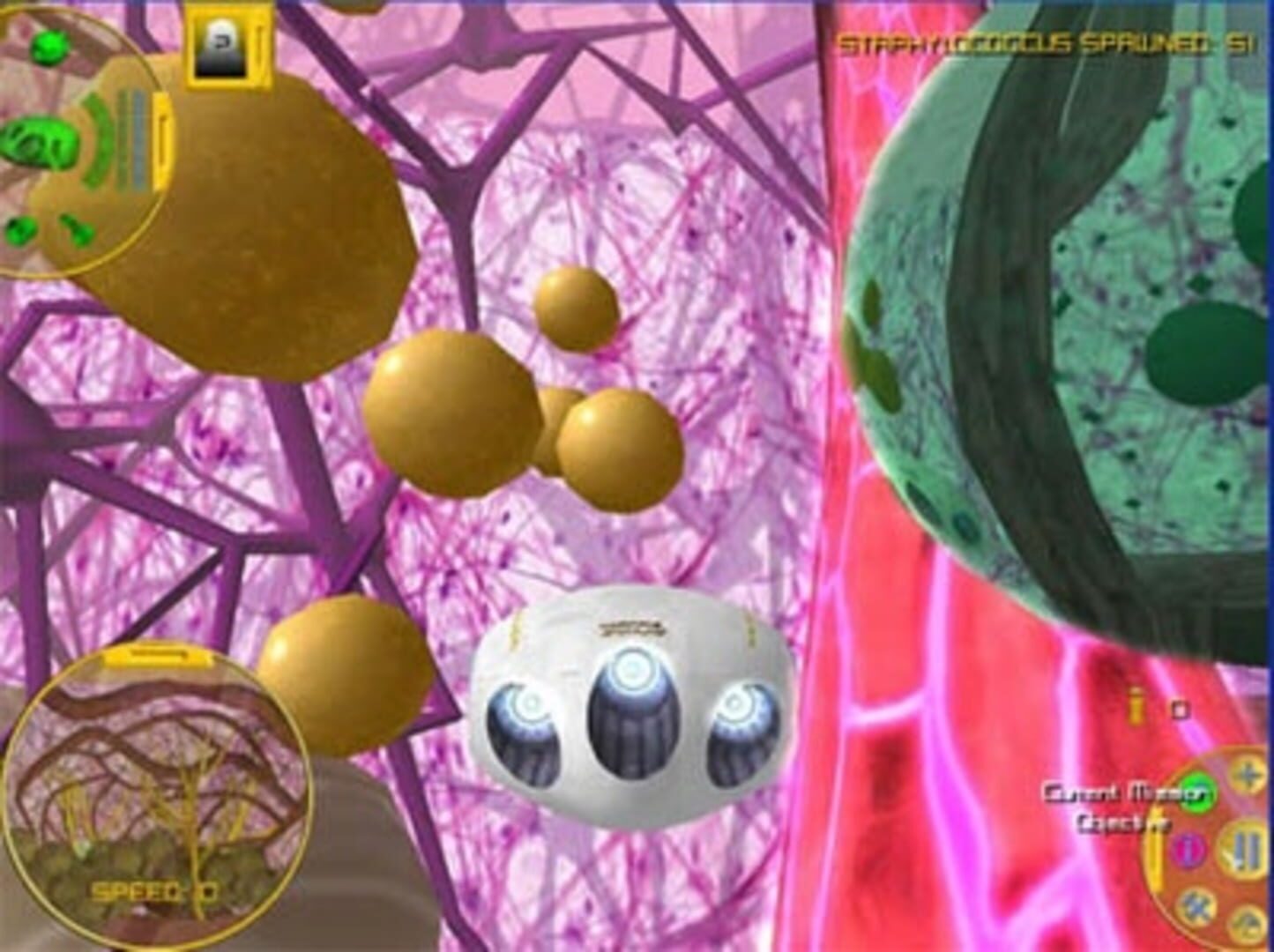
Pilot a nanobot through blood vessels to learn immunology—it's like Magic School Bus meets AP Biology, minus the fun bus driver.

Screenwise Verdict

Immune Attack is a solid educational tool disguised as a game—or maybe it's a game disguised as a textbook. Either way, it's not going to compete with Minecraft for your kid's attention.

The science is legit, the content is safe and free, and if your middle or high schooler is studying immunology or considering a STEM path, this can make abstract concepts click. But let's be real: this is homework that looks like a game, not a game that sneaks in learning. The 3D nanobot piloting is cool in concept, but the pacing is slow and the terminology is dense.

If your kid is genuinely curious about biology, great. If they're not, this will feel like assigned reading with a joystick. It's a worthy supplement to a science curriculum, but don't expect them to choose this over actual entertainment.

Age Fit

Best for ages 10-17 who are studying biology or have a genuine interest in science. Younger kids can try it with parent guidance, but the scientific depth and reading level will be challenging. Not a casual game—this is for the kid who genuinely wants to understand how the immune system works.

WISE Breakdown
Wholesome
82

Educational game with no violence, profanity, or commercial advertising. Content is entirely science-focused, teaching immunology through interactive simulation. Tone is instructional and age-appropriate for middle/high school students. No social features or toxic elements.

Imaginative
68

Offers 3D exploration of blood vessels and immune system concepts through a nanobot pilot mechanic. Players engage with real-world protein-ligand interactions and cellular biology in a gamified format. However, the creativity is constrained by educational accuracy—it's more simulation than sandbox. Limited open-ended play or creative expression beyond solving immunology puzzles.

Safe
92

Free download with no monetization, ads, or in-app purchases. No data collection beyond basic download statistics. No social features, chat, or user-generated content. Content is entirely educational with no graphic imagery or inappropriate material. Only concern is the 2008 original Windows-only version may have compatibility issues on modern systems, though the 2022 iOS/iPadOS release addresses this.

Enriching
79

Developed by Federation of American Scientists with university researchers, using scientifically accurate immunology concepts (cells, receptors, cytokines, protein interactions). Directly supports middle/high school biology curriculum. Strong educational value for students interested in STEM. However, dense scientific terminology and steep learning curve may limit accessibility without teacher/parent scaffolding. More educational than entertaining.

Parent Info
✓

Why It Might Be Great

  • Actually teaches real immunology—cells, receptors, cytokines, protein interactions—not dumbed-down edutainment
  • Free, no ads, no monetization, no data harvesting. Just pure science education
  • Developed by Federation of American Scientists with university researchers, so the content is curriculum-aligned and accurate
  • 3D visualization of immune system concepts can make abstract biology tangible for visual learners
  • Perfect supplement for kids studying biology or considering STEM careers
⚠

What to Watch For

  • Dense scientific terminology—younger kids or those without biology background will need adult help to understand what's happening
  • Steep learning curve and slower pacing than commercial games; this is an interactive textbook, not Fortnite
  • Originally Windows-only from 2008, though the 2022 iOS/iPadOS release should be more accessible on modern devices

Conversation Starters

  • "What did you learn about how white blood cells find and fight viruses? Can you explain it to me?"
  • "Which immune system cells were the most interesting to you, and why?"
  • "How does this game compare to what you're learning in science class? Does it help things make more sense?"
  • "If you could design your own immune cell, what special power would you give it?"

Ask Anything

Get a personalized guide on any topic