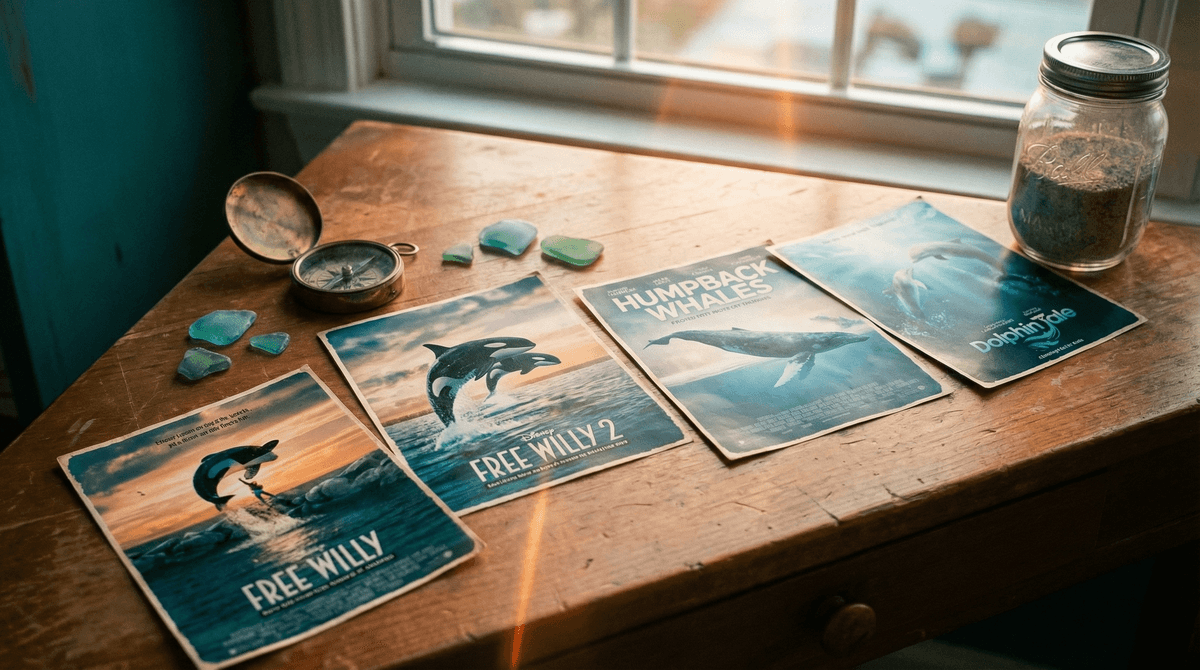
Most nature documentaries these days feel like they are competing for either the "most depressing ending" or the "longest runtime" award. Humpback Whales takes a different path. It is a 40-minute sprint that treats the ocean like a concert hall rather than a graveyard. Even a decade after its release, the visual quality holds up because the filmmakers shot this for IMAX screens. When you scale that down to a 4K TV in 2026, it still looks better than almost anything else on the free streaming apps.
The "Short" Advantage
The biggest friction point with modern nature media is the commitment. We have all started a breathtaking eight-part series on a Sunday afternoon only to realize by episode four that we are actually just watching a slow-motion tragedy about the food chain. This movie avoids that fatigue. It is snackable.
Because it was originally designed for museum theaters, it moves fast. It hits the high notes—the massive breaches, the complex songs, the bubble-net feeding—and then it gets out of the way. If your kid has a short attention span or you only have an hour before dinner, this is the perfect "filler" that actually feels like an event.
High Scores and Low Stakes
Critics gave this a 100% on Rotten Tomatoes, and that isn't because it’s a revolutionary piece of cinema. It’s because it is unfussy. It doesn't try to personify the whales with fake "characters" or scripted drama. It just lets the 7.1 IMDb rating speak for itself: this is a solid, high-quality production that respects the viewer's intelligence.
The "scary" parts are handled with a light touch. Yes, it mentions the history of whaling and the reality of ship strikes, but it focuses on the recovery. It’s one of the few environmental stories where the "after" is better than the "before." For a kid who is anxious about the planet, seeing a species actually bounce back is a necessary counter-narrative to the usual doom-scrolling.
Where to go next
If this sparks a "save the whales" phase in your house, you might be tempted to dig into the 90s archives for more ocean content. Before you queue up the old classics, check out our take on Free Willy 2: The Adventure Home - Is It Worth Watching? to see if that sequel’s conservation message still lands or if it's better left in the past.
If you are watching on Kanopy or Hoopla (which you should, since they’re free with a library card), use this as a palette cleanser. It’s the kind of movie that makes the living room feel a little bigger and a lot quieter. Just don't expect a deep dive into every sub-species; this is a greatest-hits album, not a box set.