

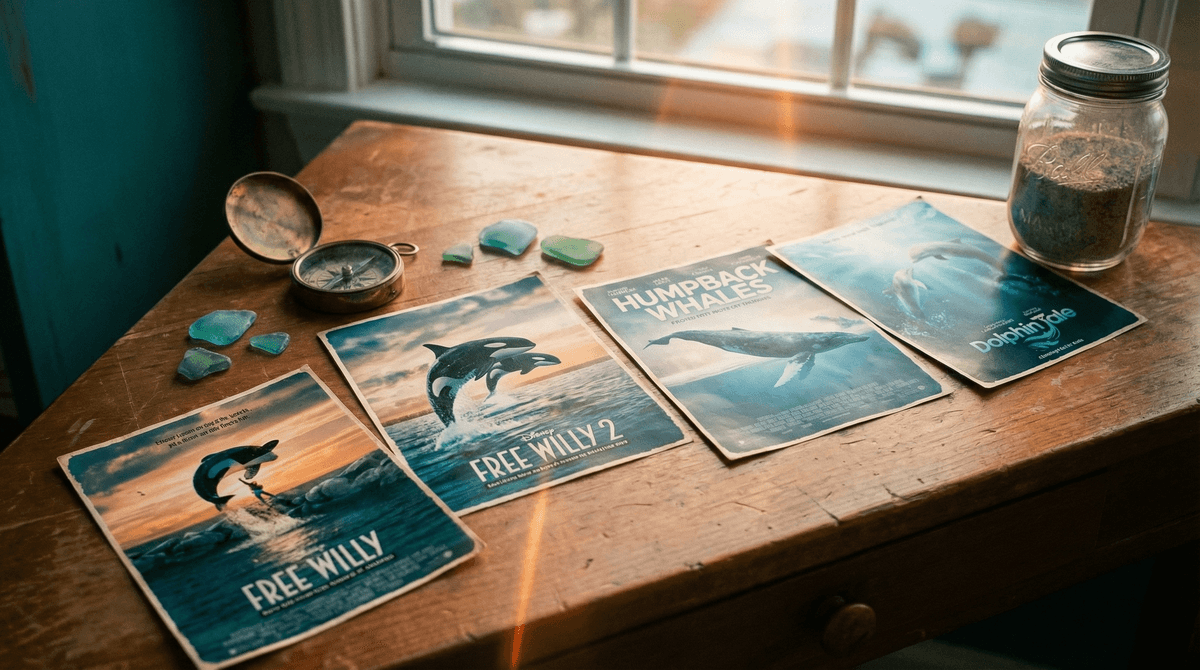
Released in 1995, Free Willy 2: The Adventure Home is the sequel to the surprise hit Free Willy. It reunites Jesse (Jason James Richter) with his orca friend Willy, this time throwing in Jesse's half-brothers, an environmental disaster involving an oil spill, and—because it's the 90s—a healthy dose of "kids can save the world if adults just listen!"
The plot: Jesse's been adopted by his foster parents (the Greenwoods), life is good, but then surprise! His biological mom had two other kids before she passed away, and now Jesse has to navigate being a big brother to two boys who've been bouncing through foster care. Meanwhile, Willy and his orca pod are threatened by that oil spill, and Jesse has to rally everyone to save them.
It's rated PG, runs about 98 minutes, and sits at a pretty mediocre 5.1/10 on IMDb. But here's the thing: IMDb scores don't always tell the full story for family movies.
If your kid loved the first Free Willy, they'll probably be into this one. The orca scenes are genuinely beautiful—there's something magical about watching these massive creatures swim that still holds up today, even with 90s special effects.
The movie leans hard into the "kid hero" trope that was everywhere in 90s family films. Jesse gets to be brave, resourceful, and right when the adults are wrong. For kids ages 7-10, that's catnip. They're at an age where they're starting to question authority and want to see themselves as capable problem-solvers.
The addition of Jesse's half-brothers adds some decent sibling dynamics. If you've got kids navigating blended families or new sibling relationships, there's actually some real emotional meat here about feeling abandoned, learning to trust, and what family really means.
Let's not sugarcoat it: this movie is... fine. It's not unwatchable, but it's also not going to blow anyone away in 2026.
The good: The environmental message about ocean conservation is solid and feels even more relevant now than it did in 1995. The orca footage is still stunning. The family dynamics are handled with more nuance than you'd expect from a kids' sequel.
The rough parts: The pacing drags in the middle. Some of the acting is, shall we say, very earnest in that 90s TV movie way. The villains are cartoonishly evil (the oil company guys literally leave orcas to die because... profits?). And the whole "kids save the day while adults stand around" thing gets a bit eye-roll-y.
The oil spill scenes can be genuinely upsetting for sensitive kids—you see animals covered in oil, struggling, and there's real peril. It's not graphic, but it's emotionally heavy.
Ages 6-7: Probably too intense. The oil spill scenes, the family separation themes, and some genuinely scary moments (orcas in danger, kids in peril) might be overwhelming.
Ages 8-10: Sweet spot. Old enough to handle the heavier themes, young enough to still get swept up in the adventure. Great for kids who are into animals, ocean life, or environmental issues.
Ages 11-13: They'll probably find it dated and a bit cheesy, but if they're into marine biology or environmental activism, it could still land. Better as a "family movie night with commentary" situation where you can all laugh at the 90s-ness together.
The environmental kid: If you have a kid who's already worried about climate change and animal welfare, this could either be empowering ("look, kids can make a difference!") or anxiety-inducing ("oil spills are killing whales!"). You know your kid best here.
Content warnings: Mild language (nothing worse than "damn"), some peril/suspense, themes of parental death and abandonment, environmental disaster imagery, and one scene where kids are in genuine danger from the oil spill.
Conversation starters: This movie is actually a solid jumping-off point for some real talks:
- What happens when oil spills into the ocean? (Spoiler: it's still happening)
- How do we balance economic needs with environmental protection?
- What does it mean to be a family? (The movie's answer: it's not just about biology)
- Why do companies sometimes prioritize profit over safety?
The 90s factor: Your kids will definitely notice this movie is old. The clothes, the technology (no cell phones!), the special effects—it all screams 1995. This can actually be fun if you lean into it. "This is what movies looked like when I was a kid" becomes part of the experience.
Accuracy check: The movie takes some liberties with orca behavior and what kids could realistically accomplish. If you've got a marine biology nerd, they might call BS on some plot points. That's actually fine—it's a chance to look up real orca facts together.
If you want the environmental message without the 90s cheese, try Dolphin Tale (2011)—it's based on a true story and holds up better. For orca content specifically, honestly just watch some nature documentaries. Our Planet on Netflix has incredible ocean footage and real conservation stories.
If your kid loved the first Free Willy and wants more, Humpback Whales (the IMAX documentary) is genuinely stunning. Or skip the screen time and visit an aquarium that focuses on conservation and rehabilitation (not the ones with performing animals—we've evolved past that, thankfully).
Free Willy 2 is a perfectly serviceable family movie that's showing its age but still has heart. It's not going to win any awards for filmmaking, but it's also not going to rot anyone's brain.
Watch it if: Your kid loved the first one, you want a jumping-off point for conversations about ocean conservation, or you're looking for a "safe" family movie night option that won't require you to explain anything too complicated.
Skip it if: Your kid is sensitive to animal peril, you have no tolerance for 90s movie cheese, or you'd rather just watch a nature documentary that shows real orcas doing real things.
The honest take: This movie won't change your kid's life, but it might spark an interest in marine biology or environmental activism. And in 2026, when we need all the young environmentalists we can get, that's not nothing.
If you do watch it, keep your phone handy to look up real orca facts afterward. The movie will make your kid ask questions, and "what's actually true about orcas?" is a pretty great rabbit hole to go down together.