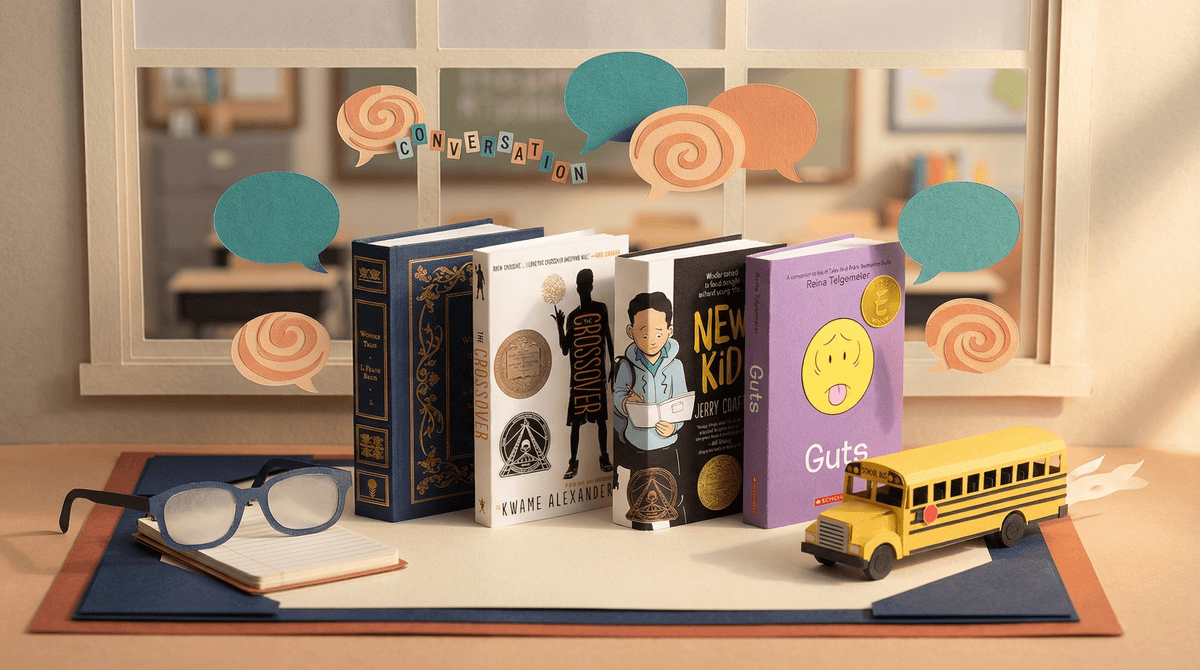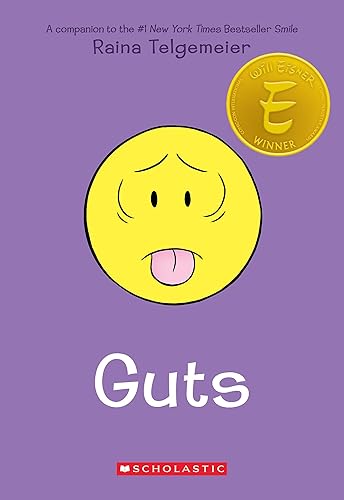
If you’ve ever dismissed graphic novels as "lite" reading, Raina Telgemeier is the creator who will make you eat your words. While some titles like Minecraft: The Graphic Novel serve as a bridge for kids who would rather be on a server than in a library, Guts is doing something much more sophisticated. It’s a masterclass in visual storytelling that explains the mind-body connection better than most textbooks.
The "medical mystery" hook
The story starts as a literal medical mystery. Young Raina is sick, her mom is sick, and then—everyone else gets better except for Raina. For a kid, that’s a terrifying narrative arc. The book captures the specific, isolating frustration of having a physical symptom that adults can’t find a "reason" for.
It’s a great pick for the kid who is currently "fine" but spends every Sunday night with a mysterious stomach ache. Telgemeier doesn't treat the anxiety as a secondary symptom; she treats it as the main character. The way she draws the "green" feeling of nausea or the tightening of the chest makes these invisible feelings concrete for a young reader.
The emetophobia of it all
We need to talk about the vomit. Emetophobia (the chronic fear of throwing up) is a massive, underserved anxiety trigger for kids. This book centers on it. For some kids, seeing Raina navigate this will be the first time they realize they aren't the only ones who feel paralyzed by a "gross-out" session in the cafeteria.
However, because the book is so honest, the imagery can be a trigger itself. If your kid is in the middle of a high-anxiety spiral specifically about germs or illness, read the room. It’s a healing book, but it’s also a "look it in the eye" book. It doesn't sugarcoat the sensory experience of being a kid who is scared of their own body.
Why it sticks with reluctant readers
There’s a reason this book has a 4.8 on Amazon and sits on almost every middle-schooler’s shelf. It moves fast. If your kid is used to the high-stakes, life-or-death energy of the I Survived series, they might find the stakes here surprisingly high, even though the "battle" is happening inside a girl's stomach.
The friendship drama is also brutal in its accuracy. Telgemeier captures those micro-aggressions of 11-year-old girls—the shifting alliances and the "not-friends" who aren't quite bullies but definitely aren't safe—with painful precision. It’s a survival guide for the social minefield of 5th grade. If your kid is starting to pull away or seems "moody" about school, this is the low-pressure way to start a conversation about what’s actually going on in their head.