

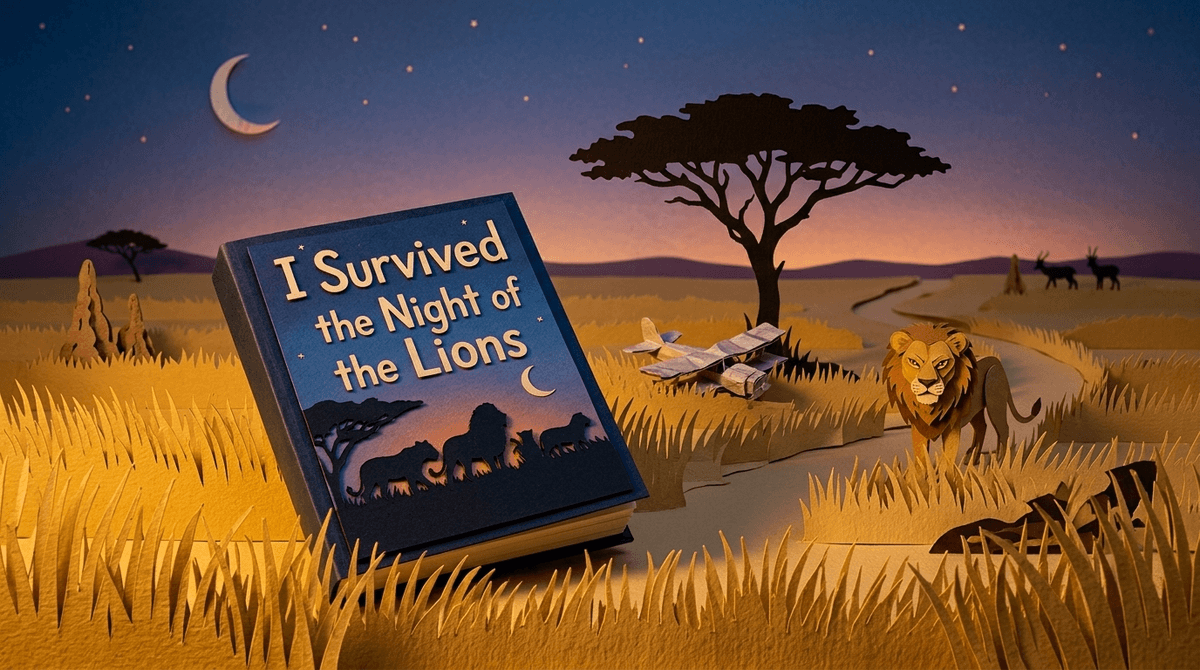
I Survived the Night of the Lions is exactly what it says on the tin: a high-stakes, predator-heavy survival story that hits the sweet spot for 2nd to 5th graders who want a thrill without the trauma of adult-targeted thrillers. It’s intense, sure—there’s a plane crash and literal man-eaters—but Lauren Tarshis has a gift for keeping the peril manageable while making the history feel urgent.
In I Survived the Night of the Lions, a young protagonist survives a small-plane crash in the African savanna only to face off against apex predators. It’s a fast-paced, historically grounded read that’s perfect for fans of The Last Kids on Earth or Hatchet. If your kid wants high-stakes action that they can actually finish in two sittings, this is the gold standard.
If you have a kid who treats a 300-page novel like a chore list, the I Survived series is your best friend. There’s a reason this is the 26th book in the series. Tarshis doesn't waste time on "world-building" or flowery prose; she drops the reader directly into a disaster and keeps the engine revving until the final page.
I Survived the Night of the Lions follows the established formula: a relatable kid, a terrifying historical event (or in this case, a survival scenario inspired by the Tsavo man-eaters and modern aviation scares), and a resolution that feels earned. For kids who struggle with focus, the short chapters and frequent cliffhangers aren't just a style choice—they’re a necessity. It’s the literary equivalent of a great 22-minute TV episode.
Let’s talk about the intensity. The book opens with a plane crash. That's a heavy start. Then comes the "Night of the Lions" part. Unlike some of the weather-based I Survived books (like the ones about floods or blizzards), the threat here is sentient and hungry.
Is it "too much"? For most 8-to-10-year-olds, no. The violence isn't gratuitous or gory; it’s atmospheric. Tarshis focuses more on the fear of the predator and the problem-solving required to survive than on the mechanics of an attack. It builds resilience by showing a kid who is terrified but keeps moving. If your kid can handle a Disney villain or the more intense moments of Wings of Fire, they can handle this.
One of the best things about the series—and this book specifically—is the "back matter." Tarshis always includes a section at the end explaining what was real and what was fiction. In Night of the Lions, she dives into the history of the African savanna, the behavior of lions, and the real-life incidents that inspired the story.
It turns a "thrill ride" into a geography and biology lesson without the kid realizing they’re being taught. It’s a great jumping-off point for conversations about conservation, the reality of the food chain, and how humans interact with wild spaces.
If this book ignites a "survival" phase in your house, don't let the momentum die. There is a whole world of "kid vs. nature" content that builds the same muscles of grit and quick thinking.
The "I Need More Danger" Category
- Hatchet by Gary Paulsen: The undisputed heavyweight champion of kid survival books. If they liked the plane crash in I Survived, they need Brian Robeson’s story. It’s grittier and more solitary, but it’s a classic for a reason.
- The Last Kids on Earth: If they liked the "monsters in the dark" vibe of the lions but want more humor and illustrations, this series is the perfect pivot. It’s a "zombie apocalypse" but played for laughs and gadgets.
- Wild Survival by Melissa Cristina Márquez: Written by a real-life shark scientist, this series follows a family of wildlife filmmakers getting into scrapes with predators. It’s got that same "real-world stakes" energy.
Screen-Based Survival
- Hunt for the Wilderpeople: A fantastic family movie about a "tough" kid and a grumpy uncle lost in the New Zealand bush. It’s funny, poignant, and captures that "us against the world" survival feeling perfectly.
- Alone (Selection of kid-friendly clips): While the full show is for adults, watching specific clips of people building shelters or finding water can be a great way to bridge the book’s fiction with real-world skills.
The "friction point" with the I Survived series isn't usually the content—it's the speed. These books are short. Your kid will likely inhale it in under an hour. If you’re buying these, buy them in batches or hit the library hard.
Pro-tip: If your kid is a reluctant reader, try the I Survived Graphic Novels. They cover the same stories but with high-quality illustrations that help with reading comprehension and keep the "action movie" feel alive.
You don't need to over-analyze a survival thriller, but a few questions can turn a quick read into a better conversation:
- "What would be the scariest part of that plane crash for you—the height or being lost?"
- "The main character had to make a choice between staying put or moving. What would you have done?"
- "Why do you think humans are so fascinated by predators like lions?"
Q: What age is I Survived the Night of the Lions appropriate for? It’s aimed squarely at ages 7 to 11 (2nd through 5th grade). The vocabulary is accessible for emerging readers, but the stakes are high enough to keep a 5th grader from feeling patronized.
Q: Is Book #26 too scary for a sensitive 7-year-old? It depends on what they find scary. If they are afraid of animals or "monsters under the bed," the idea of lions hunting humans at night might be a bit much for bedtime. However, the protagonist always survives, which provides a safety net for the reader.
Q: Do you need to read the previous 25 books first? Not at all. Each I Survived book is a completely standalone story with a different protagonist and setting. You can jump in at #26 without missing a beat.
Q: Are there any content warnings for I Survived #26? Beyond the obvious (a plane crash and predatory animal behavior), the book is very clean. No language, no romance, just pure survival action.
I Survived the Night of the Lions is a win for intentional parents because it respects a kid's desire for "real" stakes while keeping the guardrails up. It’s fast, it’s educational in a "stealth" way, and it’s a proven winner for getting kids to actually enjoy opening a book.
- Check out our full best books for kids list for more age-by-age recommendations.
- If your kid is ready for more complex survival stories, see our digital guide for middle school.
- Get help picking the next book in the series
