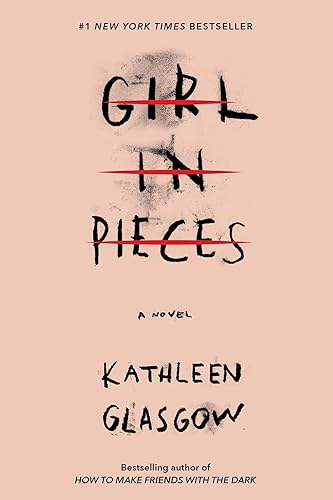
If you spend any time on the bookish side of social media, you’ve seen this cover. It is the gold standard for what’s often called the "sad girl" aesthetic—a corner of the internet where trauma, messy recovery, and poetic pain are the primary currency. Because it’s a #1 New York Times bestseller with a massive 4.6 rating on Amazon, the algorithm treats it like a universal must-read. But for a parent, the friction lies in the gap between "popular YA" and "appropriate for my teenager."
The BookTok pipeline
The reason your kid is likely asking for this book isn't necessarily because they’re struggling with their mental health. It’s because Glasgow has become the face of a specific kind of visceral realism that defines modern teen literature. On platforms like TikTok, this book is often grouped with titles that feel much lighter, which creates a bit of a trap. A reader might go from a standard romance to this, and the jump in intensity is like going from a paper cut to open-heart surgery.
If you’re trying to figure out why this specific story has such a grip on the current cultural moment, it helps to look at the Kathleen Glasgow and the ‘Sad Girl’ Phenomenon. It’s less about being "edgy" and more about a generation of readers who feel like traditional "everything is fine" stories are lying to them.
Not your older sibling's YA
In the early 2000s, books like Speak or The Perks of Being a Wallflower were the benchmarks for teen trauma. Girl in Pieces makes those look like Sunday school. Glasgow doesn't just mention that the protagonist, Charlie, self-harms; she describes the mechanics, the tools, and the physical sensations in a way that can be instructional for a vulnerable reader.
This isn't a book about a girl who has a "bad time" and gets better after a montage. It’s a book about homelessness, sexual exploitation, and the actual, boring, painful grit of a psychiatric ward. If your kid is coming off a binge of Thirteen Reasons Why, they might think they’re prepared for this. They probably aren't. While that show was a mystery-thriller wrapped in trauma, this is a character study of a person who is fundamentally shattered.
How to play it
If your teen already has this on their shelf, don't panic and snatch it away. That’s a fast track to making the book a forbidden relic. Instead, acknowledge that it’s a heavy lift. This is a "read with the lights on" book.
For parents who want to be proactive, checking out a parent’s guide to Girl in Pieces can give you the specific talking points to see if your kid is actually processing the story or just consuming the "vibe." If they liked the emotional honesty of All the Bright Places but aren't quite ready for the graphic nature of Glasgow’s debut, you might suggest they hold off on this one until they’re heading to college. It’s a powerful piece of writing, but it’s medicine that requires a very specific level of maturity to digest safely.