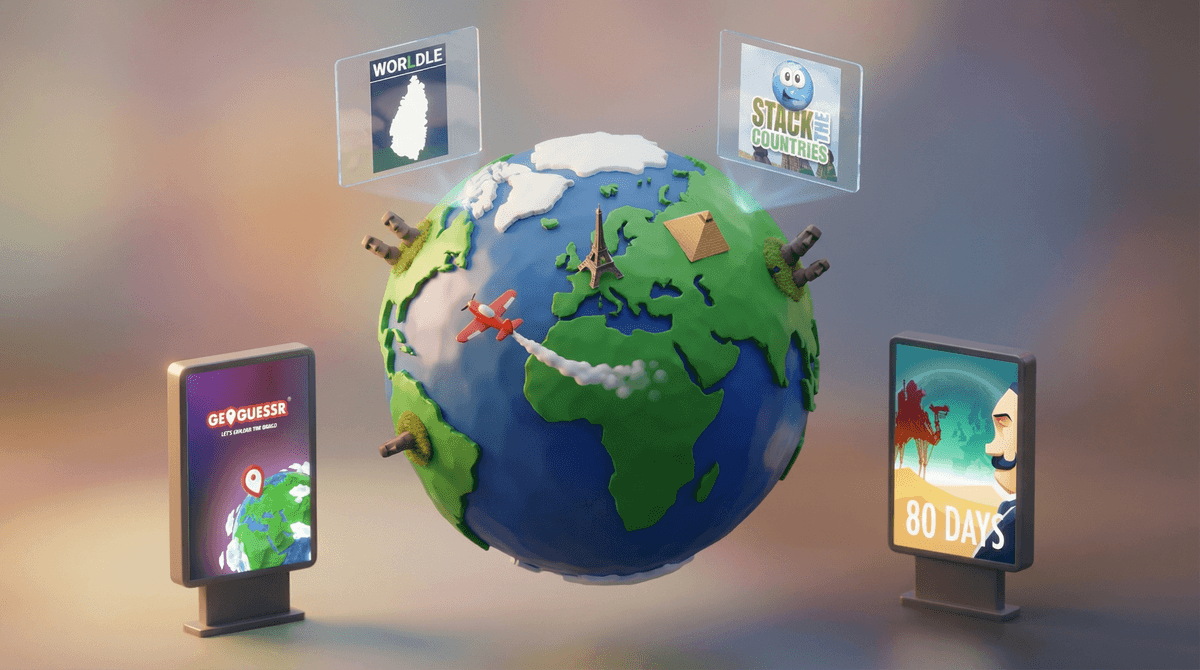
GeoGuessr is the ultimate "tab-open-in-the-background" game. It is the digital equivalent of being blindfolded, spun around three times, and pushed out of a moving vehicle into a ditch in rural Estonia. For a generation of kids who grew up with a smartphone in their pocket, it transforms the static, utilitarian world of navigating through Google Maps into a competitive sport.
The detective "meta"
What makes this more than just a trivia site is the "meta." Your kid isn't just looking for a sign that says "Welcome to Paris." They are looking at the color of the stripes on a utility pole, the specific shade of yellow on a license plate, or whether the Google camera car had a roof rack when it drove through this specific part of Mongolia.
It rewards a very specific type of hyper-fixation. If your kid is the type who can spot the difference between a Boeing and an Airbus from 30,000 feet, they will thrive here. It’s a low-friction way of introducing world cultures through media without the dry, "educational" tone of a textbook. They aren't learning about climates because they have to; they’re learning about them because they need to know if that specific type of scrub brush only grows in the Argentinian pampa.
The subscription friction
We need to talk about the "vibes" of the company lately. Since its 2013 launch, GeoGuessr has moved from a free experiment by Anton Wallén to a fairly aggressive subscription model. The community is vocal about this. You’ll see plenty of reviews on Trustpilot and Steam complaining about "scammy" billing or the fact that the free version is now essentially a demo.
The Steam edition has faced particular heat for being a "second-worst game" contender due to how it handles its paywall. If you’re trying to balance brain-building apps with pure entertainment, you have to decide if €35 a year is worth it for what is essentially a skin for Google Street View. For a kid who plays every day, it’s a steal. For a casual user, the constant "buy pro" nudges are a slog.
How to play (without the headache)
If you want to avoid the subscription drama initially, stick to the mobile app or the limited free web rounds. But the real magic happens in "Party Mode." This is where you can set up private rooms. Instead of your kid playing against a random person in Sweden who has memorized every bollard in the world, they can play against you or their friends.
It also helps mitigate the "unmoderated" nature of the real world. Because the game pulls live images, you are at the mercy of whatever the Google car captured. Usually, that’s just a dusty road in Australia, but occasionally it’s something more chaotic. Playing together on a laptop or casting it to the TV turns it into a shared experience where you can filter the weirdness in real-time.
If your kid has already fallen down the YouTube algorithm rabbit hole watching pro players guess a location in 0.1 seconds based on a single blade of grass, they are already hooked. At that point, the subscription is less of a "scam" and more of a ticket to the only esport that actually requires a deep understanding of global infrastructure.