
Facetune

Facetune

app

Everyone, 2018, Photography

WISE
28%

WISE Score

4.6

App Store

The app that teaches teens their face needs fixing—because nothing says 'self-esteem' like AI-powered appearance anxiety.

Screenwise Verdict

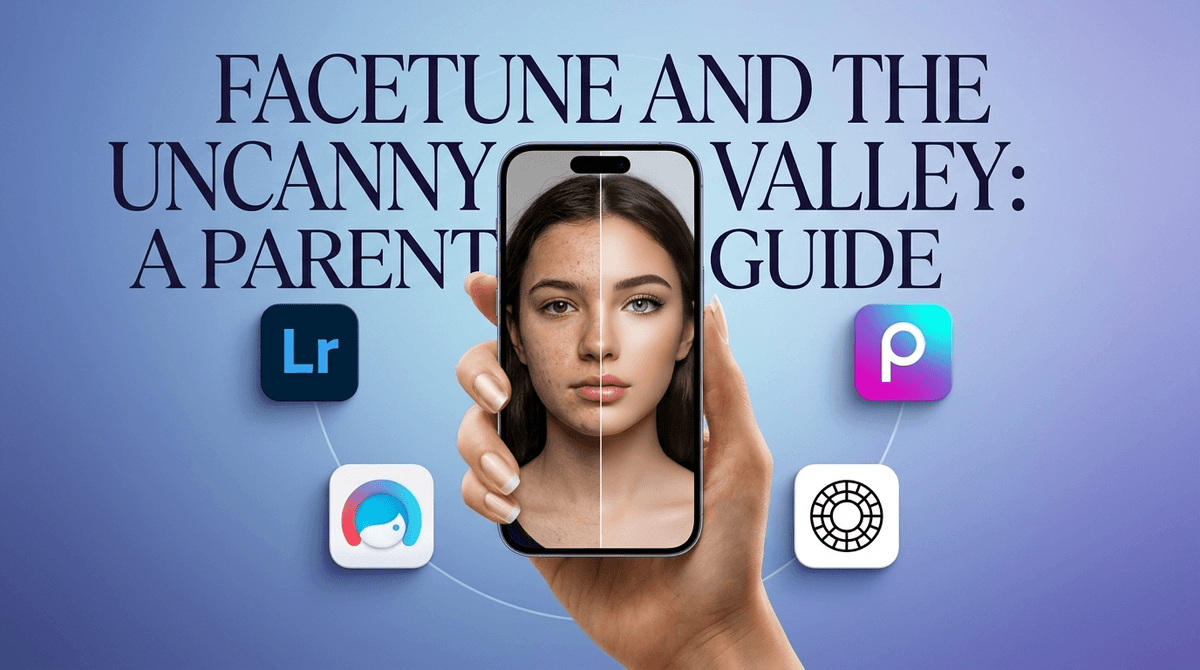
Look, I'm going to be straight with you: Facetune is basically a self-esteem destroyer disguised as a photo editor. Every major parenting safety organization—Common Sense Media, Bark, SmartSocial—flags this app for significant mental health concerns.

The core problem isn't that it teaches editing skills (though let's be honest, 'smoothing skin' and 'whitening teeth' aren't exactly portfolio-building talents). It's that it teaches kids their natural face isn't good enough. At an age when they're already drowning in social comparison and filtered Instagram reality, Facetune hands them a shovel and says 'dig deeper.'

Could an older teen use this responsibly for a resume headshot? Sure. Could it be a gateway to learning actual photography and editing? Maybe. But in practice, it's mostly fueling the toxic cycle of posting fake versions of yourself online and then feeling terrible when you look in an actual mirror.

If your kid is asking for this app, that's actually a perfect conversation starter about authenticity, social media pressure, and what we're all pretending to be online. But as an app to just hand over? Hard pass.
Age Fit

Honestly? This isn't appropriate for kids or young teens—period. If your 16-17 year old wants to touch up a professional headshot or experiment with hair color before dyeing it, fine, but even then you need to have serious conversations about authenticity and self-image. For younger kids, this is a hard pass.

WISE Breakdown
Wholesome
25

Facetune fundamentally encourages users—especially teens—to alter their appearance to meet unrealistic beauty standards. Multiple parent safety organizations (Common Sense Media, Bark, SmartSocial) flag significant mental health concerns around body image, self-esteem, and the message that your natural appearance isn't 'good enough.' While the app itself isn't overtly toxic, its core purpose undermines healthy self-perception during critical developmental years.

Imaginative
35

The app offers creative tools for photo and video manipulation with AI-powered features like background swapping, makeup filters, and style experimentation. However, the creativity is narrowly focused on appearance modification rather than broader artistic expression. It's more about conforming to beauty ideals than genuine creative exploration—you're not building worlds or telling stories, you're smoothing skin and whitening teeth.

Safe
30

While Facetune doesn't contain explicit content or predatory features, it poses significant psychological safety risks. Common Sense Media user reviews and multiple parenting safety sites warn it can 'mess with mental health' and make kids feel 'not good enough.' The app normalizes heavy photo manipulation at an age when identity formation is fragile. Monetization likely includes in-app purchases for premium features, though specific details aren't provided in the app description.

Enriching
20

Facetune teaches basic photo editing skills, but the 'enrichment' is overshadowed by what it actually teaches: that your appearance needs fixing, that authenticity should be hidden, and that presenting a filtered version of yourself is normal. It doesn't build meaningful skills, empathy, or personal growth—it reinforces insecurity and comparison culture. The technical learning is minimal compared to the psychological cost.

Parent Info

Why It Might Be Great

  • Teaches basic photo editing techniques and introduces AI-powered creative tools
  • Can be useful for professional headshots or resume photos for older teens/adults
  • Offers experimentation with hairstyles or makeup before making real changes
  • Could spark interest in photography and digital editing as a technical skill

What to Watch For

  • Major red flags around body image and self-esteem—multiple safety orgs warn this can seriously mess with kids' mental health
  • Normalizes the idea that natural appearance needs 'fixing' and filtered photos are the standard
  • Can fuel social media comparison culture and unrealistic beauty expectations
  • Likely includes in-app purchases for premium features
  • One kid reviewer on Common Sense Media literally said 'I don't recommend for little kids it can mess with their mental health'

Conversation Starters

  • "What do you think about apps that change how people look in photos? Do your friends use them?"
  • "How can you tell when someone's edited their photos on social media? Does it ever make you feel bad about yourself?"
  • "Why do you think so many people want to change their appearance in pictures? What are we all trying to look like?"
  • "If you were going to post a photo, would you rather show the real you or an edited version? What feels right to you?"

Ask Anything

Get a personalized guide on any topic