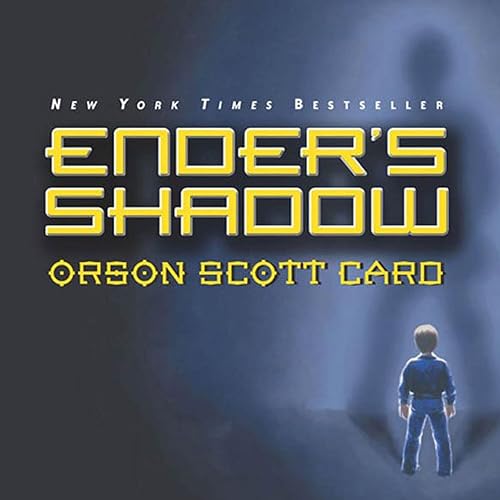
The "Shadow" is actually the main event
Most readers stumble into this series through Ender's Game, which is a fantastic "chosen one" narrative. But Ender's Shadow is for the kid who watched the movie or read the first book and thought, "Wait, why are the adults so incompetent?" Bean, the protagonist here, sees right through the propaganda. He isn't a hero by choice; he's a survivor by necessity.
While Ender is the emotional heart of the war, Bean is the cold, calculating brain in the corner. If your kid enjoys the tactical planning of a complex strategy game or likes stories where the "sidekick" is secretly the one holding everything together, this is their manifesto. It’s a more cynical, sharper look at the same events, and for many fans, it’s the superior book.
Rotterdam and the cost of survival
The opening chapters are famously bleak. We meet Bean as a starving four-year-old in the streets of Rotterdam, navigating a Darwinian nightmare of child gangs. It’s a massive tonal shift from the "school" vibes of Battle School. This part of the book is why we suggest a slightly higher maturity level. It’s not just about the violence; it’s about the psychological weight of a child having to decide who lives and who dies just to secure a piece of bread. It carries a similar dark psychological intensity to some of the heavier YA series, but without the romance to soften the blow.
This section introduces Achilles, a villain who is genuinely terrifying because he isn't a monster—he’s just a broken kid with a god complex. The rivalry between Bean and Achilles is much more personal and visceral than the abstract alien war happening in the background. It captures that same fast-paced mystery and tension of a kid on the run, but dialed up to a global military scale.
The "Smartest Kid" trap
There is a specific kind of kid who loves this book: the one who feels like they’re playing a different game than everyone else. Bean’s struggle is that he is too smart. He understands the teachers' manipulations before they even start. This makes for a great "how to think" manual. It encourages readers to look for the meta-game in any situation.
The book also hits a very emotional wall toward the end regarding Bean’s genetic makeup. It raises questions about the ethics of human engineering that stick with you long after the final page. It’s not a "happily ever after" situation. It’s a "you won, but at what cost?" ending. If you have a kid who likes to deconstruct stories and find the holes in the plot, give them this. They’ll spend the next week trying to figure out how they would have handled the Battle Room differently.