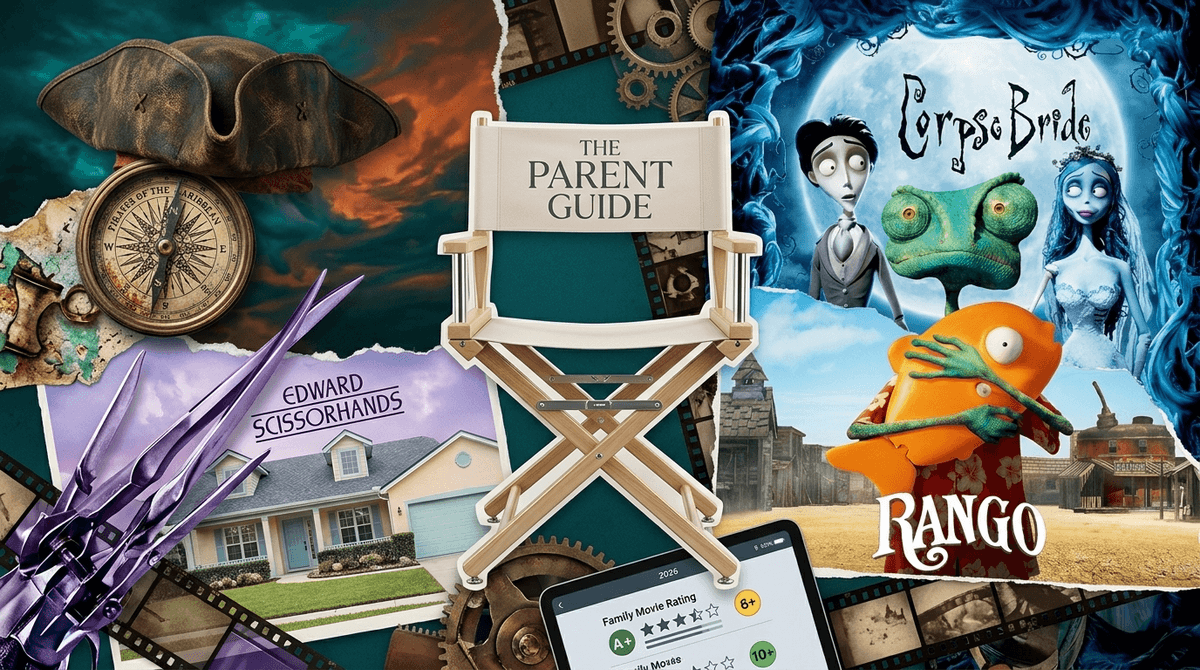
Edward Scissorhands

Edward Scissorhands

movie

PG-13, 1990, Drama, Fantasy

WISE
68%

WISE Score

91

Avg. Tomatometer

Tim Burton's gothic fairy tale about a gentle outsider with scissors for hands—beautiful, bizarre, and darker than you remember.

IMDb7.8
RT Critics91%
MC74
Common Sense Media
Where to Watch
Loading streaming options...
Screenwise Verdict

Edward Scissorhands is a legitimately good film with real artistic vision and meaningful themes about difference and acceptance. The 91% Rotten Tomatoes score isn't inflated—Burton created something visually distinctive and emotionally resonant.

But let's be clear: this is not a family movie in the Disney sense. The violence is significant (stabbing, mob with weapons, accidental injuries), there's a sexual assault attempt, and the whole thing is drenched in melancholy. Kids under 12 will likely be frightened or bored, possibly both.

The 1990s aesthetic also shows its age. The pacing is slow by modern standards, and some of Burton's quirks (the pastel suburbia, the exaggerated performances) feel more dated than timeless. Teens and adults who appreciate darker fairy tales will find substance here, but this isn't going to compete with modern entertainment for most kids' attention.

If you have a 13-year-old who's into Tim Burton's style or wants something with actual themes to discuss, this delivers. Just prep them for the violence and know that the ending won't leave them feeling warm and fuzzy.

Age Fit

This is really a PG-13 film (though it predates that rating's common use). Best for ages 13+ who can handle violence, dark themes, and sexual content. Younger kids will be scared or confused, and the melancholic tone isn't what most families expect from a 'fairy tale.'

WISE Breakdown
Wholesome
68

The film's emotional core is about kindness, acceptance, and the pain of being different. Edward is gentle and well-meaning, and the suburban family initially shows genuine warmth. However, the wholesome elements are undercut by darker themes: mob mentality, betrayal, sexual predation (a neighbor tries to seduce Edward), and a community that turns viciously against him. The tone is melancholic rather than uplifting, and the ending is bittersweet at best. It models compassion but also shows how cruelty can destroy innocence.

Imaginative
88

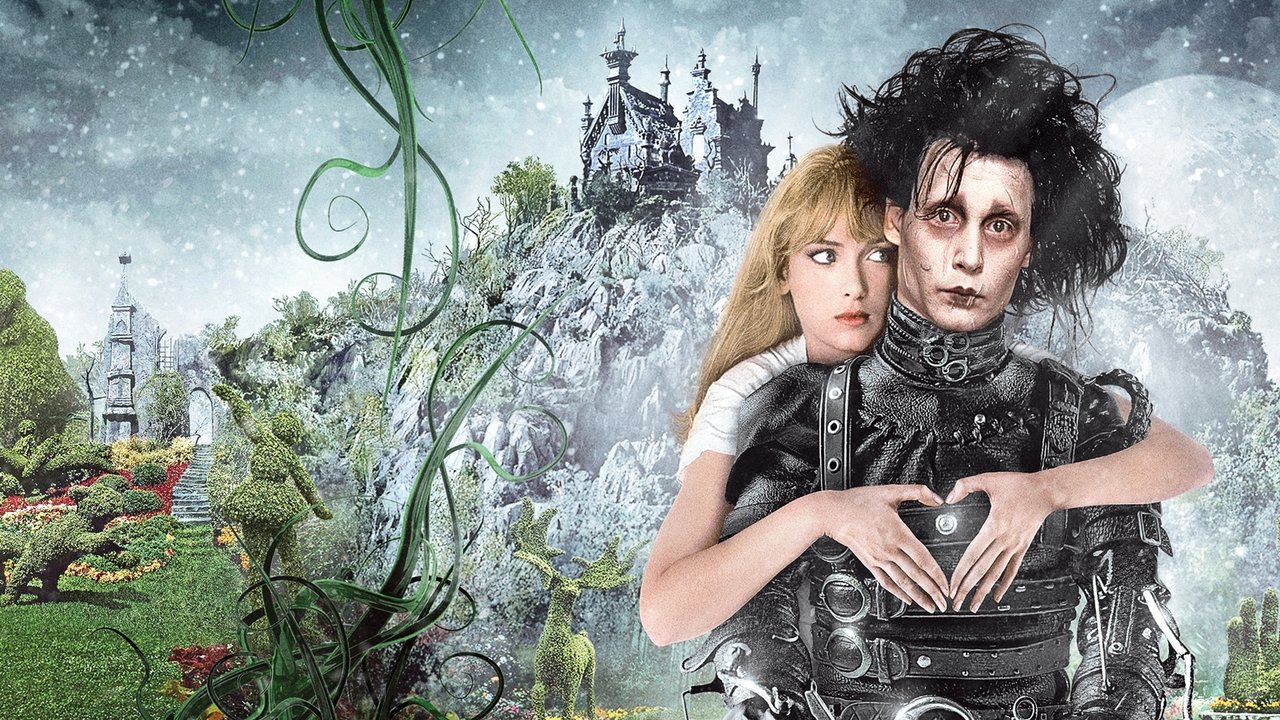
Tim Burton's visual style is distinctive and dreamlike—the contrast between Edward's gothic mansion and the pastel suburbia is striking. The premise itself (a man with scissors for hands) is wildly creative, and the film explores what that limitation would actually mean in daily life. The topiary sculptures, ice sculptures, and Edward's haircuts show creative problem-solving. The fairy-tale framing device adds mythic weight. This is imaginative filmmaking that invites viewers to think about difference and beauty in unconventional ways.

Safe
52

This is where Edward Scissorhands loses points for younger viewers. There's violence: Edward accidentally cuts people (including a young boy's face), stabs a man in self-defense, and is shot. There's a sexual assault attempt where a neighbor corners Edward and tries to seduce him aggressively. The mob scene at the end is genuinely frightening, with angry townspeople hunting Edward with weapons. The overall tone is dark and melancholic, with themes of rejection and isolation that can be emotionally heavy. Blood appears multiple times. While not gratuitous, these elements make it unsuitable for young children and potentially distressing for sensitive viewers.

Enriching
79

The film offers real substance: it's an allegory about otherness, conformity, and how society treats those who are different. The contrast between Edward's genuine artistry and the shallow suburbanites is pointed social commentary. It raises questions about beauty, monstrosity, and whether being 'normal' is worth the cost. The performances (especially Johnny Depp's largely wordless portrayal) demonstrate how much can be conveyed through physicality. The bittersweet ending doesn't offer easy answers, which is more honest than a tidy resolution. That said, the pacing drags in the middle, and some of Burton's quirks feel more stylistic than meaningful.

Parent Info

Why It Might Be Great

  • Genuinely imaginative premise and stunning visual contrast between Edward's dark mansion and candy-colored suburbia
  • Meaningful exploration of otherness, conformity, and how communities treat people who are different
  • Johnny Depp's largely silent performance is surprisingly moving—he conveys vulnerability and longing without much dialogue
  • The social commentary about suburban phoniness still lands, even if the aesthetic feels dated
  • A rare fairy tale that doesn't tie everything up neatly—the bittersweet ending respects the audience's intelligence

What to Watch For

  • Violence is a real issue: Edward accidentally cuts a boy's face, stabs someone in self-defense, and the mob scene at the end is intense
  • A neighbor sexually assaults Edward in a scene that's uncomfortable and predatory—not graphic but definitely inappropriate for kids
  • The tone is melancholic throughout, with themes of rejection and loneliness that can be emotionally heavy
  • Pacing drags in the middle—modern kids raised on Marvel might find it slow
  • Blood appears several times when Edward accidentally cuts people or himself

Conversation Starters

  • "Why do you think the neighborhood turned on Edward so quickly? What does that say about how people treat outsiders?"
  • "Edward creates beautiful things but can't touch anyone without hurting them. What do you think that represents?"
  • "The inventor died before giving Edward real hands. Do you think Edward would have been happier 'normal,' or does his difference make him who he is?"
  • "How is this different from other 'monster' or 'outsider' stories you know? What makes Edward sympathetic?"

Deep Dive

The Gothic vs. Pastel Clash

While the 91% critic score on Rotten Tomatoes suggests a universal crowd-pleaser, this movie is a visual and emotional contradiction. You have the dark, jagged silhouette of Edward living in a castle that looks like a leftover set from a German Expressionist film, dropped right next to a Florida suburb where every house is a shade of Easter-egg mint or salmon.

This isn't just a stylistic choice; it’s the whole point. The movie uses that contrast to show how quickly a "polite" community can turn someone into a novelty, then a scapegoat. If you’re navigating The Spooky-Scale Guide to Tim Burton, this sits right in the middle: it’s not as "Halloween-fun" as Beetlejuice, but it’s far more grounded and tragic than his stop-motion work.

The Friction You’ll Actually Feel

Most parents remember the topiary scenes and the ice shavings. What they often forget is Joyce. She’s the neighborhood seductress who essentially tries to corner Edward into a sexual encounter. In 1990, it was played as a "desperate housewife" caricature, but by 2026 standards, it feels predatory. It’s the single most awkward moment to sit through with a middle-schooler, mostly because it's tonally disconnected from the rest of the "fairy tale" vibe.

Then there’s the pacing. We’re used to modern films hitting a plot beat every eight minutes. This movie lingers. It spends a lot of time on Edward’s silent reactions and the slow-burn realization that he will never actually fit in. If your kid is used to high-octane fantasy, they might find the middle hour a bit of a slog. However, for a kid who feels like an outsider, the payoff is huge. It’s one of the best movies that teach creativity vs. conformity because it doesn't pretend that being "different" has a magical, happy-ever-after fix.

The Depp of it All

Johnny Depp’s performance is almost entirely physical. He has very few lines, which makes his vulnerability feel earned rather than scripted. If your teen is curious about his range beyond the blockbuster franchises, this is the essential starting point. It’s worth checking out our Johnny Depp movie guide for parents to see how this role set the template for the "weirdo with a heart of gold" archetype he’d revisit for the next three decades.

If your kid liked "Wednesday"

If your household recently binged the Wednesday series, this is the logical next step, but with a major caveat: Edward is the opposite of Wednesday Addams. Where Wednesday is confident, sharp-tongued, and in control of her macabre world, Edward is fragile and terrified. Watching this back-to-back with modern Burton projects is a great way to show a kid how "gothic" can be used for more than just aesthetic—it can be used to tell a really heart-wrenching story about loneliness.

Just be ready for the ending. It isn't a "victory" for the hero; it’s a retreat. It’s beautiful, but it’s a bummer.

Stills
Edward Scissorhands — still 1
Edward Scissorhands — still 2
Edward Scissorhands — still 3
Edward Scissorhands — still 4
Edward Scissorhands — still 5
Edward Scissorhands — still 6
Edward Scissorhands — still 7
Edward Scissorhands — still 8

Ask Anything

Get a personalized guide on any topic