The "Spreadsheet" that talks back
If your teen is used to the high-fidelity graphics of Call of Duty or the cozy aesthetics of Animal Crossing, the first five minutes of Democracy 4 might be a shock. This is a game made of circles, lines, and data points. It looks less like a video game and more like a high-tech whiteboard in a war room. But for a certain type of kid—the one who dominates the debate club or spends their weekends playing Civilization—this UI is actually a superpower.
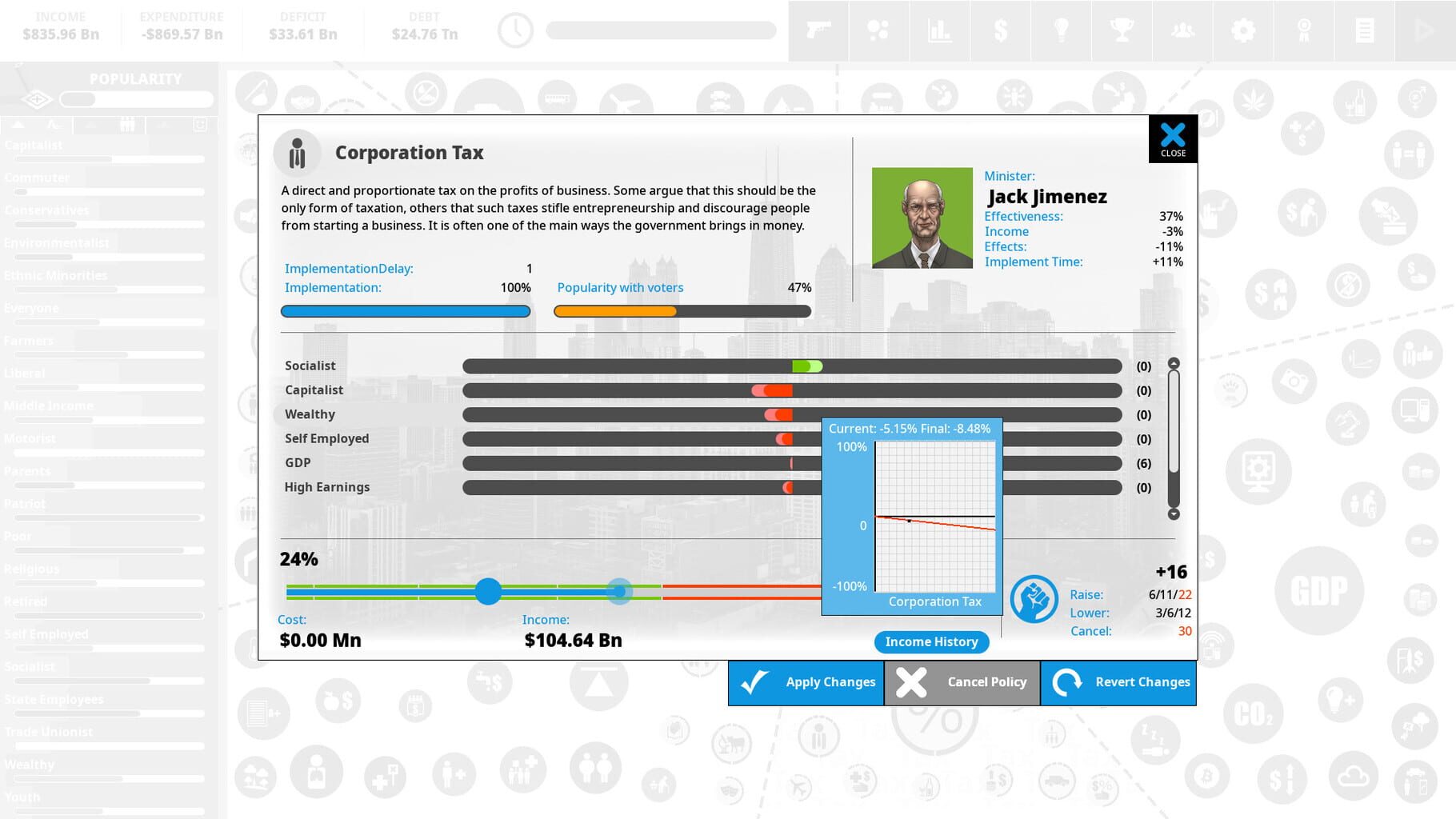
The game is built on a "neural network" of policy. You click on a bubble like "Petrol Tax" and see lines connecting it to "Car Usage," "Air Pollution," and "Middle Class Income." Moving a slider on one policy sends ripples through the entire country. It’s the best digital representation of the "butterfly effect" in government. Your kid might try to solve the climate crisis with a carbon tax, only to realize they’ve just alienated the blue-collar voters they needed to win the next election. It’s frustrating, complex, and deeply addictive for anyone who likes solving puzzles.
Systems thinking over soundbites
Most media treats politics like a team sport or a series of shouting matches. Democracy 4 treats it like an engineering problem. This is where the real value for a teen lies. It forces them to move past the "why don't they just..." phase of political thought.
When a player realizes they can’t fund universal healthcare without either gutting the military or raising taxes to a level that triggers a "brain drain" of wealthy professionals, they’re learning about trade-offs. If you’ve been looking for political games for kids that move beyond simple "good vs. evil" narratives, this is the gold standard. It doesn't tell the player what to believe; it just shows them the bill for those beliefs.
Navigating the "Agenda" question
Parents often worry if a game like this is trying to indoctrinate their kid. Positech Games has gone to great lengths to make the simulation as neutral as possible, though every simulation has built-in assumptions about how economics and sociology work. The "win condition" isn't being a good person; it's getting re-elected.
You can play as a hardline socialist, a staunch libertarian, or a total authoritarian. The game doesn't judge the morality of your choices, but it will ruthlessly simulate the consequences. If your teen is interested in how these systems interact with money and trade, it’s a natural bridge to some of the best economics games for kids that focus on the "how" rather than the "why" of financial systems.
The friction point: Heavy topics
While the graphics are just icons and text, the subject matter is heavy. You will deal with sliders for things like the "Right to Die," "Abortion Rights," and "State Surveillance." There is no gore, and there are no "scenes" of these things happening, but the game assumes the player knows what these terms mean and why they are controversial.
If your teen is younger than 15 but still wants to try their hand at governing, you might want to start with something from our list of the best civics learning games for kids. But for a high schooler who is already reading the news, Democracy 4 is a rare piece of software that respects their intelligence. It’s a sandbox where they can test their theories about the world without actually crashing the global economy.