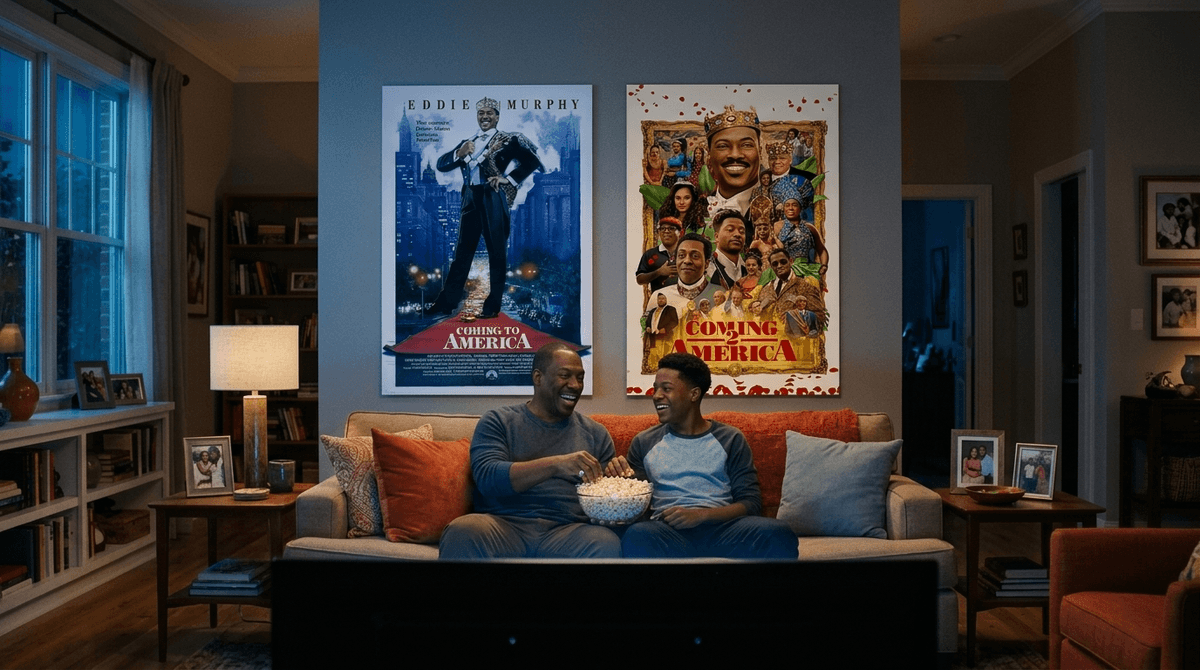
The "Peak Eddie" Factor
If you weren't around in the late '80s, it is hard to overstate how much of a supernova the lead actor was. This movie represents the absolute apex of that era. While his earlier hits were often jagged and cynical, this is the moment the "raunchy comedian" proved he could carry a sincere, big-budget romance without losing his edge.
The critics at the time were fairly split—the Metacritic score sits at a middling 47—but the audience response tells the real story. With an 85% audience score on Rotten Tomatoes, it’s clear this is a "people’s choice" classic. It works because it isn't just a collection of jokes; it’s a fairy tale that happens to be hilarious. If you're looking for where this fits in the pantheon, check out our list of The 20 Funniest Classic Comedies Ever Made to see how it stacks up against the other heavy hitters of the decade.
The Multiple-Character Gimmick
The most impressive thing about the film—and the thing that usually floors teens who are used to modern CGI—is the makeup work. The lead and his co-star play a handful of different characters, most notably the guys in the Queens barbershop. These scenes are the soul of the movie. They feel like a stage play dropped into the middle of a rom-com, filled with fast-paced, improvisational energy.
This "actor playing four roles" move became a bit of a cliché in later decades, but here it feels fresh and serves a purpose. It builds out the world of Queens as a vibrant, loud, opinionated character of its own. For a kid who grew up on the "multiverse" or actors playing variants of themselves, showing them the analog, practical-effects version of that trick is a great conversation starter.
Navigating the "80s R" Rating
We need to talk about why this movie is rated R, because it’s a very specific kind of R. It isn't the gritty, violent R of a modern action movie. It’s the "1988 comedy" R, which means there is a very high concentration of casual nudity and "locker room" talk in the first fifteen minutes.
The opening scenes in the fictional kingdom of Zamunda feature full-frontal toplessness during a royal bathing sequence. It’s played for world-building, not as a "strip club" moment, but it’s there, and it’s unmistakable. If you are watching with a 15-year-old, it’s the kind of thing that can make the room get very quiet very fast. Once the action moves to New York, the movie settles into a much more standard PG-13 vibe, but those opening salvos are the gatekeepers. If you want a deeper breakdown of how to handle these specific shifts in tone, our Coming to America: A Parent's Guide to Prince Akeem walks through the transition from those R-rated opening beats to the more family-friendly romance that follows.
Why It Still Works
Most comedies from 1988 feel like museum pieces now. They’re slow, the references are dead, or the "edgy" humor has curdled into something mean. This one escapes that trap because the central romance is actually sweet. The Prince isn't looking for a conquest; he’s looking for an equal.
It’s also one of the few films from that era that portrays a wealthy, high-tech, sophisticated African nation. Decades before other blockbusters played with the "hidden African utopia" trope, this movie was doing it with gold-leafed sets and choreographed dance numbers. It’s a "fish-out-of-water" story where the "fish" is actually more refined than the "water" he lands in, which gives the comedy a dignity that most 80s movies lacked.
If your teen liked the "stranger in a strange land" energy of something like The Fresh Prince of Bel-Air or modern royal-swap movies, this is the R-rated blueprint for all of them. Just be ready for the barbershop guys—they’re the best part, but they definitely don't filter their opinions for a modern audience.