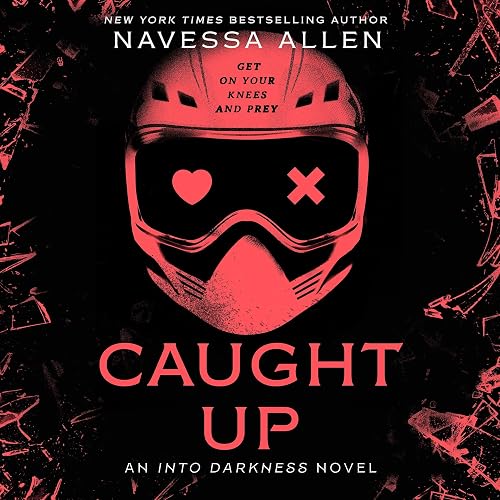
The "Stalker Romcom" Paradox
Navessa Allen has carved out a very specific niche with the Into Darkness trilogy. Calling this a "romcom" is a bit of a
marketing feint. While the dialogue might have the snappy, self-aware energy of a romantic comedy, the actual plot
mechanics are pure dark romance. We’re talking about a story where the male lead, Junior, spends his time
cyber-stalking the female lead and watching her from the shadows.
In the world of viral fiction, this is a feature, not a bug. The book leans heavily into the "he’s a monster for everyone
but her" trope. If you’ve seen the viral hype for the first book, Lights Out, you know the drill. It’s high-drama,
high-heat, and explicitly designed to push boundaries. The friction comes from the contrast between Lauren’s
"sweetness" and Junior’s "depravity." It’s a classic setup, but Allen upping the ante with the "play club" setting
means the sexual content is more clinical and kink-heavy than your average airport novel.
Why the "Red Flag" Aesthetic Works
The book’s marketing proudly declares that "red is my favorite color." This is the core of the dark romance
appeal on social media. It’s a safe space for readers to explore "walking red flags" without any of the real-world
danger. Junior is a mafia-adjacent enforcer who is objectively terrifying, yet the narrative frames his
obsession as a form of devotion.
For an adult reader, this is a standard genre convention. However, if this book is popping up in your house,
it’s likely because of how it’s packaged. The covers are often stylish and minimalist, and the "romcom" tag
makes it sound far lighter than it actually is. This isn't a "misunderstanding at a coffee shop" kind of story;
it’s a "he knows your passwords and is standing in your backyard" kind of story. If you're trying to figure out
how a book with these themes ended up in the hands of a younger reader, our parent's guide to Caught Up
explains how these adult titles often bypass digital filters through aesthetic "BookTok" trends.
The TikTok-to-Nightstand Pipeline
If your kid is a reader, they are likely seeing these titles categorized alongside much tamer YA fiction. The
algorithm doesn't always distinguish between a "sweet" romance and a "dark" one. Caught Up is part of a
wave of books that use voyeurism and BDSM as central plot points.
The specific moment where this book might cause the most friction is the transition from "online flirting" to
"real-world obsession." The characters communicate through flirty messages, which feels modern and relatable,
but that digital connection is used to justify some very dark behaviors. It’s the kind of book that’s
genuinely gripping for fans of the genre because it moves fast and doesn't apologize for its tropes. Just
know that once you get past the "shy girl" and "brooding stranger" intro, the story dives straight into
explicit, 18+ territory that stays there until the final page.