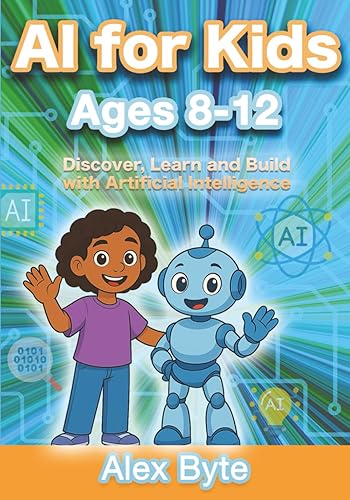
Most kids are already using AI to cheat on their history essays or generate weird images of cats. Alex Byte’s book is the antidote to that passive consumption. It moves the conversation away from what AI can do for you and focuses on what your kid can do with it.
If your kid has already exhausted the "Coding for Kids" shelf or spent a hundred hours building logic gates in Minecraft, this is the logical next step. It bridges the gap between basic block-based coding and the more abstract logic required for machine learning.
The "Aha" Moment with Teachable Machine
The standout feature here isn't the text—it's the integration with Google’s Teachable Machine. This is where the theory actually sticks. Instead of just reading about how a computer "sees," the book walks them through training a model to recognize their own face or a specific toy.
When a kid realizes they can train a machine to tell the difference between a dog and a blueberry muffin, the "magic" of AI evaporates and is replaced by understanding. It’s a shift from being a spectator to being a developer. If you're wondering if your child is actually ready for this level of logic, check out our parent's guide to AI for Kids for a deeper look at the learning curve.
Not Just Another STEM Textbook
Many tech books for this age range feel like they were written by a committee of HR managers. They’re dry, overly cautious, and frankly, boring. Alex Byte avoids this by leaning into the characters of Ada and Algo. They provide a narrative thread that makes the heavier concepts like neural networks feel like a puzzle rather than a lecture.
The book also handles the "scary" parts of AI—like deepfakes and data privacy—without being alarmist. It frames digital citizenship as a superpower. The goal isn't to make kids afraid of the tech; it's to make them the smartest person in the room when using it.
Where the Friction Is
You can’t just hand this book to a kid in the back of a minivan and expect results. It is a companion piece to a screen. To get any value out of the "Build" part of the title, they need a laptop or tablet with a webcam.
If you have a kid who prefers to work entirely solo, they might hit a few walls with the initial setup of the interactive experiments. It’s best treated as a "Saturday morning project" book where you’re nearby to help troubleshoot the browser settings.
The Verdict on the Vibe
This isn't a book about the "future" of AI. It’s about the now. It respects the intelligence of an 11-year-old enough to explain how a weighted connection in a neural network actually works, rather than just saying "the computer learns."
If your household is already tech-forward, this is an essential addition to the library. It turns a mystery into a toolset. For parents who want their kids to be more than just "prompt monkeys," this is how you start that transition.