Adopt Me!

Adopt Me!

game

2017, Role-playing (RPG), Adventure

WISE
52%

WISE Score

60%

IGDB

Roblox's biggest pet-collecting game: cute concept, but the scam economy and unfiltered chat make it a parental minefield.

Where to Play

Screenwise Verdict

Adopt Me! is Roblox's biggest success story, and you can see why: the pet-collecting loop is genuinely engaging, the creative sandbox is solid, and your kid's entire class is probably already playing.

But here's the reality—this game is a minefield without active parental controls. The scam culture is real and predatory: kids spend allowance money on Robux to buy rare pets, then get conned by older players running elaborate trades. The chat filter fails constantly, exposing elementary-aged kids to profanity and weirdly flirtatious roleplay. And the pay-to-win mechanics create intense peer pressure around pet rarity that can spiral into financial chaos fast.

If you're willing to do the work—enable Roblox's strictest safety settings, password-protect purchases, monitor transactions weekly, and have ongoing conversations about online safety and financial literacy—this can be a fun, imaginative experience for 8–12 year olds. But if you're looking for something you can hand over without supervision? Hard pass. This game requires co-piloting.

Age Fit

Best for ages 8–12 with active parental supervision and strict spending controls. Kids under 8 lack the financial literacy to navigate the scam-heavy trading economy, and teens will have aged out of the cutesy pet-care theme. This is NOT a set-it-and-forget-it game—it demands parental involvement.

WISE Breakdown
Wholesome
62

The pet-care and home-building theme is fundamentally wholesome, but parent reviews consistently flag problematic social dynamics: kids pretending to kiss, frequent crying/tantrums in roleplay, and exposure to profanity slipping through Roblox's chat filter. The cooperative pet-raising concept models responsibility, but the trading economy creates aggressive peer pressure and scam culture that undermines the intended nurturing vibe.

Imaginative
78

Adopt Me! delivers solid sandbox creativity—players design homes, care for dozens of pet species, and invent their own roleplay scenarios in a persistent online world. The trading economy adds entrepreneurial play, and regular updates with new pets/items keep the experience fresh. It's not groundbreaking (the Roblox aesthetic is blocky and generic), but 50+ million monthly players prove it sparks genuine imaginative engagement for its target demographic.

Safe
38

This is where Adopt Me! stumbles hard. Despite Roblox's filtered chat, parents report frequent profanity exposure, scam culture targeting kids' allowances, and aggressive pay-to-win mechanics that blur the line between play and real-money gambling. The trading system is a minefield: children feel pressured to spend Robux on rare pets, then get scammed by older players. Without active parental controls (spending limits, chat restrictions, transaction monitoring), this game can quickly become a financial and emotional mess. The social dynamics—unmoderated player interactions, competitive trading, status hierarchies around pet rarity—create a Lord of the Flies environment for younger kids.

Enriching
48

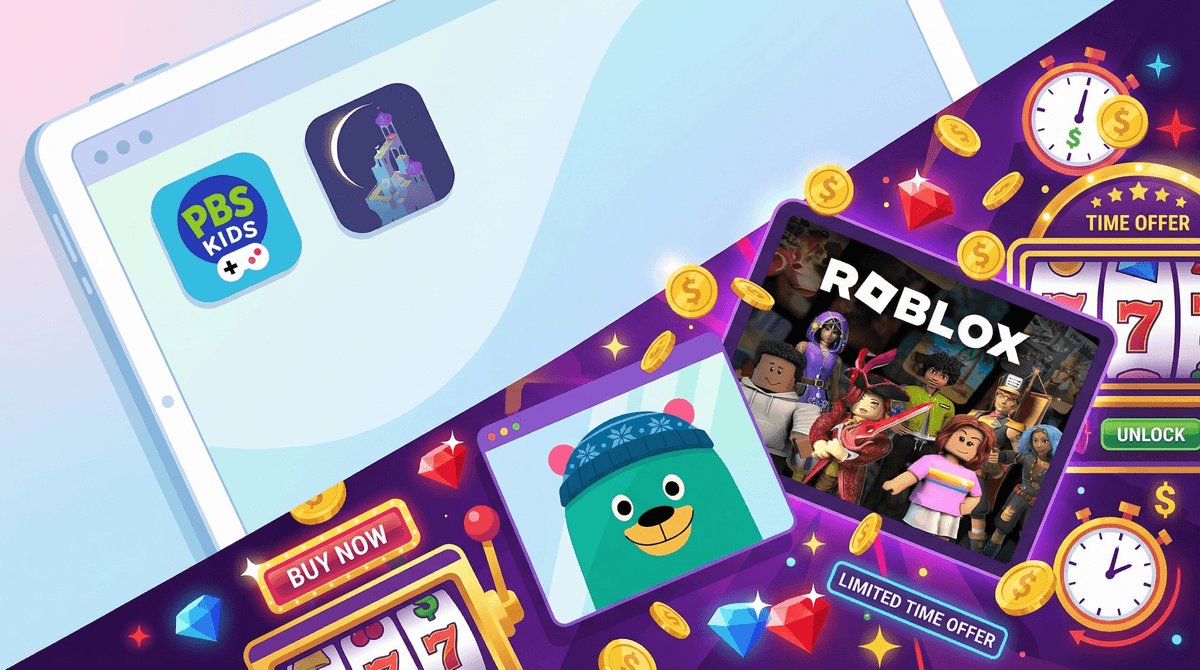
There's mild skill-building in resource management, basic economics through trading, and social negotiation. But the 'educational value' is swamped by the dopamine-loop design: collect pets, chase rare variants, grind daily tasks for currency. It's more slot-machine than life lesson. The game doesn't teach financial literacy so much as exploit kids' incomplete understanding of value. Entertainment value is high for the target age (hence the massive player base), but meaningful growth is thin on the ground.

Parent Info

Why It Might Be Great

  • Massive creative sandbox—design homes, care for 100+ pet species, invent your own roleplay scenarios
  • Teaches basic resource management and trading negotiation (when not being scammed)
  • Genuinely engaging for elementary-aged kids who love virtual pets and social play
  • Regular content updates keep the experience fresh; 50M+ monthly players means your kid's friends are probably already there

What to Watch For

  • Scam culture is rampant—kids trade rare pets for Robux, then lose real allowance money to older players running cons
  • Chat filter fails regularly; parents report frequent profanity, flirting, and inappropriate roleplay (kids pretending to kiss, etc.)
  • Pay-to-win pressure is intense—rare pets cost real money, creating status hierarchies and peer pressure to spend
  • Requires hands-on setup: enable Roblox Account Restrictions, set chat to Strict, password-protect all Robux purchases, and monitor transaction history weekly

Conversation Starters

  • "Which pet is your favorite right now? What makes it special to you?"
  • "Has anyone ever offered you a trade that seemed too good to be true? Let's talk about how scams work in games like this."
  • "How do you decide if something is worth spending Robux on? What's the difference between wanting something and needing it?"
  • "Have you seen anyone being mean or using bad language in the chat? What did you do when that happened?"

Deep Dive

The elementary status symbol

If your kid is between the ages of 8 and 12, Adopt Me! isn't just a game; it’s a currency. While critics might give it a mid-tier IGDB score of 60, that number doesn't account for the social gravity this world holds. It has effectively replaced the local park as the primary social hub where kids show off their "wealth" and negotiate their standing in the peer group.

The gameplay loop is a clever hybrid of Pokémon and The Sims. You start with a basic egg, hatch a pet, and then perform "tasks"—feeding it, putting it to bed, taking it to the playground—to age it up. But the pet-care is really just the engine that drives the real game: the trading economy. For a generation that grew up on unboxing videos, the dopamine hit of hatching a "Legendary" pet is the whole point.

The high-stakes trade

This is where the friction lives. If your kid liked trading physical Pokémon cards or Silly Bandz, they will naturally gravitate toward the Adopt Me! trading window. It’s a masterclass in digital pets and mogul mindsets, but it’s also where the most predatory behavior happens.

The game doesn't have "loot boxes" in the traditional sense, but the "Gacha" mechanic of hatching random pets creates a similar psychological pull. Kids become obsessed with "values"—using third-party websites to check if their Neon Unicorn is worth a Shadow Dragon. This leads to the "trust trade" phenomenon, a common scam where older or more savvy players convince kids to hand over a pet for nothing, promising a better one in return. It’s a harsh way to learn about financial literacy, and it’s the number one reason you’ll hear crying from the backseat during a car ride.

Beyond the pet shop

When they aren't obsessing over pet-trading scams, the creative side of the game is genuinely impressive. The house-building mechanics are deep. I’ve seen kids spend hours using "glitch building" techniques to create multi-story mansions out of basic geometric shapes. It’s a digital sandbox that rewards patience and spatial reasoning, provided they aren't being distracted by the constant "Trade me!" pings in the chat.

How to play it right

Don't just hand this off and hope for the best. The most effective way to manage Adopt Me! is to treat it like a shared hobby for the first few weeks.

  • Sit with them during a trade. Ask "Why is that a good deal?" or "How do you know you can trust this person?" Making them verbalize their logic is the best defense against scams.
  • Set a "No Chat" rule with strangers if they are on the younger end of the spectrum. Roblox’s filters are okay, but they aren't foolproof against the weirdly specific "family roleplay" that can get into "mommy/daddy" territory.
  • Treat Robux as a fixed allowance. If they blow their monthly budget on a single "Fly-A-Pet" potion, don't bail them out. The sting of a bad digital investment is a better teacher than any lecture you can give.

This game is a hustle. It’s loud, it’s commercial, and it’s a little bit chaotic. But if you’re involved, it’s also one of the few places where your kid can actually practice negotiation and resource management in a world that feels like it belongs to them.

Ask Anything

Get a personalized guide on any topic

Related Guides