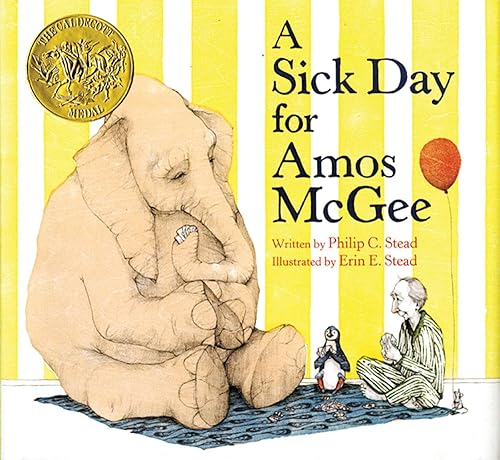
Most children’s media tries very hard to grab a kid’s attention with neon colors and high-decibel slapstick. A Sick Day for Amos McGee does the opposite. It is a masterclass in understatement. If you are looking for a book to lower the "room temperature" before sleep, this is the gold standard.
The power of the "slow" story
Amos is a creature of habit. He wakes up at the same time, eats the same oatmeal, and catches the number five bus to work. For a toddler or preschooler, this focus on routine is incredibly grounding. It mirrors their own lives where the sequence of events—shoes on, bag packed, out the door—is their entire world.
When the routine breaks because Amos gets the sniffles, the shift feels significant without being scary. The animals taking the bus to visit him isn't a chaotic "animals on the loose" trope; it’s a quiet, orderly extension of the friendship he already built. This is why it sits so comfortably among other Caldecott Winners: Picture Books That Spark Meaningful Screen-Free Moments. It proves that a story doesn't need a villain or a "big" problem to be compelling.
Look for the "hidden" character
While the text is sparse and sweet, the real heavy lifting is done in the illustrations. You’ll want to pay attention to the penguin. Throughout the book, the penguin’s body language—the way he stands, his slight hesitation, and his eventually sitting on Amos’s bed—tells a parallel story about overcoming shyness.
The art uses woodblock prints and pencil, which gives it a textured, handmade feel that stands out in an era of slick, digital-first children's books. There are tiny details to spot on every page, like the mouse that follows the action or the specific way the light changes as the day goes on. It’s the kind of visual storytelling that rewards a second or third reading because your kid will notice a small red balloon or a specific hat that they missed the first time.
Is it too quiet?
If your child is currently obsessed with "crash and bang" adventure shows, they might find the first few pages of Amos's morning routine a bit slow. That’s okay. This isn't a book meant to compete with a tablet. It’s a book meant to replace it during that twenty-minute window before the lights go out.
The "vibe" here is similar to a long-form hug. There is no snark, no sarcasm, and no hidden agenda. It simply posits that if you are kind to others, they will be kind to you. In a crowded landscape of "educational" media that tries to teach coding or Mandarin to three-year-olds, a book that just teaches reciprocity feels like a necessary relief.