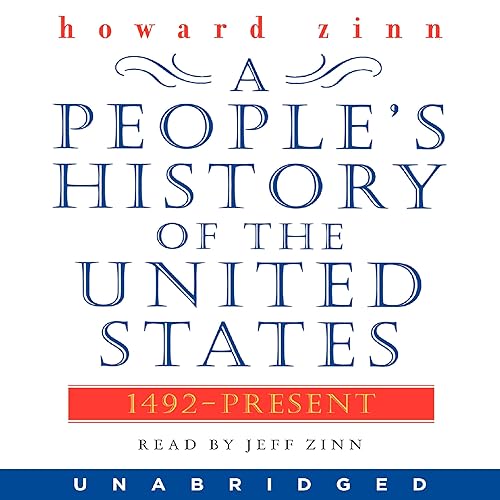
If you grew up in the American school system, you likely remember history as a series of names and dates belonging to men who wore wigs or suits. Howard Zinn’s 2009 edition of A People’s History of the United States is the book that effectively breaks that version of the past. It’s less of a traditional narrative and more of a forensic audit of the American project.
The "Columbus" Shock
The first chapter is usually where kids (and adults) either get hooked or get uncomfortable. Zinn starts with Christopher Columbus, but instead of the "ocean blue" heroics, he uses primary sources—Columbus’s own journals—to describe a brutal gold-hunting expedition that decimated the Arawak people. It’s a jarring entry point.
If your kid is used to the sanitized, "both sides" approach of a standard social studies curriculum, this book will feel like a secret they weren't supposed to know. That 4.7 Amazon rating doesn't come from people who found it "nice"; it comes from readers who felt like the scales finally fell off their eyes.
Dealing with the "Brick" Factor
Let’s be real: this book is a behemoth. At over 700 pages, handing this to a teenager and saying "let me know what you think" is a great way to ensure it becomes a permanent coaster on their nightstand.
You don't have to read it chronologically. If they’re currently studying the Civil War in school, have them read Zinn’s "The Other Civil War" chapter. If they’re obsessed with modern protest movements, skip to the later chapters covering the 20th century. It’s better used as a counter-text than a cover-to-cover marathon. When the school textbook says the New Deal saved the country, Zinn asks who it left behind. That friction is where the real learning happens.
The Bias is the Point
Critics often knock Zinn for being "one-sided." Zinn himself would likely agree. He isn't trying to be a neutral referee; he’s trying to balance a scale that he believes has been tipped toward the powerful for centuries.
He focuses on the people who didn't have the lobbyists or the printing presses—the factory workers, the fugitive slaves, the radical feminists, and the socialist organizers. If you’re worried about "indoctrination," the best way to use this book is as a conversation piece. Ask your kid: "Why do you think Zinn is focusing on this specific person while your teacher focused on the President?" It teaches them to interrogate the source, which is a survival skill in 2026.
If they aren't ready for the 2009 original
If the academic density of the main book is a non-starter, keep A Young People’s History of the United States in your back pocket. Adapted by Rebecca Stefoff, it keeps the soul of the original—the focus on grassroots resistance and marginalized voices—but trims the 700-page academic weight into something a middle-schooler can actually carry in a backpack.
Whether they read the original or the adaptation, the goal is the same: moving from "the teacher said so" to "who wrote this, and what was their agenda?" That’s the most valuable thing they’ll get out of these pages.
The teen-sized edition: A Young People's History of the United States is the official young readers adaptation of this book (ages 10–99) — same core ideas, shorter and gentler in the telling. The right handoff for a curious kid who isn't ready for the original.