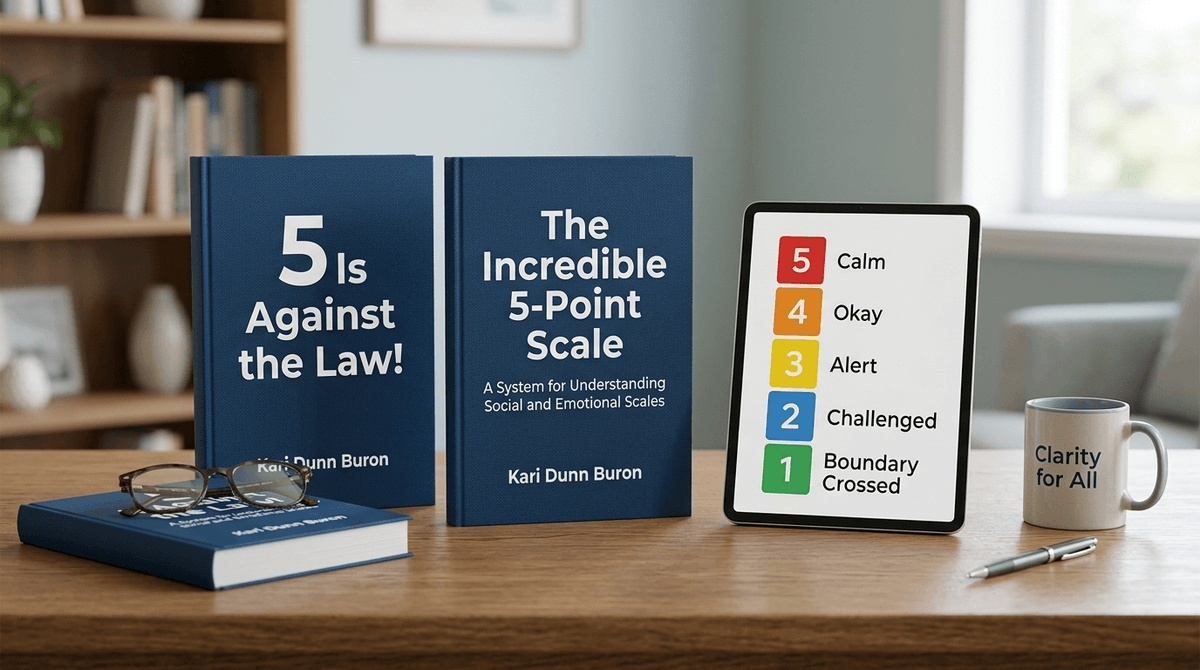
The "Straight Up" reality check
The title sounds like a threat, but for a certain type of kid, it’s actually a relief. We spend a lot of time giving neurodivergent teens "soft" social advice—things like try to make eye contact or be a good friend—that is frustratingly vague. This book takes the opposite approach. It’s the social equivalent of a driver’s ed manual: it doesn't care if you're "nice," it cares if you're legal.
By the time a kid hits middle or high school, the stakes for "social errors" shift from being the weird kid on the playground to potentially facing actual legal or school-board consequences. Kari Dunn Buron, an Autism Society Award winner, knows that "unspoken rules" are the enemy. She treats social boundaries as a hard science, which is why it has maintained a 4.6 on Amazon despite being nearly two decades old. It’s for the kid who needs to know exactly where the "creepy" line is before they accidentally step over it.
Turning vibes into data
The magic here is the 1-to-5 scale. Most social coaching fails because it relies on "reading the room," which is a high-level skill many kids just don't have. This book breaks behavior down into a quantifiable system:
- Level 1: Totally fine, keep doing you.
- Level 5: You are literally breaking the law.
Between those two is a lot of gray area where most social friction happens. The book is particularly good at explaining the "Level 4" behaviors—the ones that aren't illegal but make people feel deeply unsafe. For a teen who doesn't understand why standing too close to someone in line is a problem, seeing it mapped out as a "Level 4" on a visual scale makes it objective rather than a personal critique.
Dealing with the 2007 of it all
You have to address the elephant in the room: this book was published in 2007. That means there is zero mention of Discord, TikTok, or the specific "Level 5" disasters that can happen in a group chat. The photos and some of the fashion choices will look ancient to a 2026 teenager.
However, the logic is evergreen. If you can get your kid past the dated aesthetics, the core framework is easy to port over to digital life. A "Level 5" on the street is a "Level 5" in the DMs. If you’re looking for a way to bridge that gap, our parent’s guide to 5 Is Against the Law! helps translate these physical-world rules into the online spaces where your kid actually spends their time.
How to use it without being a narc
Don’t just drop this on their nightstand and walk away. That feels like a reprimand. Instead, use it to create a shared vocabulary. When things are calm, ask them where they think a specific TikTok prank falls on the scale. Once you both agree on what a "3" or a "4" looks like, you can use those numbers as a shorthand in real-time. Telling a kid "you're being a 4 right now" is much less inflammatory than saying "you're acting weird" or "stop doing that." It turns a potential argument into a calibration exercise.